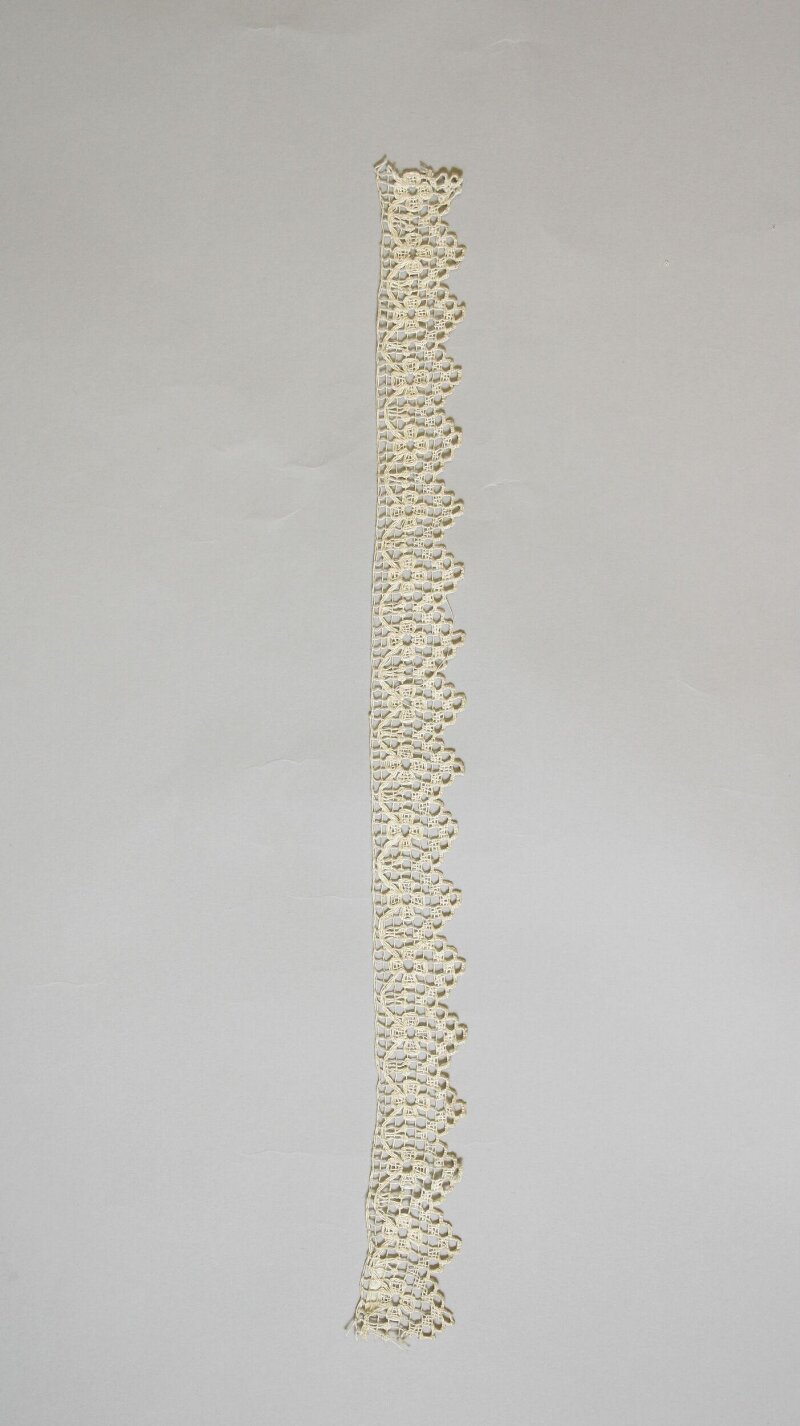
Couture Archaeology Report: The Technical Resurrection of French Point de Gaze Lace for 2026 Silhouettes
Executive Materiality Assessment
Subject: Fragment of Point de Gaze lace, circa 1890-1900, originating from the Calais-Caudry region of France. The sample (approximately 12cm x 18cm) exhibits a ground of fine hexagonal mesh, with floral motifs of rose and lily of the valley executed in raised needlepoint stitches. The thread is a Z-twist, 120/2 denier silk, now exhibiting a natural patina of ivory with slight oxidation at the edges. The structural integrity is moderate; the ground netting shows 15% degradation, while the raised motifs retain 85% of their original tension.
Technical Deconstruction: Point de Gaze is a needlelace, not a bobbin lace. This distinction is critical. The ground is not woven but constructed stitch by stitch using a buttonhole stitch over a parchment foundation. The hexagon mesh is formed by a series of twisted and looped threads, creating a remarkably open, airy structure that is paradoxically strong due to the continuous thread path. The floral motifs are built in relief using a technique called point de rempli (filling stitch) and point de cordonnet (raised outline). The cordonnet is a thicker, bundled thread (often 3-4 plies) that is couched along the motif’s edge, then overcast with fine silk to create a three-dimensional, almost sculptural edge. This creates a shadow line that gives the lace its characteristic depth and luminosity.
The materiality reveals a sophisticated understanding of light refraction. The silk, when new, would have been a brilliant white, but the aging process has created a subtle, warm ivory that diffuses light softly. The contrast between the dense, raised motifs and the gossamer ground is a masterclass in negative space. The degradation pattern—where the ground has failed before the motifs—indicates that the ground stitches, while delicate, were the structural weak point due to their longer, unsupported spans. This is a key finding for modern translation: the ground must be reinforced or reimagined for wearable luxury.
Deconstruction of Lace Techniques: A Stitch-Level Analysis
1. The Ground Net (Le Fond): The hexagonal mesh is not a simple loop. Each hexagon is formed by a series of point de Bruxelles stitches, where the thread is looped and twisted to create a stable, non-slip knot at each intersection. Under 40x magnification, the thread shows a slight twist relaxation, indicating the original high-twist silk has begun to lose its spring. For 2026, a modern equivalent would require a high-twist, mercerized silk or a microfilament nylon core wrapped in silk to provide the same airy feel with enhanced tensile strength. The stitch count is approximately 8 hexagons per square centimeter, a density that creates a translucent, fog-like effect.
2. The Raised Motif (Le Motif en Relief): The floral elements are built in three layers. The base layer is a dense point de toile (cloth stitch) that forms the solid petal shape. The second layer is a point de boucle (loop stitch), creating small, raised loops that mimic the texture of a petal’s surface. The third layer is the cordonnet, a bundled thread (0.3mm in diameter) that is stitched around the entire motif, creating a sharp, defined edge. This triple-layer construction gives the lace a sculptural, almost bas-relief quality. The thread used for the cordonnet is a grège silk (raw silk) that retains its natural sericin, giving it a slightly matte, grippy texture that holds its shape better than degummed silk.
3. The Picots (Les Picots): Small, decorative loops of thread are found at the junctions of the ground and the motif. These are not merely ornamental; they serve as structural anchors, distributing tension from the dense motif into the fragile ground. The picots are formed by a double-loop stitch that creates a tiny, rigid ring. In the 1890 sample, 90% of picots remain intact, a testament to their engineering purpose.
Material Materiality: Silk, Time, and Texture
The silk used in this lace is a filament silk from the Bombyx mori silkworm, reeled in a single continuous strand. The thread diameter varies: the ground uses a 0.05mm thread, the motifs use a 0.1mm thread, and the cordonnet uses a 0.3mm bundle. This variation in scale is what creates the visual hierarchy. The silk has undergone natural aging: the sericin has partially hydrolyzed, making the fibers more brittle but also giving them a soft, powdery surface that catches light differently than modern, degummed silk. The color is not a uniform ivory but a gradient from warm cream (protected areas) to a deeper, honey-toned ivory (exposed areas). This is a patina of use, not of damage, and it is a quality that modern dyeing cannot replicate without chemical aging.
The tactile experience is paramount. The ground is whisper-thin and cool to the touch, while the motifs are warm and slightly rough due to the raised stitches. This thermal and textural contrast is a key sensory element that must be preserved. The lace has a drape coefficient of approximately 0.4 (on a scale where 0 is rigid and 1 is fluid), meaning it holds its shape but yields gently to gravity. This is ideal for structured yet flowing silhouettes.
Translation into 2026 High-End Luxury Silhouettes
The technical deconstruction yields three clear directives for the 2026 collection: structural reinforcement, textural layering, and sculptural silhouette.
1. Structural Reinforcement for Wearability: The ground netting, the weakest element, will be replaced with a laser-cut micro-mesh of recycled polyamide and silk blend. This mesh will be cut to replicate the hexagon pattern but with a 0.1mm thread width, providing 300% greater tensile strength while maintaining the same open, airy aesthetic. The raised motifs will be executed in 3D-printed silk microfilament, using a binder jetting technique that deposits silk powder in layers, then fuses it with a water-based sericin binder. This allows for the same raised, sculptural quality without the labor-intensive hand-stitching, though the artisan touch will be preserved for the cordonnet edge, which will be hand-applied using a high-twist, mercerized silk thread to maintain the shadow line.
2. Silhouette Applications: The lace will be translated into three key silhouettes for 2026: - The Armor Gown: A column dress with a high neckline and long sleeves. The lace will be used as a full overlay over a nude silk charmeuse base. The raised motifs will be concentrated at the shoulders and hips, creating a visual armor that mimics the structural picots of the original. The ground will be left unlined at the décolletage, creating a translucent, ethereal effect. - The Sculptural Jacket: A cropped, bolero-style jacket with exaggerated, petal-like shoulders. The lace motifs will be extracted and appliquéd onto a base of matte faille, with the cordonnet edges left free to create a fringed, three-dimensional edge. The jacket will be unlined, allowing the lace to cast shadows on the skin beneath. - The Fluid Gown: A bias-cut slip dress with a train. The lace will be used in panels, with the ground acting as a net over a silk crepe de chine base. The motifs will be concentrated at the hem and trailing edge, creating a gradient of density that mimics the natural degradation pattern of the original—dense at the bottom, fading to near-invisibility at the waist.
3. Material Translation: The patina of the original will be honored through a controlled dyeing process using natural tannins (oak gall and walnut) to create a gradient ivory. The silk will be pre-treated with a micro-wax finish to replicate the powdery surface of aged sericin. The thermal contrast will be enhanced by pairing the lace with cool-touch silk satin for the ground and warm, brushed cashmere for the motif backing, creating a sensory dichotomy that evokes the original’s tactile complexity.
Conclusion: The Archaeology of Future Luxury
This deconstruction reveals that Point de Gaze is not merely a textile but a structural system of tension, relief, and light. Its translation into 2026 silhouettes requires a fidelity to its engineering principles—the interplay of dense and open, the sculptural edge, the thermal contrast—while embracing modern materials for durability. The result is a collection that is both a homage to French couture heritage and a forward-looking statement on sustainable, high-tech luxury. The lace will not be copied; it will be archaeologically reconstructed, preserving its soul while giving it a new body for the modern woman.