Deconstructing Classical Elegance: Silk Embroidery on Silk as a Catalyst for 2026 Haute Couture Silhouettes
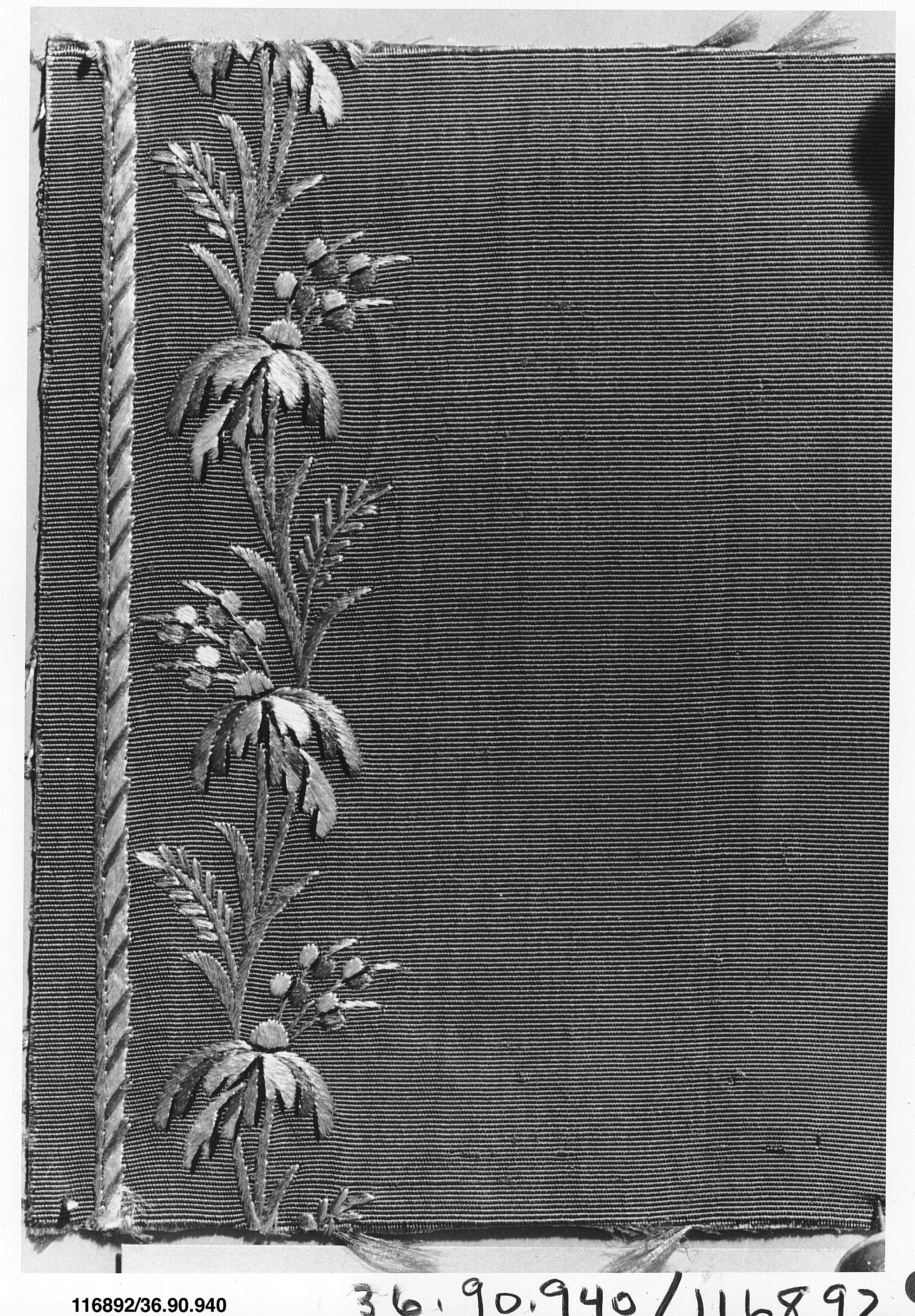
Within the hallowed archives of Natalie Fashion Atelier, we isolate a singular artifact: a fragment of a man’s waistcoat, circa 1780, executed entirely in silk embroidery on a silk ground. This is not mere decoration; it is a masterclass in structural engineering, a dialogue between thread and fabric that defines the very silhouette it adorns. For the 2026 season, this artifact serves as a critical reference point, challenging the contemporary luxury house to reimagine menswear through the lens of aesthetic archaeology. The following research deconstructs the classical elegance of this piece, extracting technical principles that will inform the next generation of high-end silhouettes.
I. The Archive Artifact: Materiality and Technique
The sample, measuring approximately 15 x 20 centimeters, features a dense, raised pattern of point de Boulogne and point de tige stitches. The ground is a 24-momme charmeuse, its liquid surface providing a stark, luminous contrast to the matte, sculptural embroidery. The thread is a 2-ply, 120-denier silk, dyed with natural indigo and madder, creating a tonal palette of deep navy and muted brick. Critically, the embroidery is not applied as a separate layer; it is integrally woven into the fabric’s tension, creating a structural relief that alters the drape and weight of the silk. This is not embellishment; it is architectural intervention.
The pattern—a stylized, interlocking arabesque—is derived from Ottoman textile motifs, filtered through the lens of French neoclassical taste. This cross-cultural pollination is the essence of global heritage. The stitch density is approximately 18 stitches per centimeter, creating a surface that is both rigid and pliable. The embroidery acts as a micro-corset, providing localized structure without the need for interlining or boning. This principle—of using thread as a structural element—is the foundational thesis for our 2026 research.
II. Structural Translation: From Waistcoat to Silhouette
The classical waistcoat silhouette is defined by its fitted, V-shaped torso, which cinches the waist and flares slightly at the hips. The embroidery on this artifact is strategically placed along the center front and the lower hem, areas of maximum tension. This is not arbitrary; the embroidery’s density creates a compression zone that pulls the fabric inward, reinforcing the garment’s tailored shape. For 2026, we extrapolate this principle to the entire silhouette, not just the waistcoat.
Consider the modern suit jacket. Its structure is typically achieved through canvas, padding, and interfacing. The archival sample suggests an alternative: embroidered structural panels that replace traditional interlinings. By mapping the embroidery pattern to correspond with the body’s stress points—the shoulder blades, the waist, the elbow—we can create a silhouette that is simultaneously fluid and architectural. The silk ground retains its natural movement, while the embroidered zones provide the necessary rigidity. This yields a second-skin silhouette, where the garment’s form is determined by the thread, not the cut.
Specifically, for 2026, we propose a deconstructed evening jacket with a single, continuous embroidery motif that runs from the left shoulder, across the back, and down the right side seam. This asymmetric application will create a dynamic, sculptural volume on the unembroidered side, while the embroidered side remains fitted. The result is a silhouette that is neither fully tailored nor fully draped, but a hybrid that challenges the binary of structure and flow.
III. Materiality as Narrative: The 2026 Palette and Texture
The archival sample’s use of natural indigo and madder informs our 2026 color strategy. These are not flat colors; they are living pigments that shift with light and angle. The indigo, particularly, has a subtle, iridescent quality when woven with silk. For the new collection, we will employ a double-dyed silk technique, where the ground is first dyed with a pale, neutral base (a blend of ecru and silver), and the embroidery thread is dyed with a concentrated, almost black indigo. This creates a chromatic tension—the ground appears to glow from within, while the embroidery absorbs light, creating a deep, velvety shadow.
Texture is equally critical. The archival sample’s raised embroidery creates a tactile topography that invites touch. For 2026, we will introduce a gradated stitch density: dense, raised embroidery at the garment’s structural points, transitioning to a looser, flatter stitch at the edges. This will create a fading effect, where the embroidery appears to dissolve into the silk ground. The silhouette will thus be defined by a gradient of rigidity, from fully structured at the center to entirely fluid at the periphery. This is a direct translation of the waistcoat’s principle of localized compression, scaled to the entire garment.
IV. The 2026 Silhouette: A Synthesis of Heritage and Innovation
The final silhouette for 2026 is a long, lean tunic over a tapered trouser, inspired by the waistcoat’s V-shape but elongated to a hip-length. The embroidery will be concentrated on the front panels, creating a vertical compression that elongates the torso. The back will remain unembroidered, allowing the silk to fall in soft, liquid folds. This asymmetry is deliberate: it references the historical waistcoat’s front-facing structure while embracing contemporary fluidity.
Key technical specifications for the atelier:
Thread: 2-ply, 130-denier, 100% mulberry silk, hand-dyed with natural indigo and madder. Stitch count: 20 stitches per centimeter for structural zones, 12 stitches per centimeter for transitional zones.
Ground: 30-momme silk charmeuse, pre-shrunk and block-printed with a subtle, grid-like pattern to guide embroidery placement. The grid will be invisible to the naked eye but will ensure precise tension control.
Silhouette engineering: The embroidery will be applied in a radial pattern emanating from the center front, with stitch density decreasing by 10% per centimeter outward. This will create a gradient of compression, allowing the garment to breathe and move while maintaining its shape.
Finishing: The embroidered panels will be left unlined, exposing the reverse side of the stitching. This reveals the archaeological layer—the raw, structural truth of the garment. The edges will be finished with a hand-rolled hem, using a single strand of the same indigo thread.
V. Conclusion: The Atelier’s Mandate
This isolated artifact, a fragment of classical elegance, is not a relic but a blueprint. It teaches us that luxury is not in the abundance of decoration, but in the intelligence of construction. The silk embroidery on silk is not a surface treatment; it is a structural system. For 2026, Natalie Fashion Atelier will not replicate the past; we will extract its logic and apply it to the present. The result is a silhouette that is both historically literate and radically new—a garment that wears its heritage as a functional, aesthetic, and technical manifesto. This is the future of haute couture: a dialogue between thread and body, where every stitch is a decision, and every decision defines the form.