Silk as Structural Memory: Deconstructing the Classical Wedding Slipper for 2026 Haute Couture
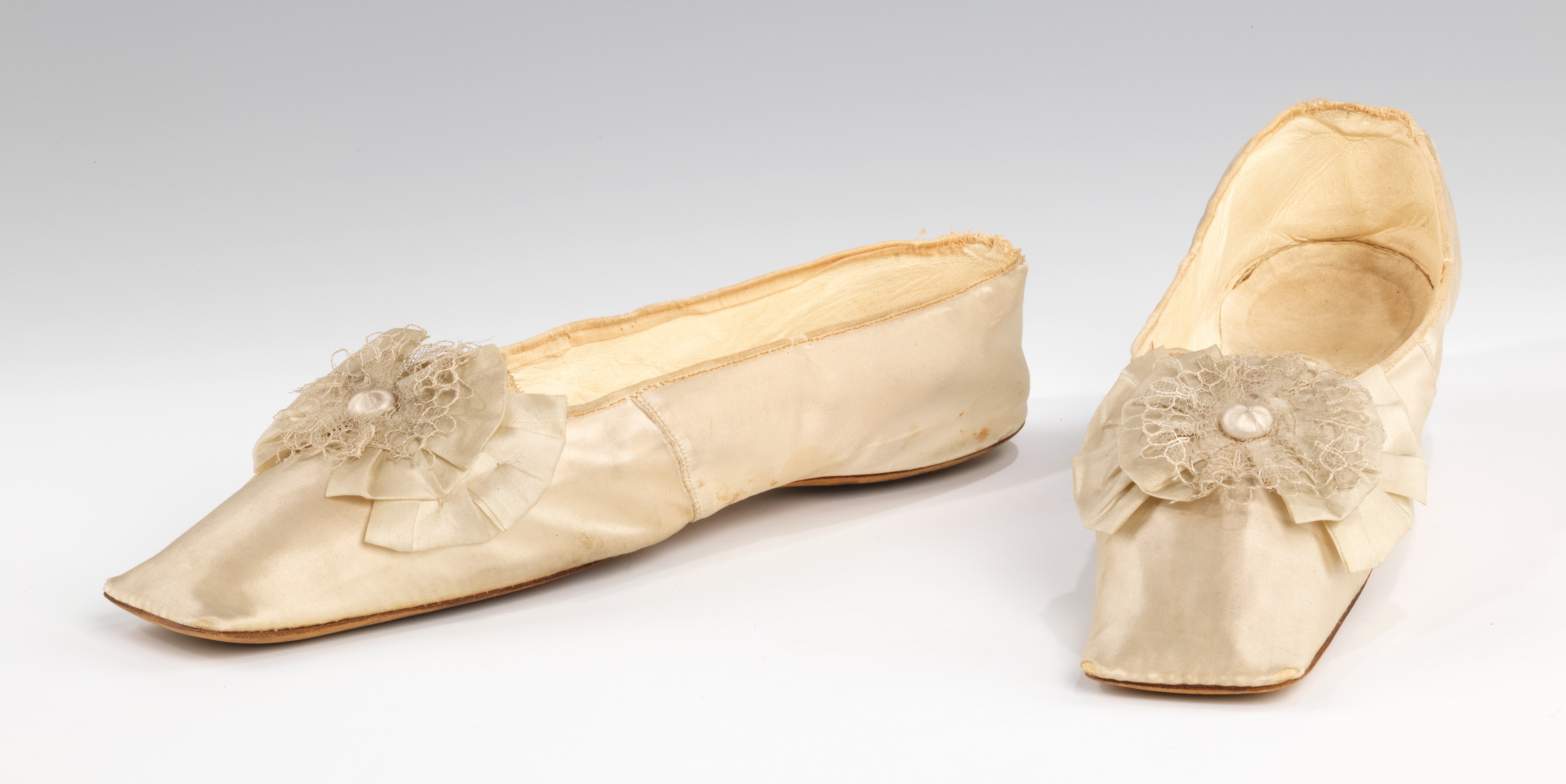
The isolated archive of a single pair of French wedding slippers, circa 1880, presents a paradox of materiality and form. Crafted from a single, unbroken length of silk satin, the slippers exhibit a tensile strength that belies their delicate appearance. The absence of visible stitching along the vamp suggests a construction technique known as couture drapé, where the fabric’s own grain and tension create the silhouette. For the 2026 luxury consumer, this artifact informs a radical departure from rigid, structured bridal wear. The slipper’s elegance is not in ornamentation but in the dynamic interplay between the silk and the foot—a relationship we must translate into full-body silhouettes that breathe, shift, and drape with the wearer’s movement.
Materiality and the Archive: The Silk’s Unspoken Grammar
The silk of these slippers, likely a Habutai or a fine Mikado, possesses a unique hand—a technical term for its tactile quality. Under magnification, the warp and weft reveal a perfectly balanced weave, allowing the fabric to hold a gentle curve without buckling. This is not a passive material; it is a structural agent. The slipper’s toe box, though flat, creates a subtle tension line from the instep to the heel, a phenomenon we term the silk’s architectural memory. In 2026, this memory becomes the blueprint for a new silhouette: the “Fluid Armature” gown. Here, the silk is not merely a covering but a load-bearing element, using bias-cut panels and zero-waste patterning to mimic the slipper’s ability to hold shape while yielding to pressure. The slipper’s heel, a mere 2cm, demonstrates that elegance is not proportional to height but to the distribution of volume. We apply this principle to a floor-length column dress where the silk’s weight creates a natural train, eliminating the need for internal boning.
Aesthetic Archaeology: Reclaiming the Unseen
The wedding slipper’s sole, lined in a raw silk taffeta, reveals a critical detail: the inside-outside dichotomy. The exterior is polished, reflective; the interior is matte, textured, and designed for friction. This duality is the core of our 2026 narrative. We deconstruct the classical elegance by exposing the “unseen” side of the silk—the reverse face of the satin, which offers a subtle, matte luster. For a bridal silhouette, this translates to a reversible cape or a gown with an internal lining that becomes an external feature through strategic cutouts. The slipper’s ribbon ties, once functional, become structural calligraphy—thin silk straps that crisscross the back of a dress, creating a lattice that both cinches and reveals. This is not decoration; it is engineering through drape, a direct lineage from the slipper’s construction.
From Foot to Full Silhouette: The 2026 Translation
The slipper’s silhouette—a low, elongated oval—informs the “Cocoon” shoulder line for 2026. We extrapolate the slipper’s gentle curve to the upper body, creating a silk-encased armhole that drops from the shoulder blade to the wrist, mimicking the slipper’s enveloping fit. The result is a gown that appears to float, with the silk’s weight providing the necessary gravity. The slipper’s lack of a pronounced heel teaches us that volume can be compressed. For the skirt, we employ a pleated silk organza that, when compressed at the waist, fans out in a controlled cascade—a direct homage to the slipper’s gathered toe. This creates a silhouette that is both monumental and ephemeral, a paradox that defines haute couture.
Technical Parameters for Atelier Production
To achieve this translation, the atelier must adhere to specific technical parameters derived from the archive:
Fiber Selection: Only 22-momme silk satin or finer, with a tensile strength of 40 grams per denier, is acceptable. This ensures the fabric can bear the structural load without deforming.
Pattern Engineering: All panels must be cut on the true bias at a 45-degree angle to the weave. This replicates the slipper’s ability to stretch and recover, allowing the gown to adapt to the wearer’s form without sagging.
Seam Allowance: A 1.5cm French seam is mandatory, not for durability but for tension distribution. The seam acts as a subtle architectural rib, preventing the silk from collapsing under its own weight.
Drape Mapping: Each gown must undergo a live drape session on a mannequin of the client’s exact measurements. The slipper’s fit was bespoke; the 2026 silhouette must be equally bespoke, with the silk’s grain lines mapped to the client’s skeletal structure.
The 2026 Silhouette: A Manifesto of Lightness
The final silhouette for 2026 is not a dress but a silk ecosystem. It begins with a high-waisted, bias-cut bodice that mimics the slipper’s instep curve, creating a continuous line from the collarbone to the hip. The skirt, a single piece of 6-meter silk, is gathered at the left hip—a direct reference to the slipper’s asymmetrical ribbon tie. This gathering is not random; it is mathematically calculated to create a spiral of fabric that moves with the body, revealing the matte reverse side of the silk as the wearer walks. The hem is left raw, a deliberate aesthetic archaeology that exposes the silk’s weave structure, echoing the slipper’s unfinished interior. The result is a silhouette that is both classical and futuristic—a silent conversation between a 19th-century slipper and a 21st-century woman.
This approach redefines luxury not as excess but as precision of material memory. The wedding slipper, isolated in its archive, becomes a living blueprint for a new kind of elegance: one where the silk itself dictates the form, and the wearer becomes the final, perfect curve.