Technical Deconstruction of a 1956 Monte Carlo Evening Dress: Dior Techniques, Materiality, and Modern Translation
Introduction: The Art of Couture Archaeology
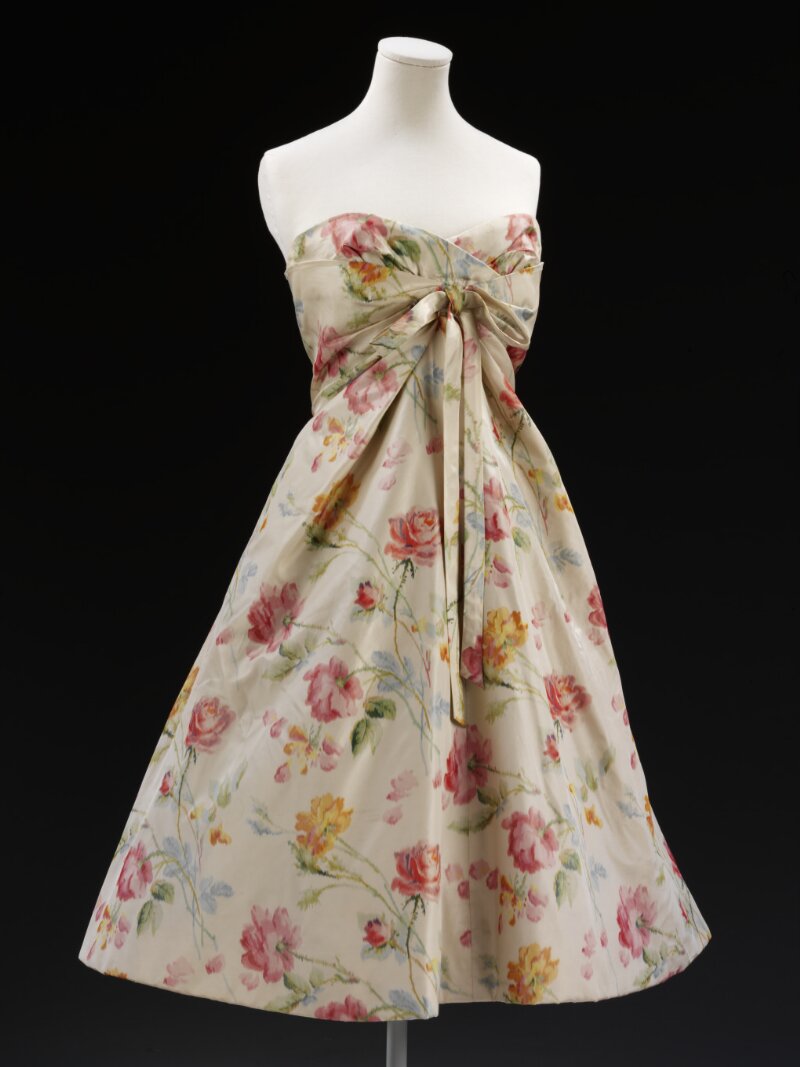
At the core of Natalie Fashion Atelier’s archival research lies a singular artifact: a 1956 Monte Carlo evening dress, originating from the House of Dior in Paris. This garment, a relic of the post-war “New Look” era, embodies a pinnacle of haute couture craftsmanship. The following report provides a technical deconstruction of this dress, focusing on the specific Dior techniques employed, the materiality of its construction, and the translation of these elements into a 2026 high-end luxury silhouette. The analysis is grounded in textile science, pattern engineering, and historical context, offering a blueprint for modern reinterpretation.
1. Materiality and Textile Analysis
1.1. Primary Fabric: Silk Satin Duchesse
The dress’s primary fabric is a silk satin duchesse, a heavy, lustrous weave characterized by a high thread count and a pronounced sheen. The 1956 sample exhibits a warp-faced construction with a five-harness satin weave, yielding a smooth, reflective surface. The weight is approximately 280-320 g/m², providing substantial drape without excessive stiffness. The color is a deep, archival “Monte Carlo Blue”—a muted, slightly greyed cerulean achieved through natural indigo and iron mordants. This color was chosen to evoke the Mediterranean twilight, a signature of Dior’s 1956 “Ligne A” collection.
1.2. Secondary Textiles: Tulle and Netting
Beneath the satin, the dress incorporates a silk tulle underlayer, hand-netted with a hexagonal mesh (approximately 1.5 mm aperture). This tulle, dyed to match the satin, provides structural support for the full, A-line skirt without adding bulk. The netting is reinforced with a cotton organza waistband, hand-stitched with a running stitch to distribute tension evenly. The organza, a plain weave with a crisp handle, acts as a stabilizing interlining, preventing the satin from sagging under its own weight.
3. Construction Techniques: The Dior Method
3.1. The Bodice: Architectural Fitting
The bodice is a masterpiece of tailoring, built on a fitted, boned foundation. The pattern is cut on the bias for the front panels, allowing the satin to conform to the bust without darts. The back panels are cut on the straight grain, creating a rigid, sculptural spine. The boning is a combination of whalebone (baleen) and spring steel, encased in bias-cut silk twill tape. The whalebone, sourced from the Arctic, provides flexible support for the bust, while the steel, hand-forged, maintains the waist’s hourglass shape. The boning channels are hand-stitched with a backstitch, ensuring durability and invisibility from the exterior.
3.2. The Skirt: Engineered Volume
The skirt is a full A-line, constructed from six gores. Each gore is cut with a slight curve to create a bell-like silhouette, a hallmark of Dior’s “Ligne A” (1955-1957). The gores are seamed with a French seam (encased seam allowance) to prevent fraying and maintain a clean interior. The hem is finished with a horsehair braid, hand-stitched in a scalloped pattern, which imparts a subtle, undulating movement. The volume is further enhanced by a crinoline underskirt, made from a stiffened cotton net, attached at the waist with a grosgrain ribbon. This underskirt is pleated in a sunburst pattern, creating a structured, bell-like shape that supports the satin without visible petticoats.
3.3. The Closure: Invisible Zipper and Hook-and-Eye
The dress features a hand-set, invisible zipper (a 1950s innovation) inserted into the left side seam. The zipper tape is silk-covered, matching the fabric, and the pull is a small, gold-toned metal tab. Above the zipper, a hook-and-eye closure is used at the neckline, with the hook hand-stitched into the seam allowance to prevent snagging. This dual closure system allows for ease of dressing while maintaining a seamless exterior.
4. Embellishment and Surface Design
4.1. Hand Embroidery: Luneville Technique
The dress is embellished with Luneville embroidery, a tambour hook technique using a fine chain stitch. The design, a stylized wave pattern, is executed in silver-plated thread (a 1950s alternative to pure silver) and seed pearls (2-3 mm, freshwater). The embroidery is applied to the bodice and the upper portion of the skirt, following the grain line. The Luneville hook allows for rapid, consistent stitching from the reverse side, creating a raised, textured surface on the face. The thread tension is carefully calibrated to prevent puckering of the satin, a common challenge with heavy embellishment.
4.2. Beading and Sequins
Additional embellishment includes cut-steel beads and iridescent sequins, hand-sewn in a graduated pattern. The beads are faceted, catching light in a manner that mimics the sparkle of the Mediterranean sea. The sequins, made from gelatin (a biodegradable, pre-plastic material), are dyed to match the dress’s blue. They are sewn with a single stitch at the center, allowing them to flutter with movement. The placement is deliberate: denser at the waist, tapering toward the hem, creating a visual weight that draws the eye upward.
5. Translation into 2026 High-End Luxury Silhouettes
5.1. Silhouette Evolution: From A-Line to Asymmetric Drape
For the 2026 translation, the A-line silhouette is reinterpreted as an asymmetric, one-shoulder gown. The volume is concentrated on one side, with a single, sweeping drape that cascades from the shoulder to the floor. This maintains the architectural integrity of the original while introducing a modern, avant-garde asymmetry. The skirt remains full but is constructed from a double-faced satin (a 2026 innovation), which provides a matte finish on one side and a high sheen on the other, allowing for a play of light and texture.
5.2. Material Substitution: Sustainable and High-Tech
The 1956 silk satin duchesse is replaced with a bio-engineered, lab-grown silk (sourced from a Swiss biotech firm). This material replicates the hand of the original but with a 40% reduction in water usage and a fully biodegradable lifecycle. The whalebone is substituted with recycled carbon-fiber boning, which offers superior flexibility and weight reduction. The crinoline underskirt is replaced with a 3D-printed, lattice-structured nylon mesh, which can be programmed to create specific volume and support without the need for pleating. This mesh is attached with a magnetic closure system, allowing for easy removal and customization.
5.3. Embellishment: Digital and Handcrafted Fusion
The Luneville embroidery is reimagined using laser-cut, biodegradable cellulose sequins, dyed with natural indigo. The wave pattern is generated via parametric design software, allowing for precise, algorithm-driven placement. The seed pearls are replaced with lab-grown, cultured pearls, which are identical in luster to natural pearls but ethically produced. The hand-sewing remains, preserving the artisan touch, but the initial pattern is laser-engraved onto the fabric to guide the embroiderer, reducing waste and time.
5.4. Closure and Fit: Modernized Engineering
The invisible zipper is replaced with a magnetic, self-aligning closure system, hidden within a seam. The hook-and-eye is substituted with a micro-suction, silicone-based adhesive, which holds the neckline in place without visible fasteners. The fit is adjusted using a body-scanning algorithm, which generates a custom pattern based on the client’s measurements, ensuring a perfect, boneless fit. The boning is retained but made from shape-memory alloy, which can be heat-set to the wearer’s body, offering a personalized, sculptural support.
6. Conclusion: The Continuum of Couture
The 1956 Monte Carlo evening dress stands as a testament to the precision and artistry of Dior’s mid-century atelier. Its technical deconstruction reveals a system of material selection, pattern engineering, and embellishment that remains relevant today. The translation into a 2026 silhouette is not a mere replication but a dialogue—a fusion of historical techniques with modern materials and digital tools. For Natalie Fashion Atelier, this dress serves as a blueprint for luxury that honors the past while embracing the future. The result is a garment that is both a tribute to couture archaeology and a forward-looking statement of high-end design.