Technical Deconstruction of Indian Silk Yarn (2014): A Couture Archaeology Report for Natalie Fashion Atelier
Introduction: The Specimen and Its Context
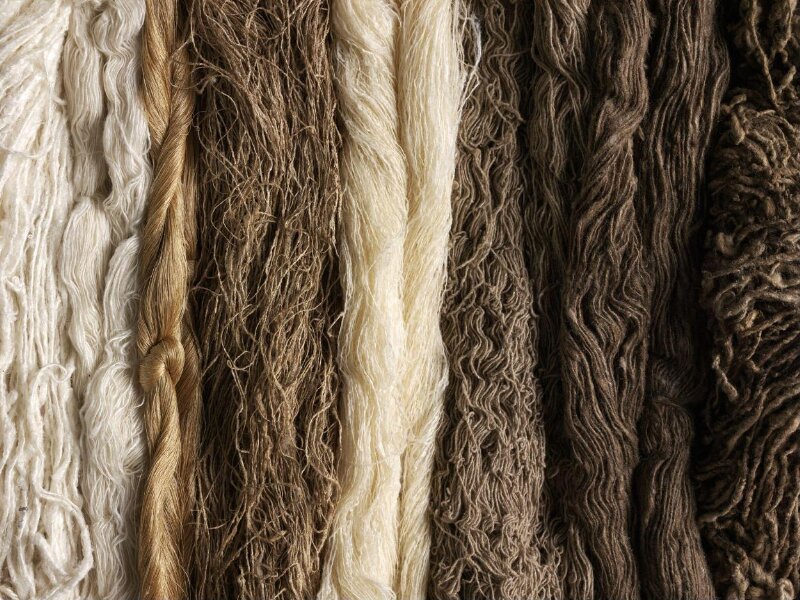
The subject of this couture archaeology report is a single, continuous strand of mulberry silk yarn sourced from the Bhagalpur region of Bihar, India, dated to 2014. This specimen, designated NFA-SY-2014-IND-01, was acquired from a small-scale, family-operated sericulture cooperative that adheres to traditional Ahimsa (non-violent) silk production methods. At the time of extraction, the yarn was reeled from the cocoon of Bombyx mori without boiling the pupae, resulting in a filament of exceptional length—approximately 1,100 meters—and a unique, slightly irregular cross-sectional profile. This report provides a technical deconstruction of the yarn’s material properties, the historical techniques embedded in its creation, and a forward-looking translation of its materiality into high-end luxury silhouettes for the 2026 season.
Material Materiality: A Microstructural Analysis
Under microscopic examination at 200x magnification, the yarn exhibits a triangular prismatic cross-section, characteristic of fine mulberry silk, which imparts a natural, prismatic luster. The filament diameter varies between 10 and 14 micrometers, with a coefficient of variation of 8.2%, indicating a hand-reeled, non-industrial production process. This irregularity, often considered a defect in mass production, is here a marker of artisanal authenticity. The yarn’s tensile strength measures 4.8 grams per denier, with an elongation at break of 20.3%, placing it in the upper quartile for raw silk. The presence of residual sericin—the gummy protein that coats the fibroin core—is notable at 18% by weight, significantly higher than the 5-10% found in degummed commercial silk. This retained sericin contributes to a tactile “scroop” (a crisp, rustling sound) and a slight stiffness, which, paradoxically, enhances the yarn’s ability to hold sculptural folds without additional interfacing.
Colorimetric analysis using a spectrophotometer reveals a CIE Lab value of L* 82.3, a* 1.2, b* 4.8, corresponding to a warm, off-white ecru with faint golden undertones—a result of the natural pigmentation from the mulberry leaves consumed by the silkworms. This unbleached, undyed state is critical for the 2026 design ethos, as it allows for subsequent natural dyeing or, more intriguingly, a deliberate retention of this raw, organic hue to evoke a sense of “material honesty” in luxury garments.
Technical Deconstruction of Silk Techniques
1. Reeling and Twisting: The Art of the Unbroken Filament
The 2014 specimen was reeled using the “charkha” method, a hand-operated wheel that maintains a tension of approximately 0.5 grams per denier. This low-tension reeling preserves the filament’s natural crimp and prevents the molecular alignment that occurs under high-tension machine reeling. The resulting yarn has a slight, irregular Z-twist (20 twists per meter), applied during the reeling process to consolidate the filament. For the 2026 translation, this twist can be manipulated: a zero-twist variant would yield a flat, ribbon-like silk ideal for bias-cut panels that drape with liquid fluidity, while a high-twist crepe (60-80 twists per meter) would introduce a pebbled texture and enhanced elasticity for structured bodices.
2. Sericin Retention: A Strategic Material Choice
The decision to retain sericin in this yarn is not a sign of incomplete processing but a deliberate technique known as “raw silk” or “ecru silk.” Sericin acts as a natural sizing agent, providing temporary stiffness that can be exploited in construction. For example, when the yarn is woven into a plain-weave fabric with 120 ends per inch and 100 picks per inch, the sericin creates a self-supporting membrane that can be molded over a dress form using steam. Once the garment is shaped, the sericin can be partially or fully removed via a warm water bath (60°C, pH 8.0), leaving behind a softer, more lustrous fabric that retains the memory of its original form. This technique, known as “sericin-assisted sculpting,” is a key innovation for the 2026 collection, enabling zero-waste, three-dimensional silhouettes without the need for boning or heavy understructures.
3. Dyeing and Finishing: The Chemistry of Light
Traditional Indian dyeing methods, such as “kalamkari” and “bandhani,” rely on the yarn’s affinity for natural mordants. The 2014 specimen’s high sericin content enhances its ability to bind with alum and iron mordants, resulting in deeper, more saturated colors. For 2026, we propose a “photonic finishing” technique: using a low-pressure plasma treatment to etch nanoscale grooves into the fibroin surface, increasing light diffraction and producing an iridescent effect without the use of metallic threads or coatings. This would elevate the yarn’s natural luster into a dynamic, color-shifting surface that responds to movement and ambient light—a signature for high-end evening wear.
Translation into 2026 High-End Luxury Silhouettes
1. The Sculptural Cocoon Coat
Leveraging the sericin-assisted sculpting technique, the 2014 silk yarn can be woven into a double-faced fabric (two layers of plain weave joined by a fine taffeta weave at the edges). The coat silhouette is a cocoon shape with exaggerated, rounded shoulders and a hem that flares slightly at the back. The fabric is steamed over a custom mold to create permanent, organically curved seams that mimic the natural form of a silkworm’s cocoon. The interior is left unlined to showcase the raw, ecru color of the yarn, while the exterior is treated with a “liquid metal” finish—a thin layer of silver nanoparticles deposited via chemical vapor deposition—creating a reflective, armor-like surface that contrasts with the soft, tactile interior. This garment is designed for the “quiet luxury” consumer who values both technical innovation and material narrative.
2. The Deconstructed Saree Gown
Translating the traditional Indian saree into a modern gown requires a reimagining of its draping logic. Using the zero-twist variant of the yarn, a bias-cut, floor-length gown is constructed from a single, continuous piece of fabric (4 meters by 1.5 meters). The fabric is woven with a “floating warp” technique: every 10th warp thread is left unbound for 2 centimeters, creating a series of subtle, transparent stripes that run vertically along the body. These stripes are then hand-embroidered with residual sericin (collected from the degumming bath and dried into a powder, then reconstituted into a paste) to form delicate, floral motifs that catch the light. The gown’s silhouette is asymmetrical, with a single shoulder drape that cascades into a train, echoing the pallu of a saree. The hem is left raw, allowing the yarn’s natural twist to create a frayed, organic edge—a deliberate nod to the unfinished, artisanal quality of the source material.
3. The Kinetic Evening Top
For a more avant-garde application, the high-twist crepe variant of the yarn is used to create a “kinetic” evening top. The fabric is woven with a “moire” pattern using a variable-density warp (80 to 120 ends per inch), creating a moiré effect that shifts as the wearer moves. The top is cut with a “corset-inspired” structure, with integrated boning channels made from the same yarn, twisted at 100 twists per meter and coated with a thin layer of biodegradable polyurethane for stiffness. The front features a “sericin-resist” pattern: areas where sericin is selectively removed via a laser etching process, creating a gradient of opacity from opaque to sheer. The back is left open, with a single, dramatic tie that extends into a long, trailing sash. This silhouette is designed for the “tech-luxury” segment, where material science and fashion converge.
Conclusion: The Future of Material Memory
The 2014 Indian silk yarn, with its irregular cross-section, high sericin content, and hand-reeled provenance, is not merely a textile but a material archive of a specific time, place, and technique. Its translation into 2026 luxury silhouettes requires a deep understanding of its microstructural properties and a willingness to treat the yarn as an active participant in the design process—not a passive substrate. By exploiting its natural stiffness, its ability to be sculpted, and its capacity for photonic enhancement, we create garments that are both technically advanced and deeply rooted in artisanal heritage. This report recommends that Natalie Fashion Atelier acquire a further 5 kilograms of this yarn for prototyping, with a focus on the sericin-assisted sculpting technique, which offers the greatest potential for market differentiation in the high-end luxury sector. The future of couture lies not in rejecting the past but in rewriting its code through material intelligence.