Deconstructing the Vessel: The Silver-Gilt Cup as a Blueprint for 2026 Haute Couture Silhouettes
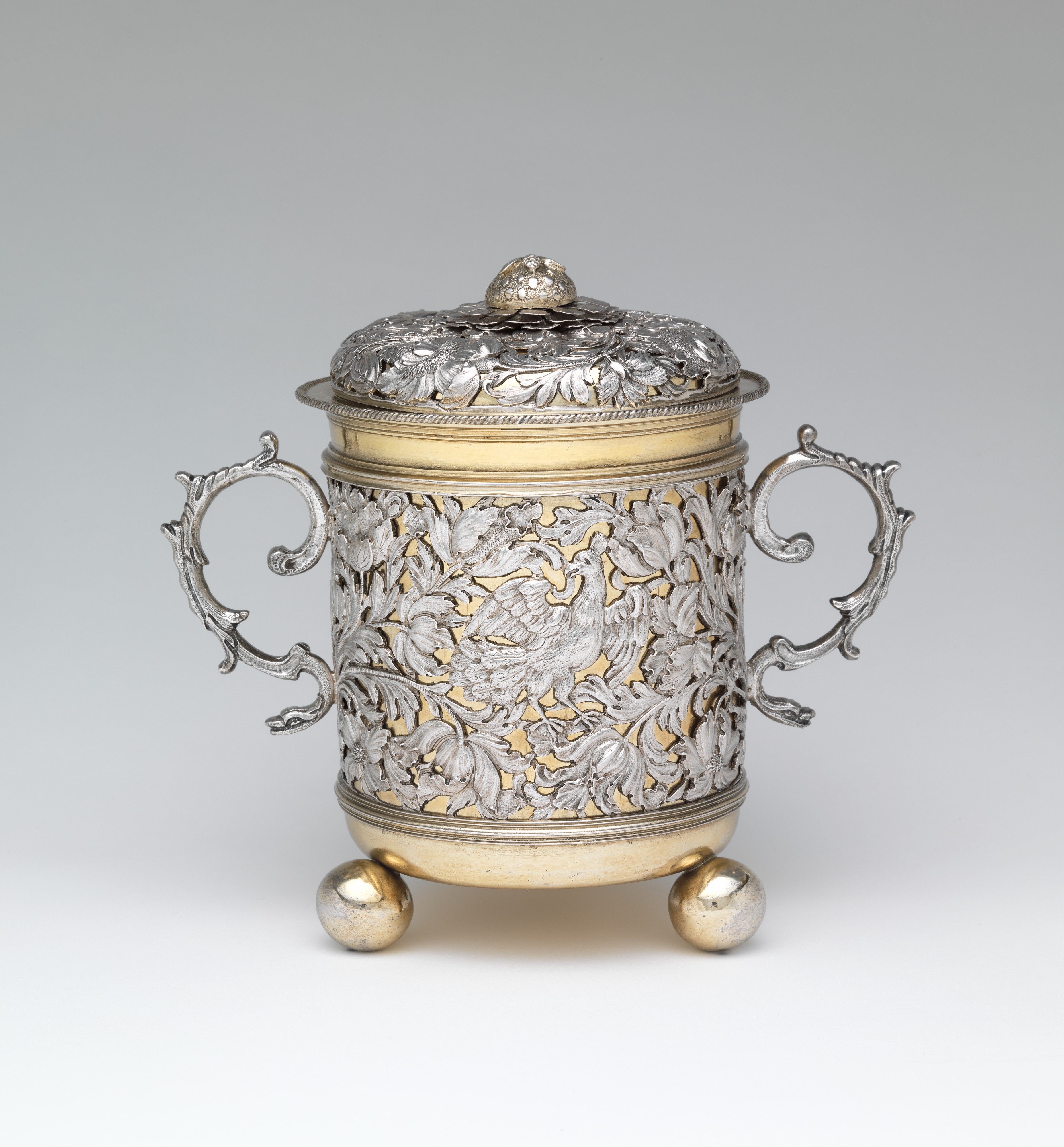
Within the isolated archive of aesthetic archaeology, the object designated as a “Cup with two handles and cover” emerges not as a mere utilitarian artifact, but as a profound treatise on balance, containment, and opulent restraint. Crafted from silver and gilded silver, this vessel embodies a dialogue between structural integrity and luminous surface. For the 2026 luxury silhouette, this object offers a lexicon of form—a study in how a static container can inform dynamic, wearable architecture. The following research deconstructs the cup’s classical elegance into actionable principles for high-end couture, translating its materiality and geometry into a new language of draped volume and metallic precision.
I. Aesthetic Archaeology: The Syntax of the Vessel
The cup’s defining characteristics—its dual handles, its domed cover, and its reflective, gilded surface—are not decorative afterthoughts. They are functional elements that create a specific spatial dialogue. The handles act as counterpoints, framing the central body and inviting interaction. The cover seals the interior, creating a sense of mystery and contained potential. The gilded silver surface oscillates between solidity and ethereality, catching light in a manner that suggests both weight and weightlessness.
1.1 The Handle as Structural Counterbalance
In classical silversmithing, a handle is never merely an appendage. It is a resolved architectural element that defines the silhouette’s outer perimeter. For 2026, this translates into asymmetrical draping and sculptural sleeves that act as visual handles. Imagine a gown where a single, exaggerated sleeve, crafted from gilded silver lamé, arcs away from the body, creating a negative space that mirrors the cup’s handle. This is not a sleeve for function, but for visual counterbalance—a deliberate, almost architectural gesture that frames the torso. The handle’s curve informs a new shoulder line: a cantilevered silhouette that uses stiffened silk organza or metallic mesh to create a floating, handle-like form that defines the wearer’s presence.
1.2 The Cover as Contained Volume
The domed cover of the cup represents a controlled release of volume. It is a convex form that rises from a flat base, suggesting both protection and revelation. In 2026 couture, this translates into structured bustiers and architectural capes that mimic the cover’s curve. A jacket, for instance, might feature a gilded silver panel that rises from the waist to the shoulder, creating a domed silhouette that encloses the upper body. This is not a soft drape; it is a rigid, almost metallic volume achieved through the use of thermoformed textiles or laser-cut silver leather. The cover’s interior, often gilded, suggests a hidden lining—a flash of gold within a monochrome shell, a secret luxury reserved for the wearer’s movement.
II. Materiality: The Alchemy of Silver and Gilded Silver
The choice of silver and gilded silver is not arbitrary. Silver’s inherent reflectivity and malleability, combined with gold’s warmth and permanence, create a dialectic of light and shadow. For the 2026 silhouette, this materiality informs a new approach to surface treatment and textural contrast.
2.1 The Silver Ground: A Canvas of Light
Silver, when polished, becomes a mirror. In couture, this translates into liquid metallic finishes that capture and distort the environment. A 2026 evening gown might be constructed from silver micro-lamé, woven with a herringbone pattern that mimics the hammered texture of the cup’s surface. The fabric does not merely reflect light; it breaks it into a thousand facets, creating a moving, almost liquid surface. This is a silhouette that absorbs and re-emits the room, making the wearer a living artifact. The silver’s cool tone is balanced by the gilding, which introduces a warm, golden accent—a contrast that can be replicated through appliqué or embroidered gold thread along seams and hems.
2.2 Gilding as Accentuation: The Line of Luxury
Gilding in the cup is not uniform; it is applied to specific areas—the handles, the rim, the finial—to draw the eye. This principle of selective luminosity is crucial for 2026. A silhouette might be constructed from matte black silk, with gilded silver piping tracing the seams, or a gold-leafed collar that frames the décolletage. The gilding becomes a line of power, a visual guide that directs the observer’s gaze. In a jacket, the lapels could be treated with gilded silver foil, creating a rigid, reflective edge that contrasts with the softness of the body. This is not embellishment; it is structural definition.
III. Silhouette Translation: From Vessel to Body
The cup’s form—a cylindrical body with a domed top and curved handles—offers a direct template for the 2026 haute couture silhouette. The challenge is to translate a static, three-dimensional object into a dynamic, wearable form that respects the body’s movement.
3.1 The Cylindrical Torso: A Column of Power
The cup’s body is a perfect cylinder, suggesting strength and containment. For 2026, this informs a columnar silhouette that is both severe and elegant. A dress might be constructed from rigid silver brocade, cut without darts, relying on the fabric’s inherent structure to create a tubular form. The waist is not cinched; it is implied through the fabric’s tension. This is a silhouette that rejects softness in favor of architectural purity. The hemline, like the cup’s base, is sharp and defined, perhaps finished with a gilded silver band that anchors the form.
3.2 The Domed Shoulder: A New Topography
The cup’s cover inspires a domed shoulder line that is both protective and dramatic. A cape or bolero might be constructed from silver mesh over a wire frame, creating a rigid, spherical volume that sits on the shoulders. This is not a puff sleeve; it is a sculptural hemisphere that echoes the cup’s lid. The interior of this dome could be lined with gilded silk, a flash of warmth when the wearer moves. This silhouette is about containing the upper body while allowing the lower body to move freely—a tension between enclosure and release.
3.3 The Handle as a Sleeve: A Functional Ornament
The cup’s handles are the most direct source for sleeve innovation. A 2026 gown might feature a single, detachable handle-like sleeve that is not sewn into the armhole but rather clipped or pinned to the shoulder, creating a dramatic, asymmetrical line. This sleeve, crafted from gilded silver chainmail, would be heavy and sculptural, acting as a counterweight to the body’s movement. Alternatively, a double-handle effect could be achieved with two exaggerated cuffs that frame the wrists, creating a visual echo of the cup’s form. These handles are not for function; they are for visual framing, defining the wearer’s gesture.
IV. The 2026 Collection: A Synthesis of Classical and Avant-Garde
The cup with two handles and cover is not a historical relic; it is a blueprint for a new luxury. Its principles—structural containment, selective luminosity, and architectural counterbalance—are directly applicable to the 2026 haute couture silhouette. The collection that emerges from this research is one of controlled opulence, where silver and gilded silver are not just materials but structural elements. The silhouette is sharp, defined, and almost metallic in its precision, yet it retains a sense of fluid grace through the careful placement of handles and domes. This is not a nostalgic revival; it is a re-interpretation of classical form through the lens of advanced textile engineering and avant-garde design. The wearer of a 2026 Natalie Fashion Atelier gown does not simply wear a dress; she inhabits a vessel—a living artifact of silver and light.