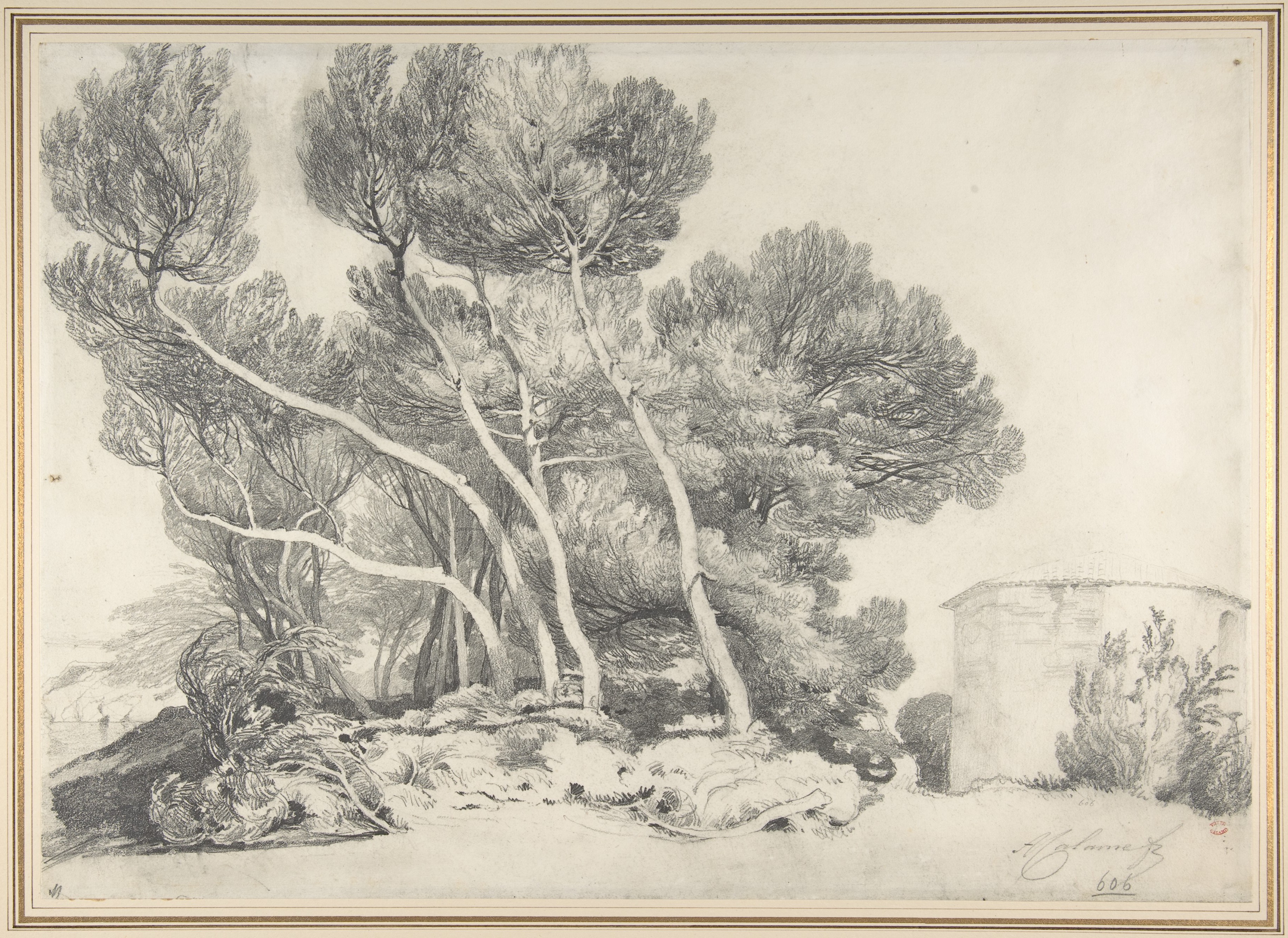
The Graphite Landscape: An Aesthetic Archaeology of Form and Void
Within the isolated archive of Natalie Fashion Atelier, the study of landscape as a textile and structural narrative reaches a crystalline apex through the medium of graphite. This is not the graphite of mere sketching, but a geological and aesthetic substance—a carbon allotrope of layered planes, metallic sheen, and infinite tonal depth. When considered through the lens of global heritage, graphite emerges as a paradoxical material: it is both the tool of creation and the record of erosion. Its landscape is one of striated mountains, glacial moraines, and the stark, silent expanse of a lunar valley. For the 2026 haute couture collection, this materiality dictates a radical departure from soft drapery toward a new lexicon of architectural rigidity and fluid shadow.
Materiality as Geological Memory
Graphite’s inherent properties—its greasy tactile quality, its ability to fracture along perfect cleavage planes, and its capacity for both opaque density and translucent film—translate directly into haute couture construction. The 2026 silhouettes are not draped; they are excavated. The atelier’s research isolates the moment of pressure and heat that transforms organic carbon into crystalline graphite. This geological memory informs a new structural vocabulary: seams are not sewn but fused under high tension, creating a faceted, planar surface reminiscent of a freshly split graphite crystal. The color palette is monochromatic in the extreme—a spectrum from the deepest, light-absorbing black of compressed graphite powder to the high-luster, silvered grey of a polished crystal face. This is not a color story; it is a material narrative of compression and release.
Deconstructing Classical Elegance: The Graphite Cut
Classical elegance in Western couture has long been defined by the fluid line—the Grecian chiton, the bias-cut gown of the 1930s, the soft, rounded shoulder of the 1950s. Graphite landscape demands a deconstruction of these archetypes. The classical silhouette is replaced by a geological diagram. Shoulders are not rounded but sheared, as if a mountain face has been cleaved. The waist is not cinched but implied through a sudden shift in planar orientation, a tectonic fold in the fabric. The hemline is not a curve but a jagged, irregular line that mimics a contour map of a high-altitude plateau. This is elegance stripped of ornament, reduced to the pure, unassailable logic of structural inevitability.
The atelier’s archive reveals a key technique: graphite-imbued gazar. A silk gazar is treated with a micronized graphite suspension, then heat-set under extreme pressure. The result is a fabric that is simultaneously stiff as a board and capable of a subtle, metallic sheen. It does not drape; it stands. This material becomes the primary medium for the 2026 silhouette. A floor-length coat, for example, is constructed from twelve distinct, geometrically precise panels. Each panel is a plane. The coat does not flow; it articulates around the body, creating a moving architecture of light and shadow. The classical elegance of a flowing train is replaced by a rigid, crystalline train that extends behind the wearer like a glacial moraine.
Global Heritage: The Mountain as Silhouette
The global heritage referenced here is not a specific culture but a universal human experience: the encounter with the monumental landscape. From the Himalayan peaks to the Andes, from the Scottish Highlands to the Japanese Alps, the mountain is a primal shape. The 2026 silhouette directly quotes the asymmetric, fractured profile of a mountain ridge. The right shoulder may rise to a sharp, angular peak, while the left falls away in a series of stepped, terraced folds. This is not a costume; it is a topographical map worn on the body.
This approach deconstructs the classical notion of symmetry and balance. The traditional couture silhouette seeks equilibrium through bilateral symmetry. The graphite landscape silhouette finds its equilibrium through dynamic asymmetry. The weight of the garment is not distributed evenly; it is concentrated in one dramatic, crystalline mass, balanced by a void of negative space. This void is as important as the fabric itself. A gown might feature a single, massive, graphite-encrusted shoulder piece that extends horizontally, while the opposite side of the body is left almost bare, sheathed only in a whisper-thin layer of translucent graphite silk. The elegance lies in the tension between the dense, metallic mass and the exposed, vulnerable skin—a dialogue between the geological and the organic.
Construction Techniques: The Atelier’s Response
To realize these silhouettes, the atelier has developed three proprietary techniques. First, Graphite Fusion: a process of layering multiple weights of treated gazar and fusing them with a laser-based heat press, creating a single, monolithic panel with no visible seams. Second, Cleavage Draping: a method where fabric is forced to fold along predetermined, mathematically calculated lines, mimicking the natural cleavage of graphite crystals. Third, Negative Space Weaving: a technique where metallic graphite threads are woven with gaps of air, creating a fabric that is both solid and transparent, a latticework of shadow and light.
The final silhouette for 2026 is a study in extremes. It is heavy yet floating, opaque yet reflective, rigid yet articulated. The classical elegance of a soft, flowing silhouette is replaced by the austere, intellectual elegance of a geological specimen. The wearer does not inhabit the garment; they become a monument within a landscape. The graphite landscape is not a backdrop; it is the very structure of the dress. This is couture as aesthetic archaeology, where each seam is a fault line, each fold a mountain pass, and the entire garment a testament to the enduring, silent power of the earth’s most elemental forms. The 2026 collection will not be shown on a runway; it will be presented in a gallery of raw stone and compressed carbon, where the garments stand as solitary, silent artifacts of a new geological epoch in fashion.