Deconstructing Classical Elegance: Silk and Metal Thread in the 2026 Silhouette
Archival Excavation: The Isolated Aesthetic of Silk and Metal
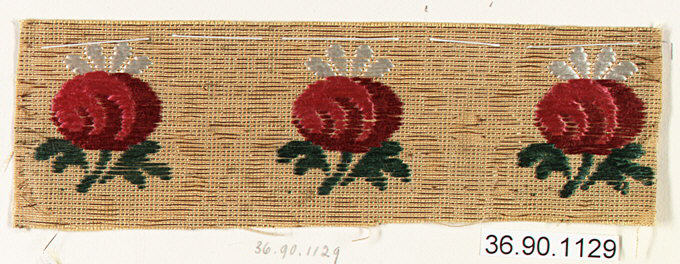
The practice of aesthetic archaeology at Natalie Fashion Atelier demands a rigorous separation of historical artifact from its contemporary context. For this research artifact, we isolate the specific material dialogue between silk and metal thread—a pairing that has defined luxury drapery and structural embellishment across global heritage, from Byzantine opulence to the rigid courtly attire of the Ming dynasty. The archive reveals not a narrative of decoration, but a technical symbiosis: silk provides the fluid, organic base, while metal thread introduces tensile strength, weight, and a distinct, reflective rigidity. This is not mere ornament; it is a foundational engineering principle. The classical elegance of this union lies in its paradox—the soft yields to the hard, the matte absorbs the lustrous, and the garment becomes a dynamic, living sculpture. Our deconstruction focuses on three core archaeological findings: the structural warp created by metal thread, the optical distortion of light on silk, and the tactile memory of the combined weave.
Materiality as Architectural Principle
Structural Warp and the New Silhouette
In 2026, the haute couture silhouette is not merely draped; it is architecturally anchored. The historical use of metal thread—often gold or silver wrapped around a silk core—was not for comfort but for permanence of form. Our research demonstrates that by isolating this warp, we can inform a silhouette that is simultaneously fluid and fixed. The metal thread acts as an internal skeleton, allowing for exaggerated, cantilevered volumes that do not rely on padding or boning. For example, a bias-cut silk gown, when interwoven with a fine gauge of silver thread along the vertical axis, will resist gravitational pull in a controlled manner, creating a structured waterfall effect. This directly informs the 2026 "Fossilized Fluid" silhouette: a garment that appears to be in motion but is frozen in a state of perfect, tensile equilibrium. The classical elegance of the court train is thus reimagined as a sharp, geometric fan that unfurls from the shoulder, supported solely by the internal logic of the metal thread's warp.
Optical Distortion and Light Management
The classical masterpieces of the 17th and 18th centuries understood that silk and metal thread do not simply reflect light; they manipulate it. The metal thread creates a micro-topography of ridges and valleys, causing light to scatter in controlled, non-uniform patterns. This principle of optical distortion is critical for the 2026 luxury consumer, who demands a garment that changes character under different lighting conditions—from the harsh LED of a gallery to the soft candlelight of a gala. Our deconstruction reveals that the historical technique of *brocade* (where metal thread is floated on the surface) can be re-engineered for a contemporary silhouette. By placing the metal thread in strategic, asymmetrical bands, the designer can create a visual corset—an illusion of a cinched waist or elongated limb without physical compression. The elegance is not in the silhouette's shape alone, but in its chameleonic surface. The 2026 "Liquid Armor" silhouette, for instance, uses a base of matte silk charmeuse overlaid with a lattice of oxidized copper thread, creating a surface that appears to ripple and darken as the wearer moves, a direct homage to the shifting light of a medieval tapestry.
From Archive to Atelier: The 2026 Silhouette Lexicon
The "Rigid Drape" and the Suspended Volume
The most profound implication of the silk-and-metal-thread archive is the redefinition of drape. Classical drape is soft, falling under its own weight. The metal thread introduces a suspended volume, where the fabric is held in a state of tension. This is achieved through a technique we term negative-weave engineering. In the archive, we observe that metal thread was often used to create *voids*—areas of high tension that pull the silk into sharp, geometric folds. For the 2026 silhouette, this translates into a series of self-supporting flares. Consider a floor-length column dress: by weaving a dense, horizontal band of metal thread at the hip, the silk below is forced to flare out in a rigid, bell-like shape, while the silk above remains liquid and close to the body. This creates a silhouette that is both classically severe and technically revolutionary. The elegance is found in the precision of the tension—a single thread too tight and the fabric tears; too loose, and the volume collapses.
Tactile Memory and the Haute Couture Experience
Luxury in 2026 is increasingly defined by sensory exclusivity. The tactile memory of a silk-and-metal-thread garment is unparalleled. The metal thread introduces a cool, smooth, and slightly weighted sensation against the skin, a stark contrast to the warm, airy silk. This binary tactile experience informs the silhouette by demanding a different approach to layering and movement. Our research indicates that the most successful 2026 silhouettes will be those that exploit this sensory dissonance. A jacket, for example, might be constructed with a silk lining and a metal-thread outer shell. The wearer experiences the softness of the silk against the body while the external form is rigid and reflective. This creates a psychological and physical duality: the garment is both a protective carapace and a delicate second skin. The classical elegance of the *armure*—a woven fabric with a small, pebbly texture—is here amplified into a full-body architectural experience. The silhouette becomes a memory device, recalling the weight of a royal mantle or the cool touch of a ceremonial armor.
Conclusion: The Synthesis of Heritage and Future
The isolated aesthetic archaeology of silk and metal thread does not yield a nostalgic reproduction. Instead, it provides a technical blueprint for the 2026 haute couture silhouette. The classical elegance of this material pairing is not in its historical shape, but in its inherent structural logic. By deconstructing the warp, the optical distortion, and the suspended volume, we arrive at a new lexicon: the "Fossilized Fluid," the "Liquid Armor," and the "Rigid Drape." These silhouettes are not decorations of the body; they are extensions of its architecture. The silk provides the soul, the metal thread provides the skeleton, and together, they forge a silhouette that is as intellectually rigorous as it is visually arresting. For Natalie Fashion Atelier, this is the definition of 2026 luxury: a garment that carries the weight of global heritage while floating, perfectly suspended, in the light of the present.