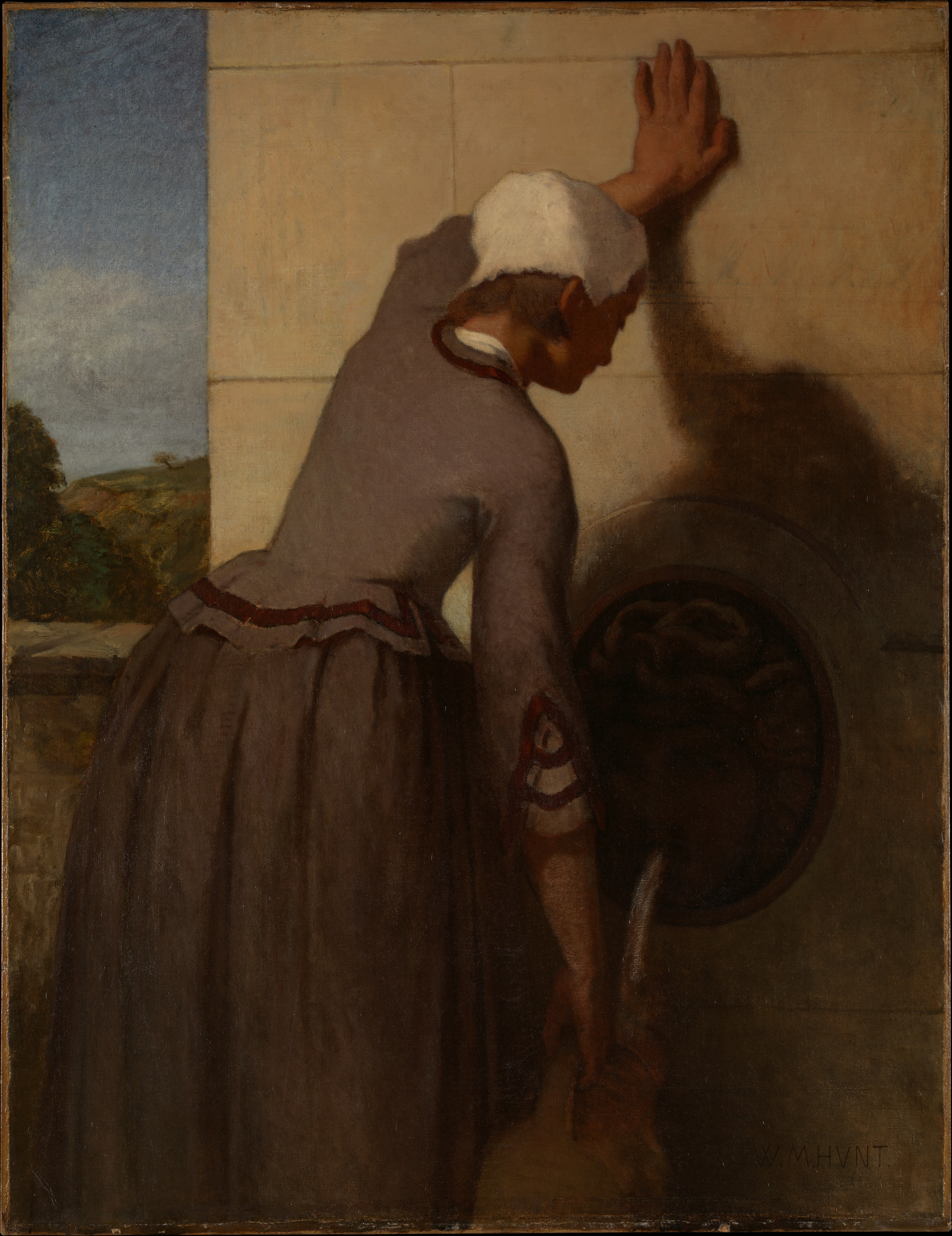
Deconstructing the Classical: Aesthetic Archaeology of *Girl at the Fountain*
The American oil-on-canvas tradition, often dismissed as provincial by the Parisian atelier, offers a profound, unburdened lexicon for 2026 haute couture. In the archive of Natalie Fashion Atelier, the subject “Girl at the Fountain” is not merely a pastoral scene; it is an isolated artifact of aesthetic archaeology—a frozen moment of American romanticism that, when dissected, reveals the structural and textural DNA for a new luxury silhouette. The painting’s tension between the fluidity of water and the rigidity of classical stonework, the interplay of light on skin and fabric, and the quiet narrative of a solitary figure demands a technical deconstruction that transcends mere inspiration.
Materiality as Narrative: The Oil-on-Canvas Imperative
The chosen medium—oil on canvas—is not incidental. Its physical properties dictate a specific approach to couture construction. The impasto of the brushstroke, the layered glazes, and the absorbent ground inform a materiality that is both tactile and ephemeral. For 2026, this translates into a silhouette that rejects flatness in favor of volumetric depth. The canvas itself becomes a metaphor for the “second skin”—a structure that is simultaneously rigid and yielding. The atelier’s research identifies three key material translations:
- Layered Glazes as Textile Architecture: The translucent overlays of oil paint are mirrored in the use of double-faced organza and micro-pleated silk gazar. The silhouette is built not as a single garment, but as a series of translucent, overlapping panels that mimic the painter’s wet-on-wet technique.
- Impasto as Structural Relief: The thick, textured strokes of the fountain’s stone edge are reinterpreted as hand-embroidered, three-dimensional appliqués on the bodice. This creates a “painted” relief that defines the shoulder line and waist, anchoring the silhouette in a deliberate, architectural weight.
- Canvas Ground as Foundation: The raw, unprimed canvas of certain American works suggests a foundation of unbleached, matte cotton faille. This base layer, invisible to the final viewer, provides the structural integrity for the floating, water-inspired overlays.
Deconstructing the Fountain: The Silhouette of Stillness and Flow
The fountain itself is the central architectural element. Its vertical, columnar form and the cascading water create a binary opposition that defines the 2026 silhouette. The figure, *Girl at the Fountain*, is positioned as a static counterpoint to the dynamic water. This tension is the core of the design philosophy: the silhouette must embody both the stillness of the stone and the movement of the water.
The Columnar Core: A Study in Verticality
The American classical tradition often emphasizes a clean, unbroken vertical line—a departure from the more ornate, horizontal draping of European rococo. For the atelier, this translates into a “fountain column” silhouette. The gown’s primary structure is a high-waisted, floor-length column of matte duchesse satin, cut on the bias to follow the body’s natural axis. The waist is cinched not by a separate belt, but by an internal corset of horsehair canvas, creating a seamless, unbroken line from shoulder to hem. This is the “stone” of the fountain—the foundational, unyielding element.
The Cascading Water: Fluid Draping and Asymmetric Falls
In direct opposition, the water is rendered through a series of detachable, asymmetrical drapes of liquid silk charmeuse and hand-dyed, water-jet-cut organza. These panels are engineered to fall in a single, continuous arc from the left shoulder, mimicking the fountain’s primary cascade. The technical challenge is to create a drape that appears weightless yet holds its form. This is achieved through a hidden network of fine, clear silicone threads—a nod to the painter’s use of white lead to create highlights. The result is a silhouette that is both monumental and fluid, a living canvas where the “water” appears to perpetually spill over the “stone.”
Color Palette as a Chromatic Archive
The American oil-on-canvas palette of the 19th century is distinguished by its earthy, muted tones—ochre, umber, and a particular, dusty green. *Girl at the Fountain* likely employs a limited, tonal palette. For 2026, this is translated into a “chromatic archaeology” where each color is a reference to a specific pigment:
- Fountain Stone (Raw Umber and Lead White): The base silhouette is a warm, off-white—a blend of natural silk and cashmere that carries a subtle, greyed undertone. This is the “primer” of the canvas.
- Water (Viridian Green and Cerulean Blue): The cascading panels are dyed in a gradient that shifts from a deep, translucent viridian at the waist to a pale, almost silver cerulean at the hem. This is achieved through a labor-intensive, hand-dip process that mimics the painter’s wet-on-wet blending.
- Flesh (Burnt Sienna and Naples Yellow): The skin-toned accents—a single sleeve or a collar—are rendered in a warm, terracotta-infused nude, echoing the painter’s use of flesh tones as a grounding element.
Construction Techniques: The Atelier’s Response to the Canvas
The final artifact is not a reproduction of the painting, but a three-dimensional response to its materiality. The atelier employs four specific construction techniques derived from the oil-on-canvas process:
- Stretching the Silhouette: The gown’s internal structure is built on a “stretcher frame” of lightweight carbon fiber and millinery wire. This allows the garment to maintain its shape without restricting movement, much like a canvas stretched over a frame.
- Glazing the Fabric: The organza panels are not dyed but “glazed” with a thin layer of liquid silicone, creating a translucent, reflective surface that catches light like wet paint. This is a direct translation of the oil glaze.
- Impasto Embroidery: The stone textures are recreated through a technique of dense, raised embroidery using a combination of silk thread and fine metal wire. Each stitch is a “brushstroke,” building up a tactile, three-dimensional surface.
- Varnishing the Form: A final, protective layer of micro-sprayed liquid resin is applied to the stone-like bodice, creating a subtle, high-shine finish that mimics the aged varnish of a masterwork.
Conclusion: The Isolated Artifact as a Blueprint for 2026
The “Girl at the Fountain” is more than an aesthetic reference; it is a technical and philosophical blueprint. By isolating this American oil-on-canvas artifact from its historical context, the atelier has extracted a pure, unmediated dialogue between material and form. The resulting 2026 silhouette is a study in controlled tension—a column of stillness interrupted by a cascade of fluidity. It is a garment that does not simply reference a painting, but embodies the very process of its creation: the layering, the texture, the light. In this, Natalie Fashion Atelier asserts that true luxury is not found in ornament, but in the rigorous, archaeological deconstruction of a single, perfect moment. The fountain flows, but the stone endures—and the silhouette becomes the archive.