Deconstructing the Masonic Snuffbox: An Aesthetic Archaeology for 2026 Silhouettes
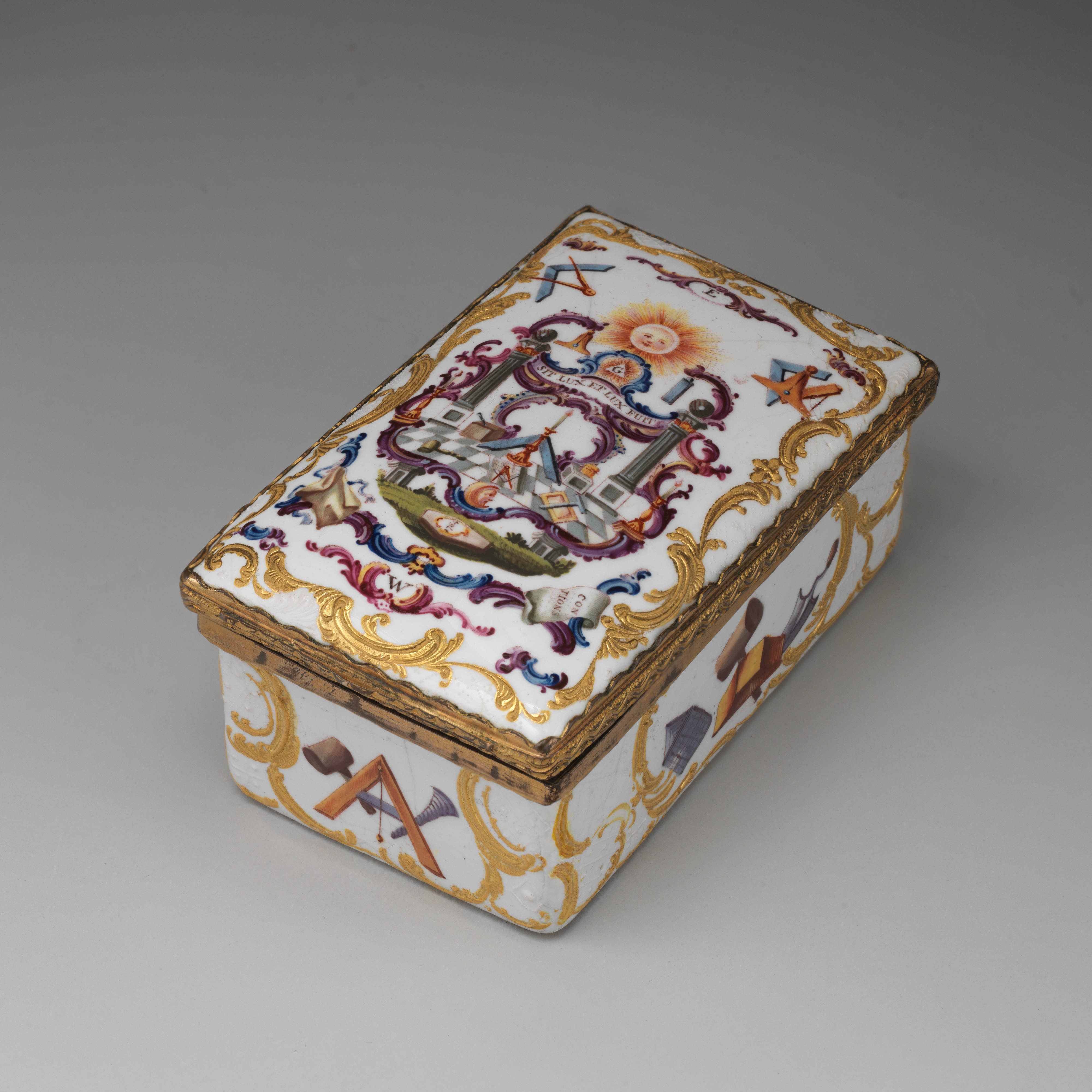
Within the isolated archive of aesthetic archaeology, the snuffbox with Masonic symbols, rendered in enamel on copper, presents a paradox of intimacy and monumentality. This object, a micro-architecture of secret knowledge, is not merely a decorative relic; it is a blueprint for a new vocabulary of luxury. For Natalie Fashion Atelier, the 2026 silhouette is not an evolution of fabric but a translation of material philosophy. The snuffbox’s rigid geometry, its luminous depth, and its encoded symbolism offer a rigorous framework for deconstructing classical elegance into a contemporary, structural haute couture.
Materiality as Structural Language: The Enamel on Copper Paradigm
The technical mastery of enamel on copper is a dialogue between opacity and translucency, between the rigid substrate and the fluid application of vitreous powder. This process—firing at extreme temperatures to fuse glass to metal—creates a surface that is simultaneously hard and luminous, cold and warm. For 2026, this duality informs a silhouette that rejects soft draping in favor of architectural carapaces. The copper base becomes the internal boning of a jacket, the enamel the lacquered shell of a skirt. The silhouette is no longer a second skin but a protective, almost ceremonial, armor.
The snuffbox’s champlevé technique—where cells are carved into the copper to hold enamel—directly translates to negative-space construction. The 2026 collection will feature garments where seams are not hidden but celebrated as deep, recessed channels. These channels, lined with a contrasting metallic thread or a matte silk, mimic the carved copper lines that separate fields of color. The result is a silhouette that is fragmented yet unified, a series of discrete, enamel-like panels that lock together to form a cohesive whole. The classical elegance of a column dress is thus deconstructed into a modular, almost puzzle-like structure, echoing the box’s own compartmentalized geometry.
Geometric Symbolism: The Masonic Code in Silhouette
The Masonic symbols—the compass, the square, the all-seeing eye, the trowel—are not mere ornamentation; they are geometric propositions. They dictate the box’s layout, its proportions, and its hierarchy of forms. For the 2026 silhouette, these symbols become structural seams and optical illusions. The compass, representing the arc of the heavens, informs the curved, asymmetrical shoulder lines of a tailored coat. The square, representing earthly precision, dictates the sharp, angular darts that carve the waist of a dress. The all-seeing eye, a triangle within a circle, becomes a cut-out motif at the back of a gown, a window of skin that reveals the garment’s internal architecture.
The trowel, a symbol of spreading brotherly love, is reinterpreted as a spatulate, flared hemline. This is not a gentle A-line but a deliberate, tool-like extension of fabric, as if the garment itself is a device for measurement and creation. The classical elegance of a straight skirt is thus transformed into a geometric instrument. The silhouette is no longer a passive form but an active, symbolic statement. The wearer becomes a living emblem, a walking archive of Masonic precision.
Luminosity and Depth: The Enamel Finish in Fabric
The snuffbox’s enamel finish is not a flat color; it is a depth of field. The vitreous layers create a translucent, almost holographic effect, where light is trapped and refracted within the material. For 2026, this luminosity is achieved through layered organza and micro-pleated silk. A single silhouette, such as a sheath dress, will be constructed from three to five layers of semi-transparent fabric, each dyed a slightly different shade of the same color. The result is a garment that shifts and breathes with movement, mimicking the internal glow of the enamel.
The copper substrate is translated into a metallic underlay. A fine copper-toned mesh is sandwiched between layers of silk, visible only at the edges and seams. This creates a subtle, internal radiance, a secret warmth that contrasts with the cool, vitreous exterior of the organza. The silhouette is thus a study in material tension: the rigidity of the copper (the mesh) versus the fluidity of the enamel (the silk). The classical elegance of a bias-cut gown is deconstructed into a layered, luminous architecture.
Scale and Intimacy: The Micro-Macro Translation
The snuffbox is an object of the hand, a private, tactile experience. The 2026 silhouette must translate this intimate scale into a monumental form. This is achieved through exaggerated proportions and micro-details. A single Masonic symbol, such as the checkerboard floor, is enlarged to cover the entire front of a coat, becoming a graphic, architectural pattern. The tiny, hand-painted lines of the enamel are replicated as micro-stitched seams, visible only upon close inspection.
The hinge of the box, a functional element of joining, becomes a visible, articulated joint in the garment. A jacket sleeve is attached not by a standard armhole but by a series of small, metallic links, allowing for a range of movement while maintaining a rigid, box-like silhouette. The clasp of the box, often a delicate, spring-loaded mechanism, is reinterpreted as a magnetic closure at the collar or cuff. These are not hidden details; they are celebrated functional elements, echoing the snuffbox’s own mechanical precision.
The 2026 Silhouette: A Synthesis of Rigor and Radiance
The final 2026 silhouette, informed by the Masonic snuffbox, is a study in controlled volume. It is not a return to the corseted waist but a redefinition of the torso as a geometric vessel. The shoulders are broad and structured, echoing the box’s lid. The waist is defined by sharp, angular seams, not by cinching. The hips are flared in a trowel-like form, creating a trapezoidal or inverted-triangle silhouette. The overall effect is one of monumental stillness, a garment that stands as a piece of architecture, yet moves with the precision of a well-oiled mechanism.
The color palette is drawn directly from the enamel: deep, vitreous blues, emerald greens, and ruby reds, contrasted with the warm, burnished tones of copper and gold. These are not soft, watercolor hues but hard, gem-like colors that seem to glow from within. The classical elegance of a pastel palette is abandoned for a dramatic, symbolic chromaticism.
In conclusion, the snuffbox with Masonic symbols, isolated within the archive of aesthetic archaeology, is not a historical curiosity but a living technical document. For Natalie Fashion Atelier, it provides a rigorous methodology for deconstructing classical elegance. The 2026 silhouette is not a nostalgic copy but a translation of material philosophy: the rigidity of copper, the luminosity of enamel, the precision of geometry, and the intimacy of scale. It is a silhouette that demands to be read, decoded, and experienced—a true artifact of haute couture for the discerning connoisseur.