Deconstructing the Classical Elegance of Mlle. Andre: An Aesthetic Archaeology for 2026
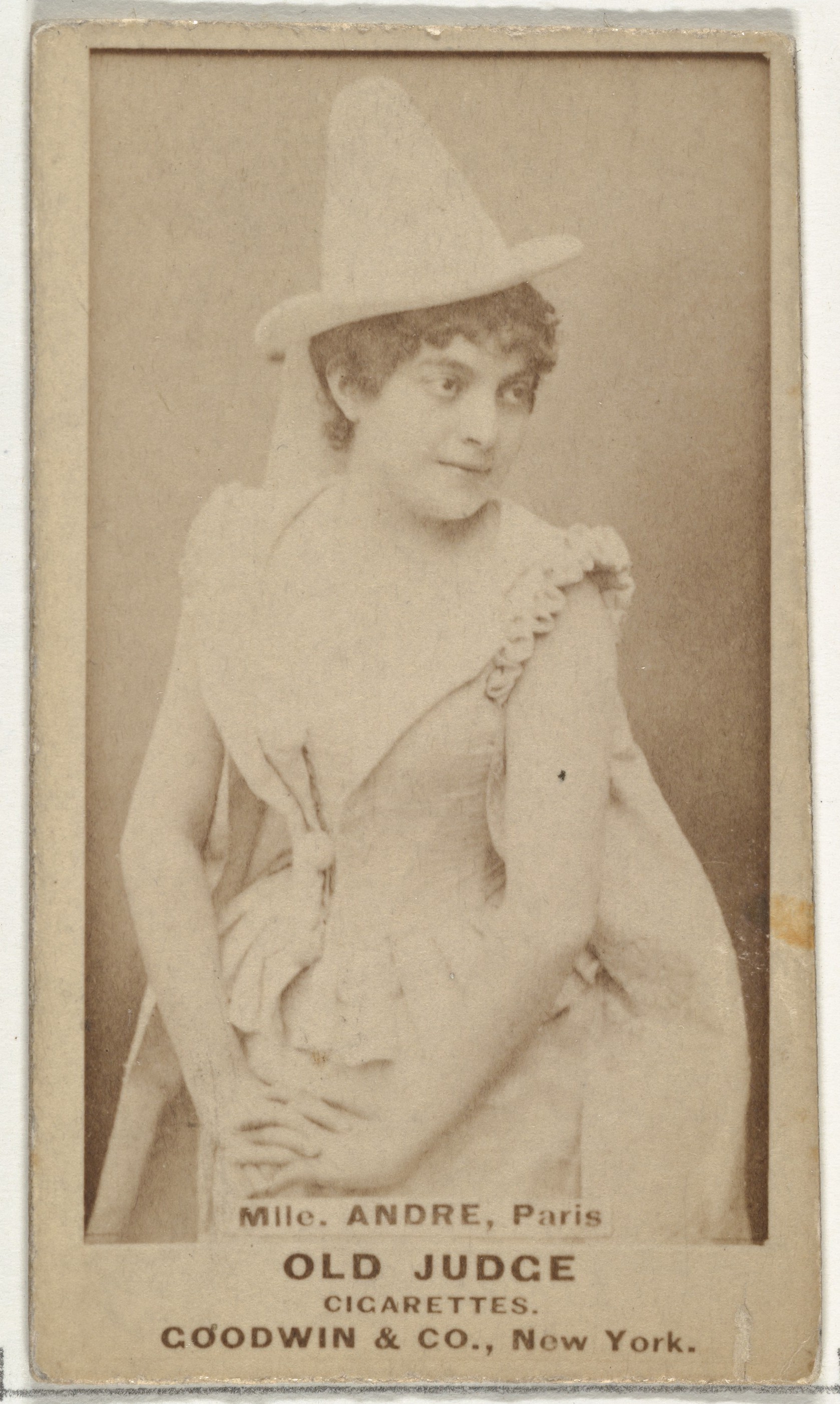
The archive of the Natalie Fashion Atelier holds a singular artifact: an albumen photograph of Mlle. Andre, from the Actors and Actresses series (N171) for Old Judge Cigarettes. This is not merely a historical record; it is a primary source of aesthetic archaeology. The image, a product of late 19th-century photographic chemistry, captures a moment of Parisian theatricality that is both ephemeral and eternal. For the 2026 luxury silhouette, this artifact offers a profound lexicon of restraint, theatricality, and structural precision. The following research deconstructs the classical elegance of Mlle. Andre, translating the materiality and gesture of the albumen print into a technical framework for high-end couture.
The Materiality of Light and Shadow: Albumen as a Textile Reference
The albumen process, which binds light-sensitive silver salts in egg white, produces a distinct tonal depth and a sepia-infused luminosity. This is not a neutral document; it is a textured surface where highlights glow and shadows dissolve into a velvety, almost tactile darkness. For the 2026 silhouette, we must translate this materiality into fabric. The luminous highlights of Mlle. Andre’s skin and costume become a directive for iridescent silk gazar and liquid lamé, which catch and scatter light in a similar manner. The deep, dissolving shadows of her bodice and skirt inform the use of matte velvet and double-faced crepe, creating a visual depth that mimics the photographic gradient. The key technical challenge is to replicate the non-uniform, hand-made quality of the albumen surface. This will be achieved through hand-dyeing and airbrush shading on a base of silk organza, creating a fabric that appears to have been developed in a chemical bath, not printed on a machine.
Deconstructing the Silhouette: The Corseted Waist and the Flowing Hem
The photograph reveals a silhouette of extreme, almost architectural, contrast. The wasp waist of Mlle. Andre, achieved through a tightly laced corset, is the fulcrum of the composition. This is not a soft, natural shape; it is a structural statement of control and artifice. For 2026, we do not replicate the corset as a historical garment, but rather as a conceptual framework. The silhouette will be defined by a high, sculpted waistline achieved through internal boning and architectural seam lines that terminate at the ribcage. This creates a compressed torso, from which the fabric is released. The flowing hem of her skirt, which in the photograph appears to be a cascade of heavy silk or wool, is reinterpreted as a single, unbroken panel of fabric that falls from the structured waist. The 2026 version will utilize bias-cut panels of heavy silk satin, cut to create a fluid, column-like shape that echoes the photographic drape but with a modern, minimalist severity. The hem will be weighted with invisible chain weights to ensure a perfect, gravity-driven fall, a nod to the physicality of the albumen print.
The Gesture of the Hand: Theatricality and Restraint
Mlle. Andre’s pose is a study in controlled theatricality. Her hand, perhaps resting on a prop or slightly extended, is not a casual gesture. It is a choreographed element of the composition, a signal of her status as a performer. This gesture informs the 2026 silhouette in a crucial way: the sleeve and armhole construction. The photograph suggests a sleeve that is set into the bodice with a low, dropped armhole, allowing for a full range of theatrical motion while maintaining a clean line. The 2026 interpretation will feature a dolman sleeve cut from a single piece of fabric with the bodice, creating a continuous, fluid line from the shoulder to the wrist. This sleeve is not a separate piece; it is an extension of the torso’s architecture. The cuff will be a rigid, sculpted band of patinated leather, referencing the hard, metallic props of the theatrical studio. This detail anchors the sleeve, preventing it from becoming merely flowing, and instead gives it a purposeful, gestural quality that mirrors Mlle. Andre’s own controlled elegance.
The Neckline and the Frame: The Portrait as a Silhouette
The albumen photograph is a portrait, and the neckline of Mlle. Andre’s costume acts as a frame for her face and décolletage. The photograph likely shows a high, closed neckline or a wide, boat-like shape that exposes the shoulders. This framing is critical. For 2026, we will explore the negative space around the neck and collarbone. The silhouette will feature a sweeping, asymmetric neckline that is cut from a single piece of fabric, with no visible seams at the shoulder. This is achieved through complex pattern cutting and internal bias taping to maintain the shape. The fabric will be a double-faced silk crepe that is chemically pleated to create a subtle, organic texture that echoes the grain of the albumen paper. The neckline is not just a cut; it is a sculptural element that frames the wearer as Mlle. Andre was framed by the camera. The absence of a collar becomes a statement of modern purity, a direct translation of the photograph’s focus on the subject’s face and expression.
Conclusion: The 2026 Silhouette as a Developed Artifact
The deconstruction of Mlle. Andre’s albumen portrait yields a 2026 silhouette that is not a costume, but a developed artifact. It is a garment that carries the material memory of light-sensitive chemistry, the structural discipline of the corseted era, and the theatrical gesture of the Parisian stage. The final silhouette for the Natalie Fashion Atelier 2026 collection will be defined by a compressed, architectural waist, a fluid, weighted column, a gestural dolman sleeve, and a sculptural, frameless neckline. The fabric will be a hand-dyed, iridescent silk gazar with a matte velvet underlay, a direct material translation of the albumen’s tonal depth. This is not a reproduction of the past; it is an archaeological reconstruction of its essence, a silhouette that speaks of Parisian elegance, technical mastery, and the enduring power of a single, luminous photograph. The 2026 client will not wear a costume; she will wear a developed artifact of aesthetic archaeology.