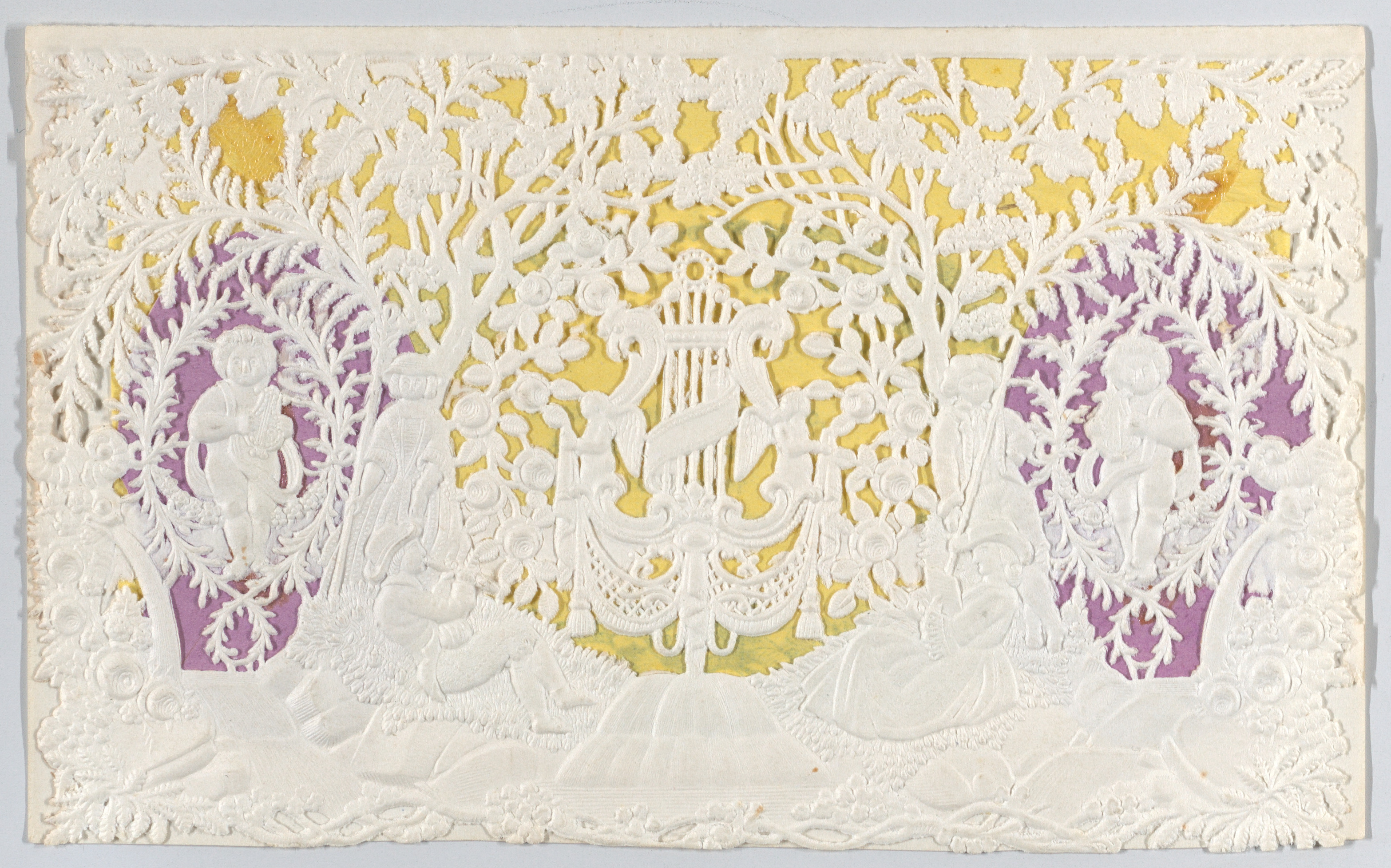
Archive Intervention: The Valentine as Aesthetic Archaeology
Within the archives of Natalie Fashion Atelier, the Valentine is not a sentimental relic but a rigorous artifact of structural and ornamental intelligence. Isolated from its romantic context, this 19th-century specimen—composed of cameo-embossed paper, open-work lace paper, colored paper, and ink—reveals a sophisticated lexicon of layering, negative space, and tactile contrast. The cameo-embossed elements provide a raised, sculptural relief that mimics the tension of draped fabric, while the open-work lace paper introduces a deliberate porosity, a study in opacity versus transparency. The colored paper and ink function as chromatic anchors and narrative markers, respectively. For 2026, this artifact offers a blueprint for haute couture silhouettes that eschew flatness in favor of dimensional, architectural complexity. The Valentine teaches us that elegance is not a surface condition but a volumetric negotiation between solid and void.
Materiality Deconstructed: Cameo-Embossed and Open-Work Lace Paper
Structural Relief and Tactile Stratification
The cameo-embossed paper is the primary volumetric agent. Its raised motifs—often floral or geometric—create a micro-architecture of light and shadow. In 2026 couture, this translates to thermo-molded textiles and resin-impregnated organza that replicate the same bas-relief effect. The silhouette becomes a topography: a fitted bodice might feature embossed panels that rise 3-5 millimeters from the base fabric, creating a visual and tactile hierarchy. This technique eliminates the need for excessive embellishment, instead relying on the inherent sculptural quality of the material itself. The structural integrity of the cameo informs the use of corseted shells that are both supportive and decorative, where the relief pattern dictates the natural drape of the garment.
Open-Work Lace Paper: The Poetics of Absence
The open-work lace paper is a study in controlled transparency. Its cut-out patterns—intricate, repetitive, yet irregular—create a negative-space architecture that allows the underlying colored paper to breathe. For 2026 silhouettes, this principle is applied through laser-cut leather and precision-etched silk. The open-work is not random; it follows a grid of tension and release, where the cut-out zones align with the body’s natural points of articulation—the shoulder blade, the waist, the hip. The result is a silhouette that appears to be in motion even at rest, as the skin or underlayer becomes part of the garment’s visual field. The lace paper’s fragility is reinterpreted through high-tenacity microfilaments that maintain the delicate aesthetic while offering structural resilience for evening wear.
Chromatic and Graphic Intervention: Colored Paper and Ink
Colored Paper as Chromatic Armature
The colored paper in the Valentine serves as a chromatic foundation, often a deep crimson, blush, or ivory. In 2026, this translates to monochromatic layering where the base color is revealed through the open-work. The silhouette strategy involves color-blocking within the same tonal family: a gown might feature a blush base layer, a deeper rose mid-layer, and a cameo-embossed shell in pale coral. The effect is a gradient of saturation that mimics the Valentine’s depth. The colored paper also informs the use of dye-sublimated textiles where the color is embedded into the fiber, ensuring that the hue remains true even when cut into intricate patterns.
Ink: The Narrative Line
The ink on the Valentine is not merely decorative; it is a calligraphic gesture that anchors the composition. Often a single line or a delicate script, it introduces a linear counterpoint to the embossed and cut-out elements. For 2026 silhouettes, this is realized through hand-painted seams and embroidered calligraphy that trace the body’s contours. The ink line becomes a structural seam that visually severs or connects volumes. A column dress, for instance, might feature a single ink-black line that spirals from the collarbone to the hem, creating a dynamic verticality that elongates the silhouette. The ink’s permanence contrasts with the lace’s porosity, offering a dialectic between the permanent and the ephemeral.
Silhouette Translation for 2026: The Valentine’s Lexicon
The Cameo Corset: Sculptural Torso
The cameo-embossed element directly informs the 2026 cameo corset, a structural bodice that uses molded thermoplastic panels to create a bas-relief effect on the torso. The silhouette is a fitted, architectural shell that flares into a full skirt or narrows into a pencil shape. The embossing is strategic: floral motifs at the bust, geometric patterns at the waist, creating a visual rhythm that guides the eye. The corset is not restrictive but supportive, using the relief to distribute tension across the body. This silhouette is ideal for evening gowns and structured cocktail dresses, where the interplay of light and shadow on the embossed surface replaces the need for jewelry.
The Open-Work Silhouette: Transparency and Tension
The open-work lace paper translates into negative-space gowns where cut-out panels reveal the skin or a contrasting underlayer. The 2026 silhouette is asymmetrical: a single sleeve might be entirely open-work, while the other is solid. The cut-out patterns follow the body’s musculature and bone structure, creating a second-skin effect that is both revealing and concealing. For daywear, this manifests as laser-cut blouses worn over high-neck shells, while for evening, it becomes full-length gowns with intricate geometric cut-outs that mirror the Valentine’s lace patterns. The key is controlled exposure: the open-work is densest at the waist and hips, tapering to solid fabric at the shoulders and hem.
The Chromatic Layering: Depth Through Color
The colored paper and ink inform a layering strategy where each layer has a distinct hue and opacity. The 2026 silhouette uses sheer overlays in a lighter tone over a solid base in a darker tone, creating a chromatic depth that mimics the Valentine’s colored paper. The ink element is translated into graphic seams and embroidered lines that trace the silhouette’s architecture. A typical ensemble might feature a crimson base dress, a blush open-work overlay, and a black ink seam that runs from the shoulder to the hem, creating a visual anchor. This layering is not merely decorative but structural, as the overlays are attached at key points to control drape and movement.
Conclusion: The Valentine as a Blueprint for 2026 Couture
The isolated Valentine artifact, stripped of its sentimental context, emerges as a rigorous design manifesto. Its cameo-embossed relief, open-work lace paper, colored paper, and ink offer a complete vocabulary for 2026 haute couture silhouettes. The cameo corset provides sculptural structure, the open-work gown introduces controlled transparency, and the chromatic layering creates depth without bulk. This is not a nostalgic revival but a technical translation of historical material intelligence into contemporary form. The Valentine teaches us that elegance is a volumetric equation, where every raised motif, every cut-out void, and every ink line contributes to a silhouette that is both timeless and rigorously modern. For Natalie Fashion Atelier, this artifact is not a relic of the past but a working document for the future of luxury.