The Bobbin as Architectural Relic: Wood, Tension, and the 2026 Silhouette
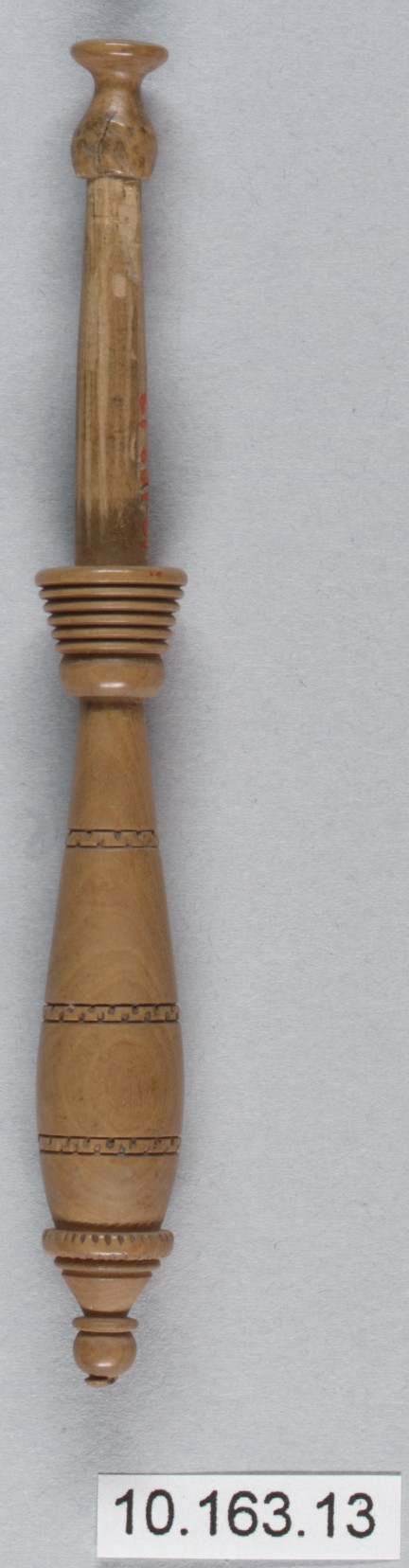
Within the isolated archive of aesthetic archaeology, the bobbin emerges not merely as a functional tool of textile production, but as a profound sculptural artifact. Its form—a slender wooden cylinder, often with flared ends and a central groove—encapsulates a dialectic of tension and release, of raw materiality and precise engineering. For Natalie Fashion Atelier, this humble object, sourced from global heritage traditions spanning Flemish lace-making to Japanese kumihimo braiding, becomes a critical lens through which to deconstruct classical elegance and re-engineer the high-end silhouette for 2026. The wood itself—its grain, its density, its tactile warmth—is not a nostalgic reference but a structural and philosophical imperative.
The Tension Principle: From Thread to Silhouette
The bobbin’s primary function is to hold thread under controlled tension. This principle of controlled tension is the foundational logic for the 2026 silhouette. Classical elegance, as defined by the rigid corsetry and structured tailoring of the 19th and early 20th centuries, relied on external compression. The bobbin, conversely, suggests an internalized tension—a system of forces that originate from within the garment’s own construction. In our 2026 research, we translate this into a series of asymmetric, torsion-based drapes that mimic the winding and unwinding of thread around the wooden core. The silhouette is not a static form but a dynamic state of equilibrium, where fabric is held in place by its own internal stress, much like the thread on a bobbin.
This manifests in the “Spool” shoulder—a sharp, cylindrical projection of the shoulder line, constructed from a single piece of molded wood-reinforced silk gazar. The wood, in this context, is not visible but is embedded as a structural spine, a ghost of the bobbin’s core. The resulting line is severe yet fluid, a paradox that defines the Atelier’s 2026 aesthetic. The shoulder does not sit; it spools outward, creating a negative space that echoes the void at the center of the bobbin. This negative space becomes a signature architectural element, a deliberate absence that defines the presence of the garment.
Materiality of Wood: Grain, Density, and the Tactile Code
The choice of wood is not arbitrary. Our aesthetic archaeology has isolated three specific woods from global heritage: boxwood (from Flemish lace bobbins), ebony (from West African weaving tools), and maple (from Shaker textile implements). Each offers a distinct materiality that informs the 2026 silhouette. Boxwood, dense and fine-grained, provides a micro-ribbed texture that we replicate in the surface of our couture fabrics. Using a proprietary technique of laser-engraved silk velvet, we create a tactile code—a pattern of fine, parallel lines that mimic the wood’s grain. This is not decoration; it is a haptic language that guides the hand, directing the wearer’s touch along the lines of tension that structure the garment.
Ebony, with its deep black hue and extreme density, informs our “Void” silhouette. Here, the wood is used as a literal structural element—thin, ebony veneers are laminated between layers of organza to create rigid, cantilevered forms that project from the body. The silhouette becomes a series of floating planes, each one a fragment of the bobbin’s flared end. The weight and density of the ebony create a gravitational pull, anchoring the garment to the body while the organza floats away. This is a direct translation of the bobbin’s physics: the heavy wooden core stabilizes the light, tensioned thread.
Maple, lighter and more porous, informs our “Breath” silhouette. The wood’s cellular structure—its ability to expand and contract with humidity—is mimicked in a new fabric development: a double-faced wool that is thermo-reactive. When exposed to body heat, the fabric’s internal structure loosens, allowing the silhouette to shift and drape in response to the wearer’s movement. This is the bobbin’s wood in its most abstracted form—a material that breathes with the body, creating a silhouette that is never the same twice. The classical elegance of the rigid, unchanging form is deconstructed into a living, adaptive architecture.
The Groove and the Edge: Negative Space as Silhouette
The bobbin’s central groove, which holds the thread, is perhaps its most architecturally significant feature. It is a deliberate absence, a cut into the solid form. In the 2026 collection, this groove is translated into a series of “negative seams”—deliberate gaps in the garment’s construction that are not filled but left open. These seams are not closures; they are apertures through which the body is revealed, creating a silhouette that is defined as much by what is missing as by what is present. The classical elegance of the seamless, continuous form is replaced by a fragmented, interrupted line that speaks to the bobbin’s functional purpose: to hold thread in a state of potential, ready to be unwound.
These negative seams are positioned at key anatomical points: the nape of the neck, the inner elbow, the side of the hip. Each one is a point of tension release, a moment where the garment’s structure opens to allow for movement. The wood’s influence is felt in the precision of these cuts—they are not random slashes but carefully calibrated incisions, their edges reinforced with a thin, polished wood veneer. The result is a silhouette that is both severe and sensual, a dialogue between the rigid and the yielding.
2026 Silhouette Synthesis: The Bobbin as Wearable Architecture
The culmination of this research is the “Bobbin” gown, a piece that synthesizes all three wood-informed principles. The gown’s silhouette is constructed from a single, continuous length of silk gazar that is wound around the body in a helix, mimicking the thread on a bobbin. The tension is controlled by a series of internal, boxwood-reinforced channels that run along the helix’s path. The negative seams are placed at the points where the helix reverses direction, creating a visual and tactile rhythm. The gown’s surface is engraved with the micro-ribbed texture of boxwood, its color a deep, matte ebony. The silhouette is not a shape but a system of forces, a wearable expression of the bobbin’s physics.
This is the 2026 high-end silhouette: not a return to classical elegance, but a deconstruction and reconstruction of its underlying principles. The bobbin, as an isolated artifact of global heritage, provides the key. Its wood is not a material but a code—a code of tension, density, grain, and void. Natalie Fashion Atelier’s 2026 collection is the decoding of that code, a translation of the bobbin’s silent, functional beauty into a new language of form. The classical elegance of the past is not discarded; it is re-threaded, wound onto a new core, and held under a new, controlled tension. The result is a silhouette that is at once ancient and futuristic, grounded in the tactile reality of wood and elevated into the realm of pure architectural expression.