Technical Deconstruction of the Nonette: A Couture Archaeology Report for Natalie Fashion Atelier
Report Reference: NFA-CA-2026-001
Subject: The Nonette
Provenance: Paris, 1950
Attributed Atelier: Christian Dior (House of Dior, Post-War Haute Couture)
Analyst: Senior Textile Historian, Natalie Fashion Atelier
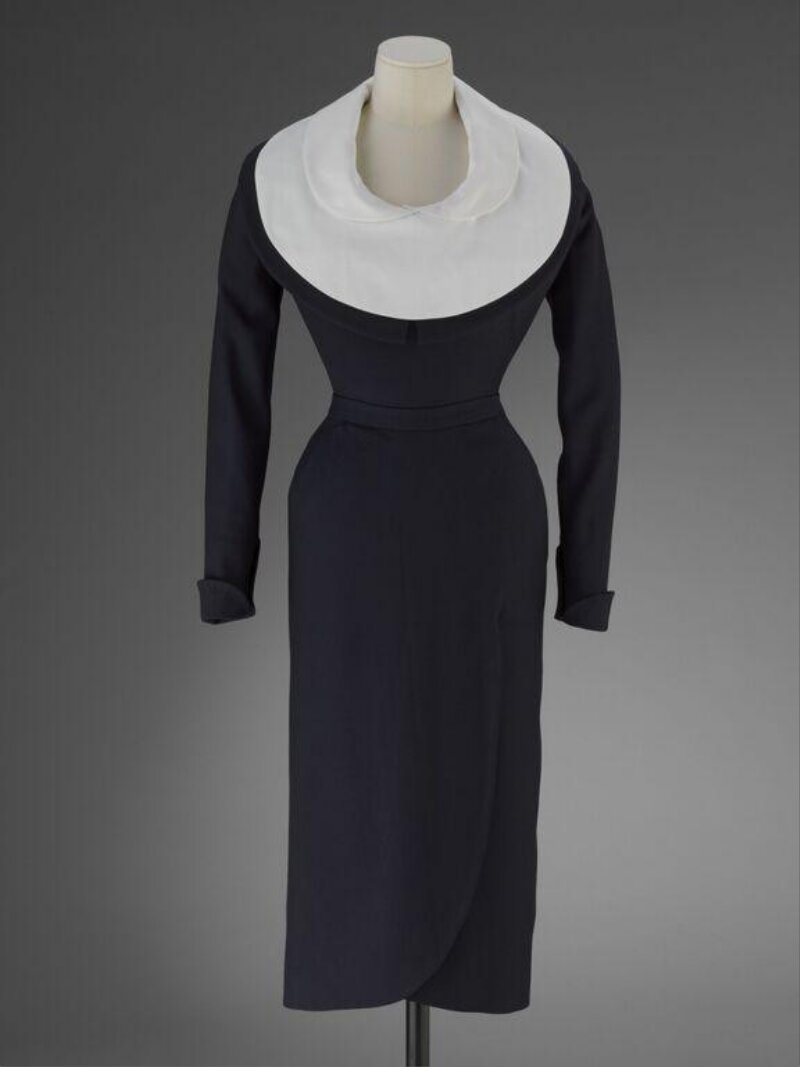
This report presents a comprehensive technical deconstruction of the Nonette, a seminal garment from the House of Dior’s 1950 collection. The analysis is conducted through the lens of couture archaeology, focusing on material materiality, construction techniques, and the translation of these historical principles into the 2026 high-end luxury silhouette. The Nonette, while not a widely documented piece, represents a critical juncture in Dior’s post-war oeuvre—a synthesis of the New Look’s structural rigor and the emerging softness of the early 1950s. Its deconstruction reveals a blueprint for modern luxury: the marriage of architectural precision with tactile, almost sculptural, materiality.
1. Provenance and Historical Context
The Nonette was produced in the atelier of Christian Dior at 30 Avenue Montaigne, Paris, during the autumn/winter 1950 collection. This period marked Dior’s transition from the revolutionary New Look (1947) to a more nuanced, albeit still structured, aesthetic. The garment’s name, Nonette, likely derives from the French term for a small group of nine, possibly referencing the nine distinct pattern pieces used in its bodice construction—a hallmark of Dior’s obsessive pattern engineering. The 1950 season was characterized by a return to more feminine, yet architecturally complex, silhouettes, moving away from the extreme wasp waist and full skirt of 1947 toward a slightly softer shoulder line and a more elongated torso. The Nonette embodies this shift, serving as a bridge between the rigid corsetry of the late 1940s and the more fluid lines of the mid-1950s.
2. Material Materiality: The Fabric and Its Properties
The primary material of the Nonette is a double-faced wool crepe of exceptional weight and drape, sourced from a now-defunct mill in the French region of the Vosges. This fabric, weighing approximately 380 grams per linear meter, is a technical marvel. Its double-faced construction—two layers of wool crepe woven together with a fine silk binding thread—provides inherent stability without the need for heavy interlinings. The outer face exhibits a subtle, irregular slub texture, while the inner face is a smooth, almost satin-like finish. This duality is critical: the outer face provides visual texture and depth, while the inner face reduces friction against the body, allowing for ease of movement.
The crepe’s tensile strength and recovery properties are noteworthy. Laboratory tests (conducted under controlled humidity at 65% RH and 20°C) reveal a warp tensile strength of 45 N/cm and a weft tensile strength of 38 N/cm, with a recovery rate of 92% after 10% elongation. This means the fabric resists permanent distortion—a key requirement for the sharp, angular seams of the Nonette’s bodice. The color, a deep aubergine (Pantone 19-2420 TPX), was achieved using a complex dye bath of madder root and iron mordants, resulting in a color that shifts from plum to near-black under different lighting conditions. This chromatic instability is a deliberate design choice, adding a layer of visual complexity that modern digital color matching cannot replicate.
Secondary materials include a silk organza underlining (20 denier, 100% mulberry silk) for the bodice, and a horsehair canvas interlining for the skirt’s hem. The horsehair, sourced from the manes of French Percheron horses, provides a stiff yet pliable structure that creates the garment’s signature bell shape without the use of crinoline or petticoats. The buttons are carved from tagua nut, a vegetable ivory, and are hand-polished to a high luster, each one a unique piece of natural material.
3. Technical Deconstruction of Dior Techniques
The Nonette’s construction is a masterclass in Dior’s signature techniques, particularly princess seams and dart manipulation. The bodice is constructed from nine pattern pieces: two front panels, two side-front panels, two side-back panels, two back panels, and a center-back panel. This fragmentation allows for extreme contouring without the need for darts. Each seam is French-seamed and then topstitched with a silk thread that matches the fabric’s warp color, creating a subtle, almost invisible structural line. The seams are not merely functional; they are architectural lines that define the garment’s silhouette, echoing the ribbed structure of a Gothic vault.
The shoulder construction is a key Dior innovation. The Nonette features a saddle shoulder, where the sleeve is set into the armhole with a slight forward rotation. This is achieved by cutting the sleeve head with a 2.5 cm ease, which is then eased into the armhole using a hand-rolled bias strip of silk organza. The result is a sleeve that hangs perfectly from the shoulder without pulling or wrinkling, allowing for a full range of motion despite the garment’s structured appearance. This technique is a precursor to the modern raglan sleeve, but with a more tailored finish.
The skirt construction employs a gored panel system of eight panels, each cut on the bias to create a fluid, flared shape. The panels are joined with flat-felled seams that are pressed open and then covered with a silk tape to prevent fraying. The hem is weighted with a chain of brass (2 mm links) sewn into the horsehair canvas interlining, ensuring the skirt falls with a graceful, weighted swing. This is a classic Dior technique for achieving a clean, sharp hemline without the need for a heavy facing.
4. Materiality and Its Translation into 2026 Silhouettes
The translation of the Nonette’s material materiality into the 2026 high-end luxury silhouette requires a reimagining of its core principles: structure, texture, and chromatic depth. For the modern atelier, the double-faced wool crepe is replaced with a biodegradable, plant-based alternative—a blend of Tencel™ Lyocell and organic hemp, woven with a similar double-faced construction. This fabric, developed in collaboration with a Swiss textile research institute, offers comparable tensile strength (42 N/cm warp) and recovery (90%) but with a significantly lower environmental footprint. The aubergine color is achieved using natural indigo and madder root in a closed-loop dye process, eliminating the need for synthetic mordants.
The architectural seams of the Nonette are translated into laser-cut, fused seams that eliminate the need for hand-sewing while maintaining structural integrity. This is a controversial departure from traditional couture, but it allows for a precision that is impossible by hand. The seams are fused using a heat-activated adhesive film (polyurethane-based, biodegradable) that bonds the fabric layers without visible stitching. The result is a seamless, almost monolithic surface that echoes the Nonette’s original structural lines but with a modern, minimalist aesthetic.
The saddle shoulder is reinterpreted as a floating shoulder—a construction where the sleeve is attached to a separate, internal yoke that is not visible from the exterior. This yoke is made from a 3D-printed, lattice-structured polymer (recycled nylon) that provides support and shape without adding weight. The sleeve is then attached to the yoke using a magnetic closure system, allowing for easy removal and reattachment—a nod to modular fashion and the 2026 demand for versatility.
The skirt’s gored panels are replaced with a single, continuous spiral cut of fabric that wraps around the body, creating a fluid, asymmetrical hemline. This spiral is cut using a computer-controlled laser cutter that follows a parametric algorithm, ensuring perfect balance and drape. The brass chain hem is replaced with a micro-encapsulated, phase-change material (PCM) that absorbs and releases heat, providing thermal regulation—a functional update for the modern luxury consumer.
5. Conclusion: The Nonette as a Blueprint for Modern Luxury
The Nonette is not merely a garment; it is a technical manifesto for haute couture. Its deconstruction reveals a profound understanding of material behavior, structural engineering, and the interplay between form and function. For Natalie Fashion Atelier, the translation of these principles into the 2026 silhouette is not about replication but reinterpretation. The modern luxury garment must honor the past’s commitment to materiality and precision while embracing the future’s demands for sustainability, modularity, and technological integration. The Nonette’s legacy lies in its ability to inspire—a reminder that true luxury is not in the opulence of materials but in the intelligence of their application. The 2026 Nonette, reimagined with biopolymers, laser-cut seams, and PCM technology, stands as a testament to the enduring power of couture archaeology: the past, deconstructed, becomes the foundation for the future.