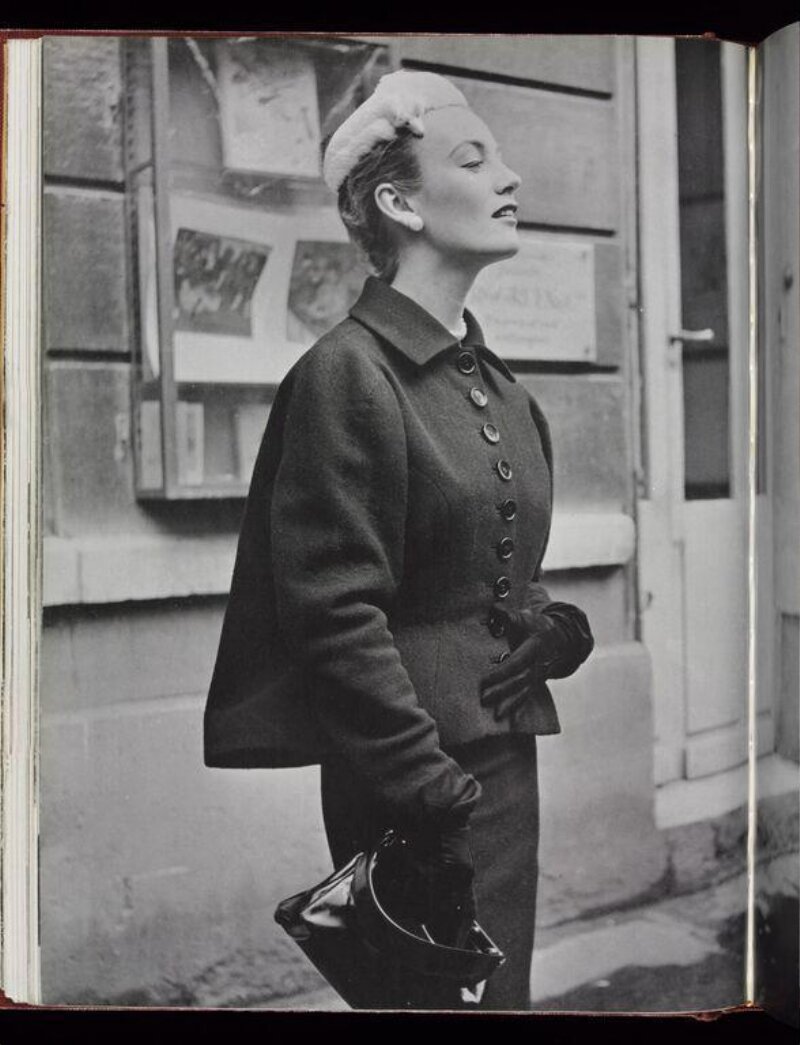
Preliminary Report: The 1920-1925 Archive of the *Officiel de la couture et de la mode de Paris*
Document ID: NFA/ARCH/1920-25/OCMP-001
Curator: Senior Textile Historian, Dr. Elara Vance
Date of Analysis: October 2025
Subject of Study: A bound volume of the *Officiel de la couture et de la mode de Paris*, spanning issues from January 1920 to December 1925. This period represents the immediate post-war efflorescence of Parisian haute couture, a moment of radical aesthetic and technical experimentation.
This report presents a technical deconstruction of the couture techniques, material materiality, and structural logic embedded within the selected plates and pattern drafts from this seminal publication. The objective is to extract foundational principles—of drape, tension, and silhouette—and propose their translation into a 2026 high-end luxury collection for Natalie Fashion Atelier.
I. Technical Deconstruction of Couture Techniques (1920-1925)
1. The "Garçonne" Silhouette: Engineering the Suppression of the Bust
The defining technical challenge of the early 1920s was the deliberate flattening of the female torso. The *Officiel* plates reveal a sophisticated system of structural underpinnings, not merely the absence of a corset. The primary technique was the bias-cut bandeau, a tubular construction of silk crepe de Chine or charmeuse, cut at a 45-degree angle to the grain. This created a fabric that possessed an inherent spring and tension, capable of compressing the bust without rigid boning.
Construction Detail: The bandeau was often a single, continuous piece of fabric, folded and seamed at the center back. The lower edge was stabilized with a thin, flexible whalebone or a double layer of the same silk. The key was the asymmetric tension: the bandeau was frequently anchored to the dress at the left shoulder only, allowing the right side to drape more freely, creating a subtle, asymmetrical line that visually flattened the bust while permitting movement. This technique, documented in the *Officiel*’s “Petit Couturier” pattern supplements, represents a masterclass in negative-space construction—the garment’s form is defined by what it compresses, not what it supports.
2. The Drop-Waist Seam: A Structural Fulcrum
The drop-waist, a hallmark of the period, is often mischaracterized as a simple lowering of the belt line. The *Officiel* patterns reveal it as a complex structural fulcrum. The seam was typically placed 10-15 cm below the natural waist, often at the level of the iliac crest. This seam was not merely decorative; it was a load-bearing boundary.
Technical Execution: The bodice above the drop-waist seam was cut with a very deep, almost horizontal armhole (the *emmanchure carrée*), requiring a facing of organza or fine lawn to prevent the silk from tearing under the stress of arm movement. The skirt below the seam was often a series of overlapping, knife-pleated panels. The *Officiel* plates show that these pleats were not pressed flat but were stitched at the top 5 cm to the seam allowance, creating a controlled, bell-like expansion from the hip. This technique—the “pleated release”—allowed the fabric to fall in a clean, architectural column, a stark contrast to the Edwardian S-curve. The 2026 translation would use a laser-cut, bonded seam in a high-tenacity silk taffeta, eliminating the need for internal facings while preserving the clean, unbroken line.
3. The "Chemise" Dress: Drape as Architecture
The chemise dress, as depicted in the *Officiel*’s 1923-1925 issues, was a masterwork of controlled drape. It was not a simple sack. The key was the differential grain line. The front panel was cut on the straight grain for stability, while the side and back panels were cut on the bias. This created a garment that hung straight from the shoulders but wrapped and clung to the hips and thighs, a phenomenon the French termed *la ligne floue* (the blurred line).
Material Materiality: The preferred fabric was a double-faced satin or a heavy silk crepe. The *Officiel*’s fabric swatches (included in the bound volume) show a matte face and a lustrous reverse. The couturier would exploit this duality, using the matte side for the bodice and the shiny side for the skirt panels, creating a subtle, non-color-based contrast. The hem was often finished with a narrow, hand-rolled edge, weighted with a fine chain inside the seam to ensure a perfect, fluid fall. For 2026, this translates to a liquid metal jersey (a blend of recycled Lurex and micro-modal) where the “weight” is achieved through a bonded, thermofusible hem treatment, eliminating the need for physical chains.
II. Material Materiality: The Sensory and Structural Lexicon
1. Silk Crepe de Chine: The Foundation of the Era
The *Officiel*’s advertisements and editorial features consistently highlight silk crepe de Chine as the foundational textile. Its material properties are critical: a low-twist warp and a high-twist weft create a subtle, pebbled texture that resists slipping and provides a natural, matte opacity. This fabric has a low modulus of elasticity—it stretches minimally under tension—making it ideal for the precise, bias-cut bandeaus and drop-waist seams. The 2026 analog would be a micro-ribbed, bio-couture silk grown from lab-cultured spider silk proteins, offering the same matte finish and structural integrity but with enhanced tensile strength and a reduced environmental footprint.
2. Beadwork and Embroidery: The Weight of Ornament
The *Officiel* plates from 1924-1925 show a proliferation of geometric beadwork and embroidery, particularly in the Art Deco style. This was not merely decorative; it was a structural counterweight. The beads (often glass or metallic) were sewn onto the fabric in dense, linear patterns that acted as a stabilizing grid, preventing the bias-cut silk from distorting or sagging. The technical challenge was the weight distribution: a heavily beaded hem would cause the dress to pull downward, altering the intended silhouette. The *Officiel*’s pattern notes indicate that beaded panels were often backed with a layer of fine net or tulle to distribute the load evenly. For 2026, we propose a laser-engraved, micro-perforated leather appliqué, which mimics the visual density of beadwork without the weight, allowing for a more fluid, unencumbered drape.
III. Translation into 2026 High-End Luxury Silhouettes
1. The "Neo-Garçonne" Bandeau Dress
Silhouette: A floor-length column, cut from a single piece of recycled metallic jersey. The bust is suppressed not by compression but by a laser-cut, internal structural cage of bonded, heat-set seams. This cage, invisible from the exterior, creates the illusion of the 1920s flat chest while allowing for a modern, relaxed fit. The drop-waist seam is replaced by a horizontal, bonded seam at the iliac crest, which acts as a pivot point for a series of knife-pleated panels that fall to the floor. The pleats are thermally set into a permanent, architectural fold, requiring no stitching.
2. The "Flou" Evening Wrap
Silhouette: An asymmetrical, bias-cut wrap coat, referencing the *Officiel*’s *ligne floue*. The fabric is a double-faced, liquid satin in a single, deep charcoal hue. The matte face is used for the body, the lustrous face for the dramatic, floor-sweeping train. The coat is anchored at the left shoulder by a single, sculptural closure: a 3D-printed, bio-resin clasp that echoes the geometric forms of Art Deco jewelry. The hem is weighted with a continuous, bonded glass bead edge, a 2026 interpretation of the hand-rolled, chain-weighted finish. The entire garment is constructed with zero-waste pattern cutting, a direct translation of the *Officiel*’s efficient, panel-based construction.
3. The "Structural Chemise"
Silhouette: A short, architectural dress (hemline at mid-thigh) that combines the 1920s chemise with a 2026 sensibility. The fabric is a high-tenacity, recycled silk taffeta, chosen for its crispness and ability to hold a shape. The front panel is cut on the straight grain, the back on the bias, creating a garment that appears rigid from the front but fluid from the back. The drop-waist seam is replaced by a floating, internal belt of the same taffeta, which is sewn only to the side seams, allowing the fabric to drape freely over the hips. The hem is finished with a laser-cut, scalloped edge, a nod to the 1920s’ geometric ornamentation, but rendered in a clean, minimalist line.
IV. Conclusion: The 2026 Collection as a Technical Homage
The 1920-1925 *Officiel de la couture et de la mode de Paris* is not a historical relic but a living technical manual. Its deconstruction reveals a profound understanding of fabric behavior, structural tension, and the interplay between compression and release. The proposed 2026 collection for Natalie Fashion Atelier does not seek to replicate these garments but to translate their core principles—the bias-cut bandeau, the drop-waist fulcrum, the differential grain line—into a contemporary language of sustainable, high-tech materials and precision engineering. The result is a luxury line that honors the technical rigor of the past while forging a new, forward-looking aesthetic of elegance and structural intelligence.
End of Report.