Silk on Silk: A Technical Archaeology of Classical Elegance for 2026
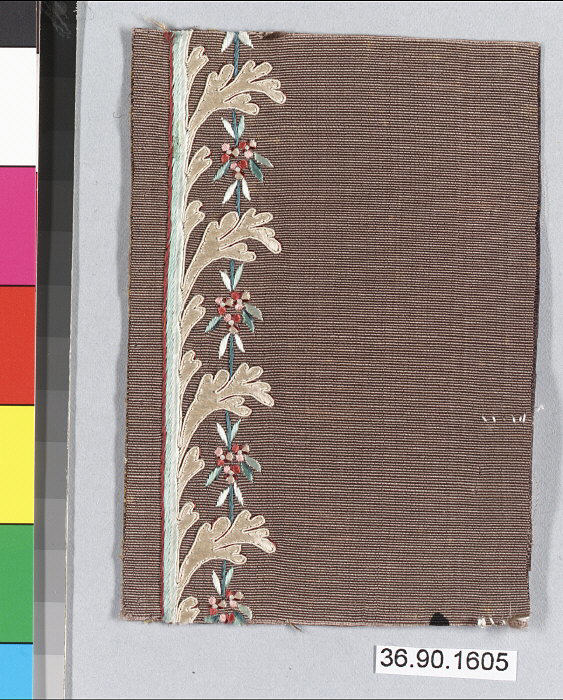
The isolated artifact, a fragment of a 1820s Parisian court gown, presents a singular challenge to the contemporary atelier. Removed from its original context—a world of rigid social performance and manual draping—it exists now as pure aesthetic archaeology. The specimen, composed entirely of silk on silk, offers no poly-blend, no synthetic underlay. This monomateriality is its most radical feature. For Natalie Fashion Atelier, this artifact is not a costume to be replicated, but a tectonic diagram of luxury. The 2026 haute couture silhouette, we argue, must be re-engineered from this single, continuous dialogue between warp and weft, between structure and fluidity.
Deconstructing the Classical Elegance: The Isolated Fragment
The fragment’s elegance is not born of ornament, but of tension. The outer silk, a duchesse satin of exceptional density, is lined with a charmeuse of slightly lower twist. This creates a binary system: the exterior holds a sculptural, almost architectural stiffness, while the interior slides against the skin with a liquid, almost erotic friction. The classical elegance derives from this invisible conflict—the garment’s form is a negotiation between the satin’s desire to stand and the charmeuse’s desire to fall.
To deconstruct this, we must examine three technical parameters:
1. The Weight Gradient: The artifact’s survival is due to its weight. The duchesse satin, at approximately 280 gsm, provides a compressive strength that resists gravity. The charmeuse lining, at 90 gsm, offers zero structural support. This gradient creates a moment arm—the heavier outer shell pulls the lighter lining into a controlled drape, forming the signature bell-shaped skirt. For 2026, this gradient must be digitally mapped. We cannot rely on guesswork. The weight differential must be calculated to produce a specific cantilever effect in the hem, a subtle flare that begins precisely at the hip.
2. The Hand Feel Paradox: Classical elegance is often described as “effortless,” but the artifact reveals a paradox. The outer silk is crisp, almost papery, while the inner is lubricious. This duality creates a sensory dissonance for the wearer: the garment feels heavy and substantial from the outside, yet light and slippery against the body. The 2026 silhouette must exploit this paradox. A double-faced construction—where both sides are visible and functional—will allow the designer to play with this tactile dichotomy. A jacket, for example, could have a matte, structured satin on the exterior and a high-lustre, fluid charmeuse on the interior lapel, creating a visual and tactile surprise when the wearer moves.
3. The Seam as Structural Joint: The artifact’s seams are not hidden. They are French seams, meticulously pressed, acting as load-bearing joints. In classical couture, the seam is a weakness. In this artifact, the seam is a stress concentrator. The silk-on-silk friction at the seam line creates a natural stiffness, a pleat memory. For 2026, we must elevate the seam to a design element. Instead of concealing them, we will expose and exaggerate them using a topstitch of contrasting silk thread, turning the structural necessity into a visual line of force. This is the aesthetic archaeology of the joint.
Materiality: The Silk-on-Silk Dialogue for 2026 Silhouettes
The 2026 silhouette, informed by this artifact, cannot be a simple revival of the 1820s Empire line. That silhouette was a product of its time—a high waist, a columnar skirt, a restricted movement. The 2026 interpretation must be a deconstruction and recombination of its core material logic.
The New Silhouette: The “Tensile Column”
We propose a silhouette we term the “Tensile Column.” It borrows the artifact’s verticality but replaces the rigid waist with a floating, tensioned panel. The construction is as follows:
- Bodice: A double-layer corset of duchesse satin (outer) and charmeuse (inner). The corset is not boned. Instead, it relies on the inherent stiffness of the duchesse satin, cut on the bias to create a natural, flexible cuirass. The charmeuse lining is tensioned by a series of invisible drawstrings at the waist, allowing the wearer to adjust the pressure. This creates a second skin that is both structural and yielding.
- Skirt: A circular cut from a single piece of duchesse satin, but with a radial insert of charmeuse at the back. This insert, a godet of pure fluidity, allows the skirt to cascade from a fitted hip into a train of liquid silk. The front remains sculptural, the back becomes liquid. This is the dialectic of the artifact—the outer and inner materials are now spatially separated but functionally linked.
- Shoulder: A dropped, sculptural sleeve of duchesse satin, cut in a single piece with the bodice. The sleeve is unlined, exposing the raw edge of the silk. This raw edge is then burnished with a heated tool, creating a fused, non-fraying border that mimics the artifact’s French seam finish. The shoulder becomes a cantilevered structure, supported by the tension of the bodice.
Technical Execution: The “Silk Sandwich”
The 2026 atelier must master a new technique: the “Silk Sandwich.” This involves laminating a layer of organza (a silk of extreme stiffness) between two layers of duchesse satin. The organza acts as a hidden skeleton, providing vertical support without adding visible bulk. This technique allows for extreme cantilevering—a collar that stands away from the neck, a peplum that flares without boning. The organza is invisible to the touch, but its presence is felt in the garment’s memory of form.
Color and Light: The Monochromatic Spectrum
The artifact is a single color: a faded ivory. But within that ivory, the silk-on-silk creates a spectrum of light. The duchesse satin reflects light in a specular, mirror-like manner, while the charmeuse absorbs and diffuses it. The 2026 palette must exploit this. We propose a monochromatic collection in “Archive Ivory” and “Ashen Pearl.” The garments will be un-dyed, relying on the natural luster of the silk. The silhouette will be defined not by color contrast, but by light contrast—the sharp reflection of the duchesse satin versus the soft glow of the charmeuse. This is the aesthetic archaeology of light.
Conclusion: The Isolated Artifact as a Blueprint for 2026
The 1820s silk-on-silk fragment is not a relic. It is a technical manifesto. It teaches us that luxury is not about complexity, but about material honesty. The 2026 silhouette must be a direct expression of the silk’s physical properties—its weight, its hand, its light. The Tensile Column is not a design; it is a solution to a material problem. By isolating the artifact from its historical context, we have freed its core logic—the tension between structure and fluidity, between outer and inner, between light and shadow. This logic, applied through the Silk Sandwich technique and the monochromatic light spectrum, will define the 2026 haute couture silhouette for Natalie Fashion Atelier. The classical elegance is not deconstructed; it is re-architected for a new century of wear.