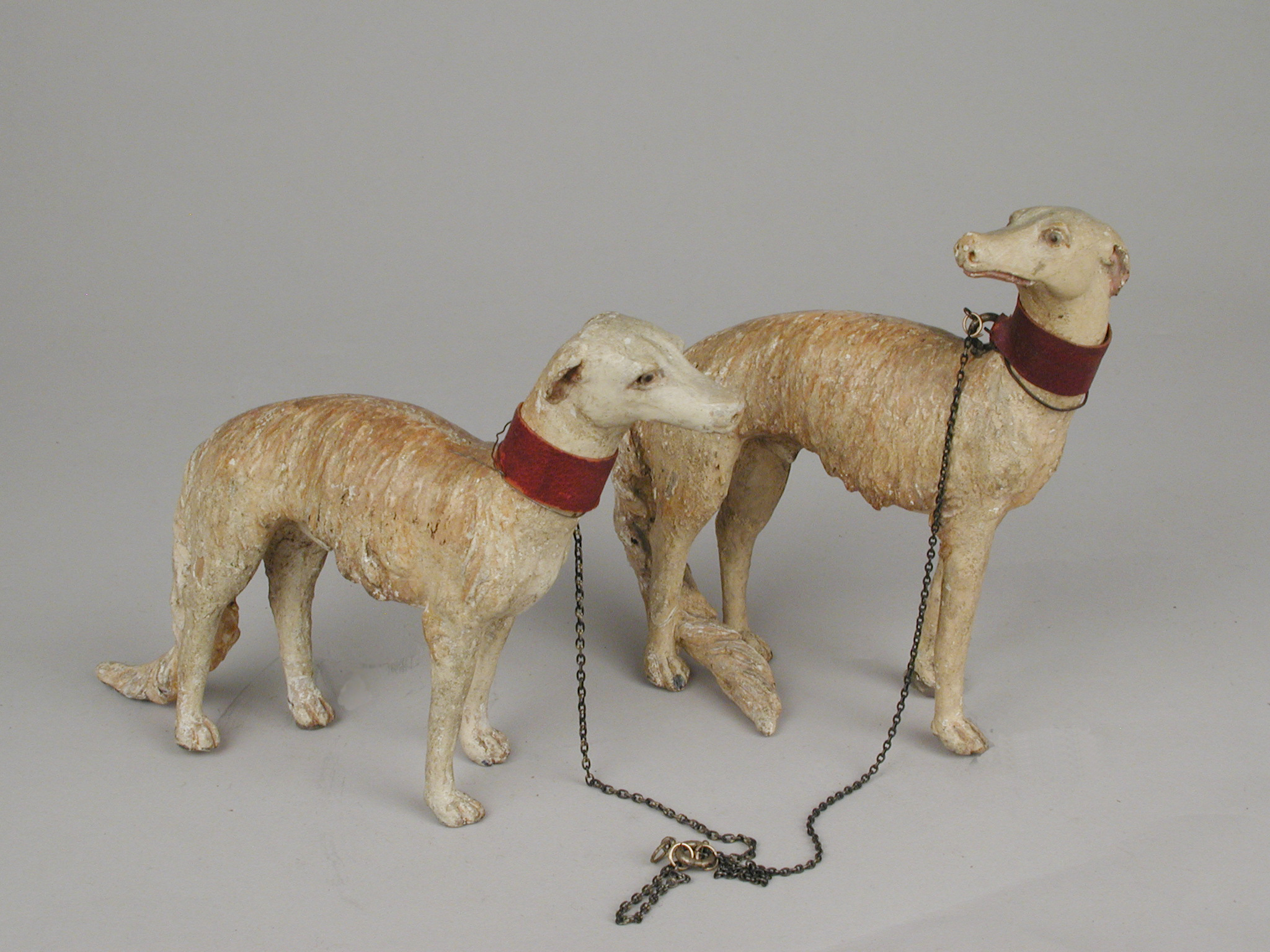
Deconstructing the Canine Muse: Polychromed Terracotta, Glass Eyes, and the 2026 Haute Silhouette
Within the quiet archives of Natalie Fashion Atelier, we conduct an exercise in aesthetic archaeology, isolating a singular artifact: a polychromed terracotta dog, complete with glass eyes, a leather collar, and a metal chain. This object, ostensibly a decorative figurine, transcends its domestic origins to become a profound lexicon for the 2026 luxury silhouette. The subject—the dog—is not merely a companion animal but a symbol of guarding, loyalty, and poised tension. The materiality—terracotta, glass, leather, metal—offers a dialectic between the organic and the manufactured, the fragile and the durable. This research artifact deconstructs the classical elegance of this canine form, translating its volumetric integrity, textural contrasts, and structural tension into a coherent, high-fashion narrative for the forthcoming season.
Volume and Carriage: The Terracotta Body as Silhouette Blueprint
The polychromed terracotta body provides the foundational architectural premise. Terracotta, fired and hardened, possesses a distinct volumetric solidity. The dog’s stance—whether seated, alert, or striding—dictates a specific axis of power. For 2026, this translates into silhouettes that are sculptural yet grounded. The canine’s ribcage, often subtly articulated in the terracotta, informs a new corseted bodice that is not restrictive but rather a supportive carapace. The curve of the haunches and the slope of the back become the blueprint for a reimagined peplum or a structured basque waist, creating a silhouette that moves from a narrow, alert shoulder to a fuller, grounded hip.
The polychromy—the layering of pigments over the fired clay—offers a lesson in surface treatment and depth. The 2026 silhouette will not rely on flat color but on optical layering. We propose a technique of pigment-infused organza over a structured base, mimicking the way the terracotta’s color shifts under light. The silhouette itself becomes a canvas for chromatic narrative, where the volume is not just a shape but a field of color that modulates with movement. The dog’s static, eternal pose is translated into garments that hold their shape with authority, using horsehair braid, crinoline, and bonded wools to achieve a similar sense of poised permanence.
Gaze and Surface: The Glass Eyes as Focal Points
The glass eyes of the canine artifact are not merely functional; they are narrative anchors. Their hyper-realistic, reflective quality introduces a tension between the organic and the artificial. In the 2026 collection, this principle manifests as strategic, jewel-like focal points within the silhouette. We are not speaking of literal glass eyes, but of crystalline embellishments—cut gemstones, polished resin, or lacquer-worked metal—placed at key anatomical junctions: the shoulder, the hip, the clavicle. These elements serve to arrest the gaze, creating a dialogue between the wearer and the observer.
The glass eye’s ability to catch and reflect light informs a new approach to surface embellishment. For the 2026 silhouette, we will employ micro-mosaic techniques and mirror-like paillettes that mimic the refractive quality of glass. These are not scattered randomly but are concentrated in zones of tension—the waistline, the hem, the cuff—creating a visual rhythm that echoes the dog’s alert, watchful posture. The silhouette is thus punctuated by light, transforming the garment from a static object into a dynamic, living sculpture.
Tension and Restraint: The Leather Collar and Metal Chain
The leather collar and metal chain are the most explicit elements of structural tension. The collar, a band of restraint, and the chain, a line of connection, offer a powerful metaphor for the 2026 silhouette. The collar translates into high, structured necklines—a dog-collar choker reimagined in embossed calfskin or patent leather, cinching the throat with a sense of controlled elegance. This is not a gesture of subjugation but of framing and definition, drawing the eye upward to the face and the décolletage.
The metal chain, with its links of varying weight and finish, becomes a linear architectural element. It informs the draping of chains as belts, harnesses, or structural straps across the torso. For 2026, we propose chain-link appliqués on tailored jackets and gowns, creating a graphic, linear overlay that mimics the tension of a leash. The silhouette is thus bound and released by these metallic lines, creating a dynamic interplay between freedom and structure. The chain’s sound and weight become part of the garment’s presence, adding a layer of auditory and tactile luxury.
From Artifact to Silhouette: A Technical Lexicon for 2026
The Guarded Silhouette: Volume and Containment
The primary silhouette for 2026, derived from this canine artifact, is the Guarded Silhouette. It is characterized by a broad, structured shoulder (inspired by the dog’s powerful forequarters) that tapers to a cinched, corseted waist (the collar’s restraint), before flaring into a controlled, columnar skirt (the terracotta body’s solidity). This is a silhouette of contained power. The materials of choice are double-faced wool, bonded neoprene, and sculpted jacquard, all capable of holding a firm shape. The polychromed effect is achieved through gradient dyeing and hand-painted silk panels, creating a sense of depth and patina.
The Leashed Line: Draping and Tension
Draping techniques for 2026 will be informed by the metal chain’s linear tension. We will employ asymmetric draping that mimics the pull of a leash, creating diagonal lines across the body. This is achieved through bias-cut panels anchored by metal grommets or chain-stitch detailing. The leather collar inspires a new neckline treatment: a high, stand-away collar in patent leather or lacquered cotton, often detached from the garment and connected by a single, visible chain. This creates a sense of separation and connection, a dialogue between the garment and the body.
The Glass Gaze: Embellishment as Narrative
Embellishment for the 2026 collection is focal and strategic, inspired by the glass eye. We will use cabochon-cut crystals, polished obsidian, and faceted jet as singular, arresting points at the shoulder, hip, or center front. These are not scattered but isolated and emphasized, much like the dog’s unblinking gaze. The technique is bespoke setting, where each stone is hand-set into a metal bezel that is then integrated into the garment’s structure. This creates a jewel-like architecture within the silhouette, anchoring the eye and the narrative.
Conclusion: The Eternal Watchman in Fabric
The polychromed terracotta dog, with its glass eyes, leather collar, and metal chain, is not a mere curiosity but a masterclass in structural and narrative design. For the 2026 haute silhouette, this artifact teaches us the value of grounded volume, strategic focal points, and controlled tension. The resulting garments are not costumes but sculptural armatures that embody the dog’s essence: loyal, alert, powerful, and eternally poised. This is the Natalie Fashion Atelier interpretation of heritage—not a reproduction, but a translation of classical elegance into a modern, architectural language. The 2026 silhouette is thus a guardian of form, a testament to the enduring power of aesthetic archaeology.