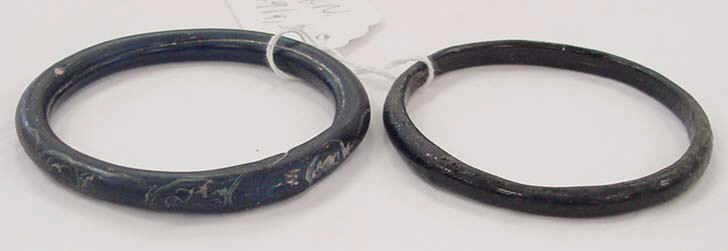
Artifact Analysis: The Murano Glass & Pietra Dura Jewelry Set
This research artifact, curated for the Natalie Fashion Atelier archive, examines an isolated jewelry set of Italian heritage, circa 1860. The piece, a parure comprising a necklace, earrings, and a brooch, is constructed from hand-blown Murano glass and carved pietra dura (hardstone) inlays. Its aesthetic archaeology reveals a synthesis of Venetian glassmaking virtuosity and Florentine stone mosaic tradition. For the 2026 luxury silhouette, this artifact provides a critical lexicon for redefining opulence through material weight, translucency, and structural tension.
Materiality & Craft: Glass and Stone as Structural Dialogue
The set’s primary materials—glass and stone—are not merely decorative but serve as opposing yet complementary structural forces. The Murano glass, with its internal “sommerso” technique (layered colored glass encased in crystal), creates a volumetric, almost liquid density. The pietra dura elements, carved from agate, lapis lazuli, and chalcedony, offer a rigid, planar counterpoint. This dialogue between translucency and opacity, between the fluid and the fixed, is the core technical insight for 2026.
In high-end silhouettes, this translates to a new material hierarchy. The glass informs “liquid armor” constructs—garments where resin-coated silk organza or thermo-molded polyurethane is layered over a rigid understructure, mimicking the glass’s internal depth. The stone informs “fossilized volume”—structured, almost architectural shoulders and hips that appear carved from a single block, using bonded wool felt or compressed jacquard. The jewelry set’s weight, once a limitation, becomes a design principle: gravity as a design tool.
Deconstructing Classical Elegance: The Isolated Aesthetic Archaeology
Classical Italian elegance, as embodied by this set, relies on symmetry, balance, and the illusion of effortless grandeur. However, our isolated archaeology—removing the piece from its original context of ballroom and salon—reveals a subversive potential. The glass’s fragility and the stone’s permanence create an inherent temporal dissonance. The set is both eternal and ephemeral.
For 2026, this dissonance informs a “deconstructed classicism” in silhouettes. The symmetrical necklace is reinterpreted as an asymmetrical, cascading drape on a gown’s back, using glass-beaded fringe that mimics the Murano’s internal color shifts. The brooch’s rigid floral motif becomes a “fossilized appliqué”—a three-dimensional, carved resin panel sewn onto a sheer tulle bodice, appearing both embedded and floating. The classical elegance is not rejected but fractured, allowing each element to exist in its own material and temporal plane.
Technical Translation: Glass into Silhouette, Stone into Structure
The translation of glass into silhouette requires a deep understanding of its optical and tactile properties. The Murano glass’s “avventurina” (gold flecks) and “filigrana” (filigree) patterns are not replicable in fabric, but their visual complexity can be achieved through woven metallic threads and laser-cut organza overlays. The 2026 silhouette will feature a “glass gown”—a column dress in micro-pleated silk, overlaid with a second skin of laser-cut, iridescent organza that shifts color with movement, echoing the glass’s internal light play.
The stone’s translation into structure is more direct. The pietra dura’s precise, jigsaw-like inlays inform a new approach to “negative space tailoring.” Garments will feature cut-out panels that reveal an underlayer of contrasting fabric, much like the stone inlays reveal the gold or silver base. The 2026 silhouette will include a “stone corset”—a structured bodice with geometric cut-outs, reinforced with boning and filled with sculpted, resin-hardened panels that mimic the agate’s banding. The weight of the stone becomes the drape of the fabric, creating a silhouette that is both heavy and floating.
2026 Silhouette Propositions: The Glass-Stone Continuum
From this artifact, three distinct silhouette propositions emerge for the 2026 luxury collection:
1. The “Sommerso” Silhouette: Inspired by the glass’s layered depth. A floor-length gown with a high neckline and long sleeves, constructed from a base of heavy matte silk. Over this, a second layer of translucent, heat-set tulle is draped in cascading folds, creating a “liquid veil” effect. The hem is weighted with glass beads, ensuring the fabric falls with the same gravity as the Murano glass. The silhouette is columnar but appears to contain an internal, shifting volume.
2. The “Pietra Dura” Silhouette: Inspired by the stone’s geometric inlay. A tailored pantsuit with a sharply structured blazer and wide-leg trousers. The blazer features “fossilized panels”—sections of bonded wool that are laser-cut and then re-stitched into the garment, creating a mosaic-like pattern. The trousers are cut to mimic the stone’s rigidity, with a crease that is pressed so sharply it appears carved. The overall silhouette is severe, architectural, and grounded.
3. The “Avventurina” Silhouette: Inspired by the gold-flecked glass. A cocktail dress with a fitted bodice and a full, bell-shaped skirt. The bodice is entirely covered in hand-embroidered gold and silver bugle beads, arranged in a random yet dense pattern. The skirt is constructed from multiple layers of gold-shot organza, each layer slightly shorter than the one beneath, creating a “faceted” volume that catches light from every angle. The silhouette is opulent, celebratory, and kinetic.
Conclusion: The Artifact as a Blueprint for Temporal Luxury
The isolated jewelry set of Murano glass and pietra dura serves as a profound blueprint for the 2026 luxury silhouette. Its aesthetic archaeology reveals that true elegance is not static but a dialogue between material opposites: the fluid and the fixed, the transparent and the opaque, the fragile and the eternal. For Natalie Fashion Atelier, the 2026 collection will not replicate these materials but will channel their structural and optical principles into garments that exist in a state of beautiful tension. The glass informs the drape, the stone informs the structure, and the classical elegance is deconstructed into a new, temporal form of opulence. This is the future of haute couture: a rigorous, material-driven archaeology that transforms historical mastery into a living, breathing silhouette for the modern era.