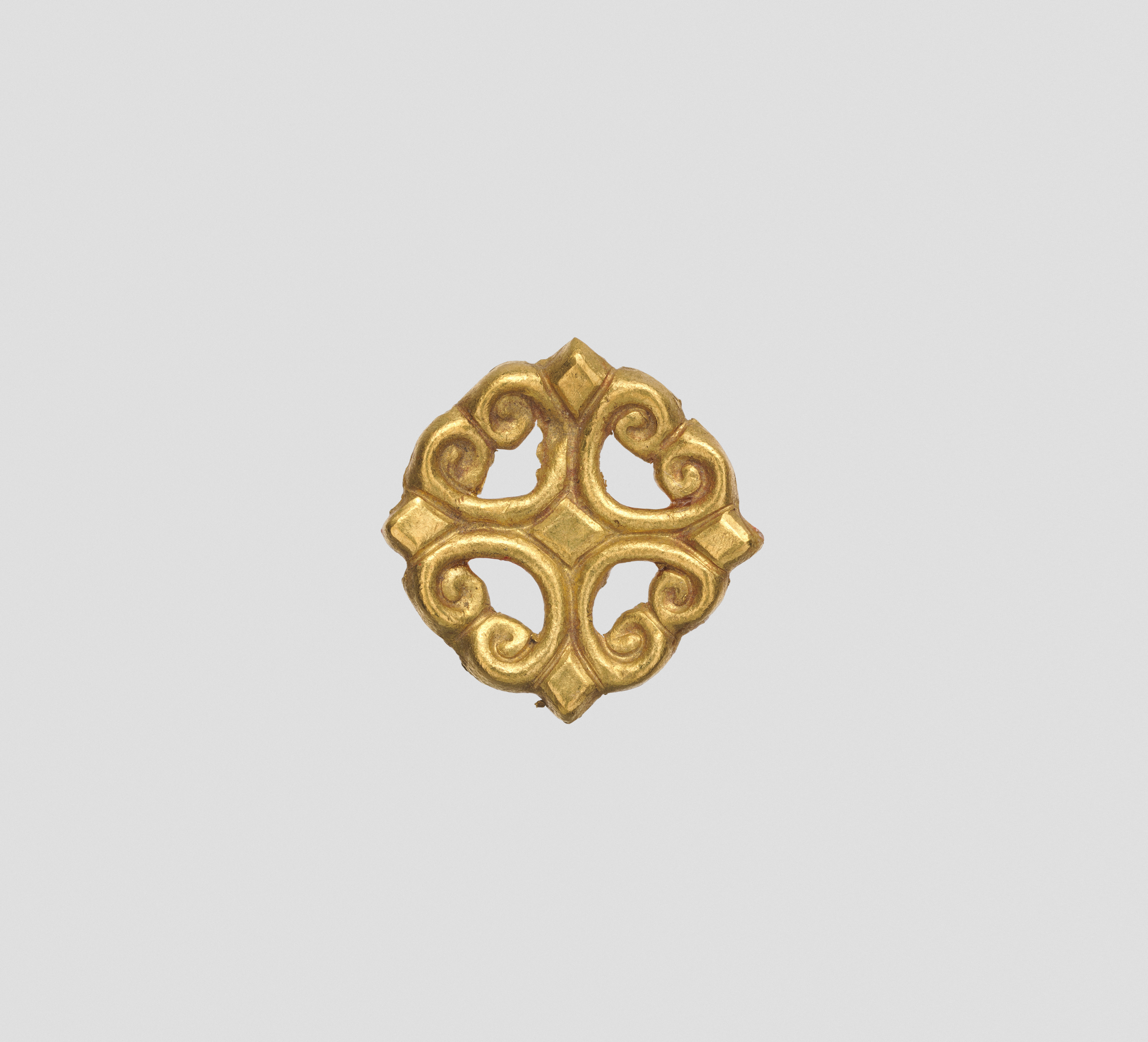
Archaeology of Adornment: Scythian Gold and the Semiotics of Surface
The discourse of contemporary luxury is increasingly an exercise in deep-time aesthetic archaeology. For the atelier seeking to define the 2026 silhouette, the archive offers not mere inspiration, but a foundational grammar. Our focus turns to a singular artifact of nomadic majesty: the Scythian gold dress ornament. More than accessory, these appliqués—often depicting stylized stags, griffins, and intricate phytomorphic (plant-based) motifs—constituted a portable cosmology, a language of power, mobility, and protection hammered into malleable metal. Their materiality, pure gold, was chosen not solely for its incorruptible luxury but for its symbolic resonance with the eternal sun, a divine metal for a people in perpetual motion. This investigation deconstructs the classical elegance inherent in these objects, moving beyond superficial "tribal" references to extract a core philosophy of structured fluidity, narrative density, and protective contouring—principles that directly inform the architectural and emotional intelligence of the 2026 haute couture silhouette.
Deconstructing the Nomadic Classical: Tension as Elegance
The classical elegance of Scythian goldwork is born of profound tension—a dynamic equilibrium that prefigures the modern couture ethos. Firstly, it embodies a dialectic of rigidity and movement. Each plaque, while solid and structurally defined, is designed to sway and catch light on the body, its form often depicting creatures in arrested motion. This creates a kinetic elegance, where the silhouette is not static but defined by a controlled, sonorous movement. Secondly, it presents a synthesis of the zoomorphic and the geometric. The organic, curling forms of antlers or wings are subjected to a severe, almost abstract stylization, resulting in a pattern language that is both primal and intensely sophisticated. This is not naive representation but a highly codified abstraction, a precursor to the modernist impulse to distill nature into essential line. Finally, there is the tension between surface ornament and structural function. These pieces were sewn onto robust garments, often leather or felt, meaning the gold provided both luminous detail and strategic reinforcement at stress points. The ornament was architecture.
Archive Node: The Mirror and the Narrative Plane
The provided archive context—"一面是光洁银镜上以黄金镶嵌的纷繁棕叶纹,另一面是冰冷石棺板上以浮雕诉说的生命叙事"—offers a profound hermeneutic key. It describes a duality: one side, a polished silver mirror inlaid with gold acanthus leaves; the other, a stone sarcophagus panel narrating a life in relief. This object perfectly encapsulates the Scythian—and thus our derived—aesthetic principle. The mirror side represents the cultivated surface: refined, reflective, and intricately adorned. The sarcophagus side represents the embedded narrative: the story carved into the very structure, giving it depth and meaning. The Scythian dress ornament operates on this same dual plane. Its surface dazzles with a "纷繁" (profuse, intricate) complexity of split-leaf and animal-form patterns, designed to reflect fire and sunlight. Simultaneously, its presence on the garment is a narrative act, mapping mythology, status, and apotropaic (warding off evil) symbols directly onto the body's topography. The wearer becomes both a reflective surface and a walking story.
Informing the 2026 Silhouette: From Nomadic Plaque to Architectural Dress
Translating this archaeological intelligence into the 2026 luxury silhouette requires a transposition of principles, not a literal replication. The coming silhouette will be defined by an intelligent negotiation between body and artifact, moving towards what we term “Narrative Architecture.”
1. Silhouette as Armature: Contoured Protection and Kinetic Lines. The rigid yet fluid nature of the gold plaques inspires silhouettes built on internal armatures. Imagine dresses where boning is not hidden but expressed as external, gilded tracery, following the lines of the ribs and spine like a contemporary corselet-armor. These metallic elements, in pale or rose gold finishes over technical fabrics, would provide structure while allowing for a pliant, walking motion—the kinetic elegance of the nomadic horseman rendered in haute couture. Silhouettes will feature asymmetric hems or sleeves weighted with metal-threaded fringes, creating a deliberate, sonorous movement that echoes the sway of ancient adornments.
2. Surface as Deep Narrative: The Embossed Plane. Rejecting flat embellishment, 2026 surfaces will embrace high-relief embroidery and sculptural appliqué that replicate the hammered depth of Scythian repoussé work. Motifs of abstracted antlers, feathers, and split-palmettes will be rendered not in sequins, but in layered leather, horn, and resin, then gilded. This creates a tactile, topographic map on the garment. A column gown may feature a single, monumental narrative panel descending the spine—a personal mythology told in bas-relief—while the rest of the garment remains a "polished mirror" of minimalist silk. This is the direct embodiment of the archive's dual-sided object: narrative and reflection coexisting.
3. Materiality of Permanence and Light: Modern Gold. The Scythian choice of gold for its permanence and solar symbolism translates into a 2026 material palette emphasizing luminous durability. We will see not merely gold thread, but the use of gold-coated technical membranes—lightweight, uncrushable, and capable of being laser-cut into intricate, plaque-like patterns. Matte and polished gold finishes will be juxtaposed on the same garment, playing with reflection and absorption just as the nomadic gold caught both sun and shadow. This material will be combined with its ancient counterparts: felted wools (modernized as cashmere felts) and leather, creating a dialogue between primal tactile warmth and futuristic, metallic cool.
Conclusion: The Eternal Nomad
The Scythian dress ornament, in its elegant synthesis of story and structure, protection and display, provides a vital blueprint for a post-digital luxury. The 2026 silhouette, informed by this deep heritage, moves beyond seasonal shape into the realm of wearable archaeology. It is a silhouette that carries its history not as pastiche, but as integrated principle: architecturally contoured, narratively dense, and finished with a luminous, purposeful materiality. It answers a contemporary desire for garments of profound substance and intelligent beauty—garments that, like the gold of the steppes, are designed for both eternal significance and the dignified motion of a modern, nomadic life. For Natalie Fashion Atelier, this is not a look backward, but a strategic forging ahead, using the most ancient of masteries to define the most forward of forms.