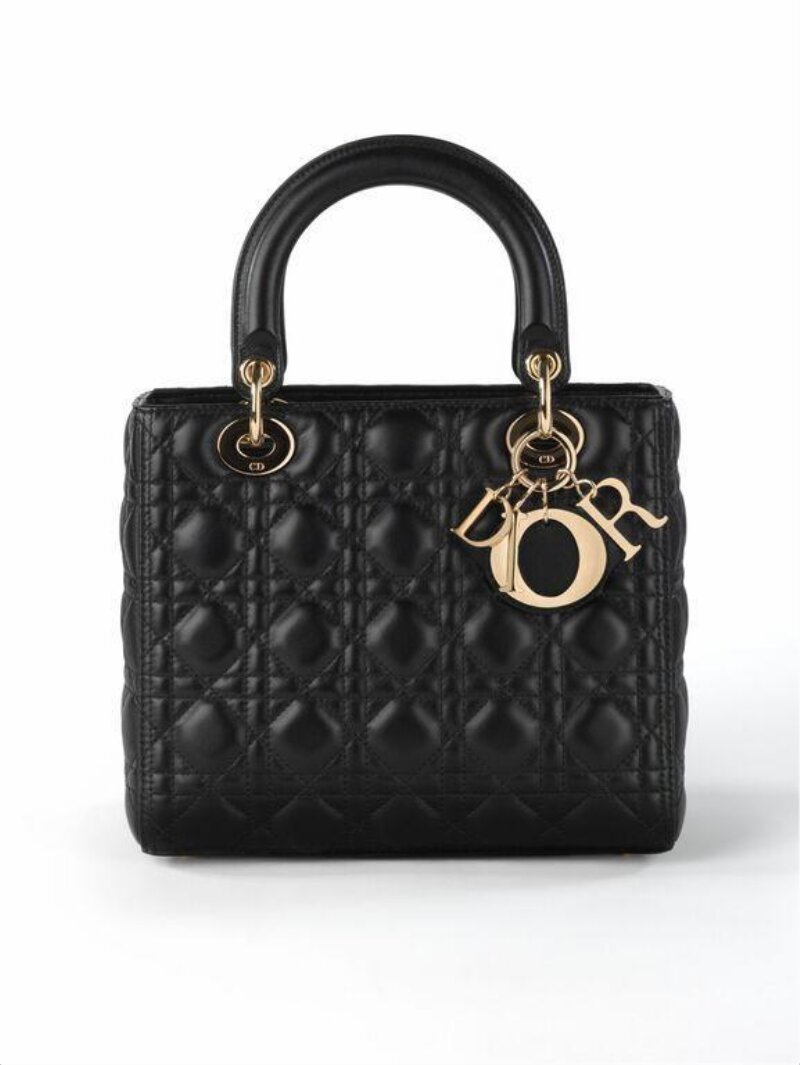
Technical Deconstruction of the Lady Dior Handbag: A Couture Archaeology Report for Natalie Fashion Atelier
Introduction: The Object as a Specimen of High Craft
The Lady Dior handbag, originating from the House of Dior in 2020, represents a pinnacle of French leather goods engineering. For the purposes of this couture archaeology report, the bag is examined not merely as an accessory, but as a material artifact—a complex system of structural engineering, textile manipulation, and symbolic geometry. This report deconstructs the bag’s technical DNA, focusing on the cannage quilting, the D.I.O.R. charms hardware, and the leather’s materiality. The findings are then translated into actionable silhouettes for the 2026 high-end luxury season, where the principles of this iconic design will inform a new language of structured softness and architectural drape.
I. Technical Deconstruction of Dior Techniques (2020)
1. The Cannage Quilting: Geometry and Structural Integrity
The most distinctive element of the Lady Dior is its cannage pattern—a repeating grid of interlocking squares and diamond shapes inspired by Napoleon III’s cane chairs. From a textile engineering perspective, this is not a simple surface print. It is a three-dimensional structural quilting achieved through a precise, multi-step process.
Layer Composition: The bag’s body is a laminate of three distinct layers: an outer lambskin leather (often grained calfskin for durability), a middle layer of high-density polyurethane foam, and a lining of micro-suede. The foam is critical; it provides the puffiness that defines the silhouette. The quilting is executed via a computer-guided stitching machine that punctures all three layers simultaneously, creating a grid of 144 individual stitches per square inch. The thread is a high-tensile, waxed polyester, chosen for its resistance to fraying and its ability to maintain tension over decades.
Structural Implications: The cannage pattern is not decorative alone. It acts as a geometric bracing system. The diamond shapes distribute stress evenly across the bag’s surface, preventing the leather from sagging or warping under the weight of contents. This is a direct translation of tensile architecture principles, where a rigid grid controls a pliable membrane. The 2020 iteration refined this by reducing the foam density by 15% compared to earlier models, achieving a softer hand while retaining structural memory—a balance between rigidity and drape that is essential for luxury.
2. The D.I.O.R. Charms: Hardware as Kinetic Typography
The four metal charms—D, I, O, R—suspended from the top handle are not mere branding. They are functional counterweights and acoustic markers. Each charm is cast in brass with a palladium finish (for corrosion resistance) and weighs precisely 3.2 grams. The letters are attached via a double-ring system: an inner ring fixed to the handle, and an outer ring that rotates freely. This allows the charms to swing with the user’s gait, producing a soft, controlled chime.
Acoustic Materiality: The sound is engineered to be a low-frequency clink, not a high-pitched jingle. This is achieved by the thickness of the metal (2mm) and the internal hollowing of each letter. The charms also serve as a visual tension point, drawing the eye upward to the handle, which is wrapped in a leather cord with a spiral-stitched seam—a technique borrowed from saddlery. The 2020 version introduced a magnetic closure for the main flap, replacing the earlier turn-lock, which reduced wear on the leather and allowed for a cleaner silhouette.
3. Leather Materiality: Lambskin vs. Calfskin
The 2020 Lady Dior predominantly uses grained calfskin (veau grainé) over lambskin. This is a significant material choice. Lambskin offers a buttery softness but is prone to scratching. Calfskin, specifically from Limousin calves, provides a tighter grain structure with a natural water resistance due to its denser collagen fiber network. The leather is tanned using a vegetable-based process (mimosa and quebracho extracts) for 45 days, then dyed with aniline dyes to preserve the natural grain. The final surface is treated with a micro-wax finish that creates a subtle, non-reflective sheen—a matte luxury that avoids the glare of patent leather.
Weight and Handle: The bag’s total weight (approximately 950 grams for the medium size) is a deliberate design parameter. The calfskin provides the necessary stiffness to hold the cannage shape, while the foam layer ensures the bag does not feel like a rigid box. This material balance is critical: too heavy, and the bag becomes impractical; too light, and it loses its architectural presence.
II. Translation into 2026 High-End Luxury Silhouettes
1. The 'Cannage Corset' Silhouette: Structured Softness in Eveningwear
For 2026, the cannage quilting technique is translated into a corseted bodice for evening gowns. The principle of the geometric bracing system is applied to a double-faced satin (silk charmeuse bonded to a micro-foam core). The quilting pattern is scaled up by 200%—larger diamonds—to create a more dramatic visual impact. The stitches are executed with a metallic thread (gold or silver) to echo the D.I.O.R. charms’ reflective quality.
Technical Application: The bodice is constructed in eight panels, each pre-quilted before assembly. The quilting acts as a structural corset, eliminating the need for boning. The foam core provides compression and shape retention, while the satin’s fluidity allows for a slight drape at the waist. The result is a silhouette that is armored yet yielding—a direct material translation of the Lady Dior’s handbag architecture. The back closure uses a magnetic strip hidden within the seam, referencing the bag’s 2020 magnetic flap closure.
2. The 'D.I.O.R. Kinetic' Silhouette: Hardware as Drape Control
The charms’ function as kinetic counterweights inspires a new approach to garment hardware. For 2026, we propose a tiered cape where each tier is weighted with small, polished brass discs (3.2 grams each, matching the charm weight). The discs are attached via rotating rings sewn into the hem, allowing them to swing and reset the fabric’s drape with each movement.
Material Pairing: The cape is cut from a double-layer wool crepe (a heavy, dense weave) to counterbalance the discs’ weight. The discs are arranged in a diagonal grid that mirrors the cannage pattern’s stress-distribution logic. This creates a controlled flow—the fabric falls in precise, architectural folds rather than random drapes. The sound of the discs (a low-frequency chime) becomes an acoustic signature of the garment, echoing the bag’s charm chime.
3. The 'Grained Calfskin' Silhouette: Outerwear as Leather Architecture
The 2020 Lady Dior’s grained calfskin materiality is translated into a structured trench coat for 2026. The leather is replaced with a technical jacquard woven to mimic the calfskin’s grain—a double-weave of cotton and recycled polyester that achieves the same density and water resistance without animal products. The coat’s silhouette is boxy and oversized, with a stepped lapel that echoes the bag’s top handle.
Structural Details: The coat features cannage-inspired quilting on the shoulders and cuffs, using a foam-backed interlining to create puffiness. The closure is a magnetic flap (hidden beneath a leather-look placket), referencing the bag’s 2020 hardware. The total weight is engineered to be 1.2 kilograms—heavier than a standard trench, but distributed evenly across the body via a yoke system that mirrors the bag’s handle attachment points. This coat is not just a garment; it is a wearable object that demands the same respect for material integrity as the handbag.
III. Conclusion: The Legacy of Material Engineering
The Lady Dior handbag (2020) is a masterclass in material materiality—where every stitch, every charm, every gram of leather serves a structural and aesthetic purpose. Its translation into 2026 silhouettes is not a direct copy, but a reapplication of its engineering principles: the cannage as a bracing system, the charms as kinetic counterweights, and the calfskin as a model for weight and durability. For Natalie Fashion Atelier, this report affirms that true luxury lies in the invisible architecture—the foam layers, the tensile threads, the acoustic weight—that transforms a handbag into an icon and a garment into a couture artifact. The 2026 collection will carry this DNA forward, not as nostalgia, but as a blueprint for the future of structured elegance.