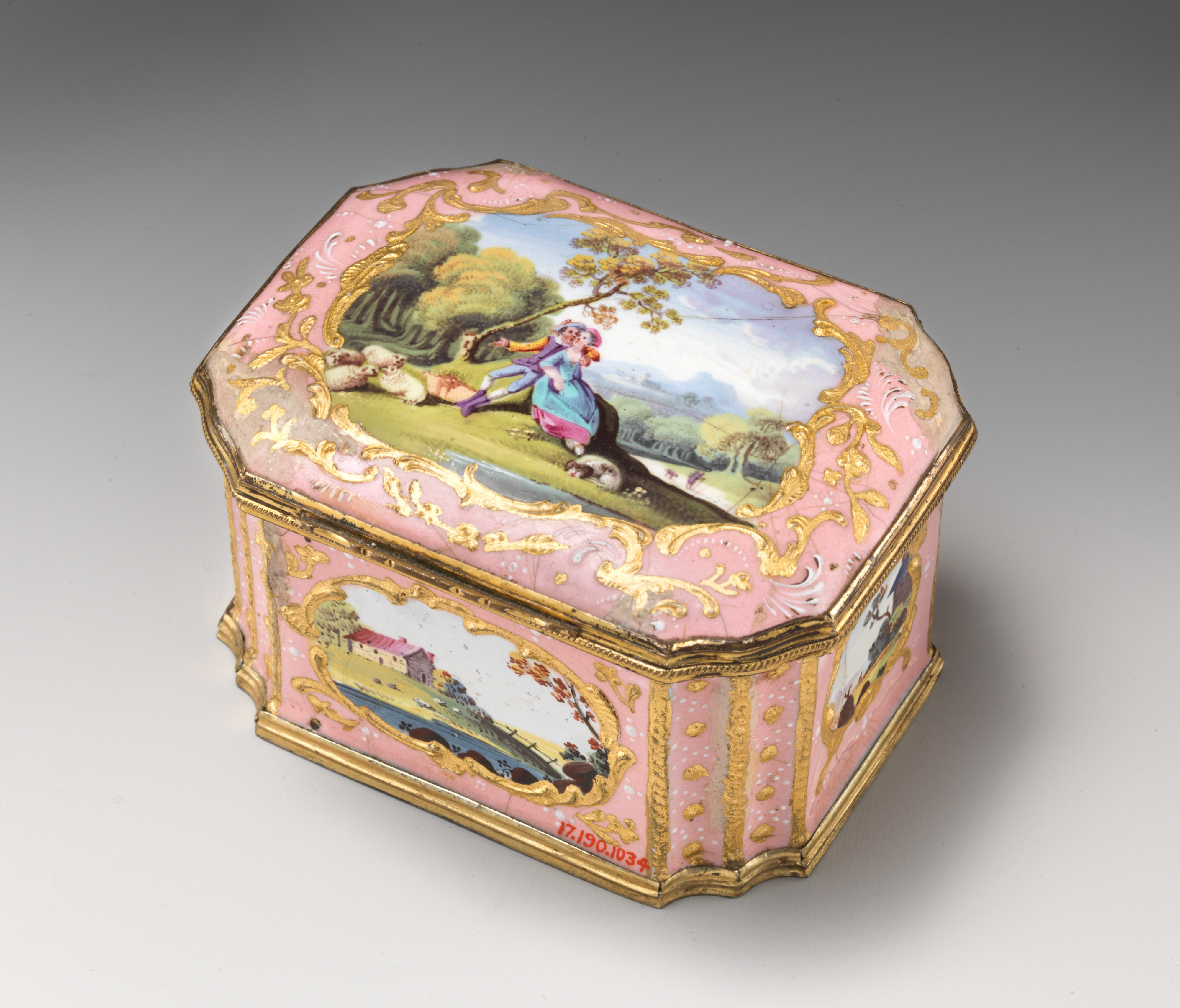
The Enameled Copper Snuffbox: An Aesthetic Archaeology for 2026 Couture Silhouettes
Within the isolated archive of global heritage, the enameled copper snuffbox emerges not as a mere trinket of aristocratic leisure, but as a profound artifact of material alchemy. For the 2026 season at Natalie Fashion Atelier, this object—a miniature vault of color, light, and structural tension—offers a lexicon of design principles that transcend its original function. This research artifact deconstructs the classical elegance of the snuffbox, translating its enameled copper materiality into a rigorous framework for high-end silhouettes. The analysis proceeds through three distinct lenses: the chromatic logic of the enamel, the structural grammar of the copper substrate, and the kinetic interplay of containment and revelation.
I. Chromatic Logic: The Enamel as a Surface of Depth and Luminosity
The enameled surface of a historical snuffbox is not a painted layer; it is a vitreous, fired membrane that captures and refracts light. This technique, perfected across European and Asian ateliers, creates a depth that flat pigmentation cannot achieve. For 2026 haute couture, this translates into a chromatic architecture where color is not applied but embedded within the fabric itself.
Consider the cloisonné technique: thin copper wires delineate compartments, each filled with a distinct enamel paste. After firing, these cells produce a mosaic of intense, jewel-like hues. The 2026 silhouette must replicate this effect through structural color—not dyes, but woven metallic threads and layered organza that create iridescence. The palette is drawn from the snuffbox’s typical repertoire: deep cobalt, emerald green, and vermillion, tempered by the patina of aged copper. These colors are not used in broad swaths but in compartmentalized panels on a gown, mimicking the snuffbox’s segmented lid. A bodice might feature a grid of hand-embroidered silk threads, each cell a different shade, separated by fine silver or copper piping. This creates a surface that shifts in hue as the wearer moves, echoing the snuffbox’s play of light.
Furthermore, the translucency of the enamel—achieved by applying multiple thin layers—informs the use of sheer overlays in 2026 silhouettes. A skirt constructed from multiple layers of tinted tulle, each a slightly different saturation of the same color, produces a depth analogous to the enamel’s vitreous body. The luminosity is further enhanced by under-linings of metallic lamé, which catch and reflect light through the translucent layers, much like the copper base shines through the enamel. This technique is reserved for evening wear and ceremonial pieces, where the object’s heritage of luxury is most potent.
II. Structural Grammar: The Copper Substrate as a Framework for Form
The copper base of the snuffbox is not merely a support; it is a structural armature that dictates the object’s geometry. Copper’s malleability allows for crisp edges, gentle curves, and sharp angles—all of which inform the architectural silhouette of 2026. The rigidity of the metal, when translated to couture, suggests a departure from fluid draping toward sculpted, engineered forms.
Specifically, the hinged lid of the snuffbox provides a model for articulated joints within a garment. A jacket or coat can incorporate metal or resin hinges at the shoulder or elbow, allowing for a rigid silhouette that still permits movement. The copper’s patina—a natural oxidation that produces greens, browns, and blues—is replicated through surface treatment of fabrics. A copper-infused silk faille can be chemically treated to develop a controlled patina, creating a garment that ages and changes over time, a living artifact. The weight of the copper is also a consideration. In the snuffbox, the metal provides a satisfying heft. In 2026 silhouettes, this translates to weighted hems and structured understructures. A floor-length gown might feature a copper chain mail underlayer, visible only at the hem, which lends the garment a gravitational pull, anchoring the silhouette to the floor.
The geometric precision of the snuffbox’s form—often a perfect rectangle, oval, or octagon—informs the cut of the garment. Panels are not draped but precisely cut and assembled like the sides of the box. A 2026 silhouette may feature a rectangular bodice with sharp, angular shoulders, transitioning into a softly rounded skirt, mimicking the snuffbox’s lid and base. The seams are not hidden but emphasized with metallic piping, acting as the copper wires that separate the enamel cells. This creates a garment that is a three-dimensional object on the body, a wearable box that both conceals and reveals the form within.
III. Kinetic Interplay: Containment and Revelation in Movement
The snuffbox’s primary function is containment—a small, portable vault for a precious substance. This principle of containment is central to the 2026 couture silhouette. The garment becomes a protective shell, a second skin that encloses the wearer. Yet, the snuffbox also allows for revelation through its hinged lid. This kinetic duality informs the design of transformable garments.
For 2026, this translates into silhouettes with detachable or hinged panels. A cape might be secured by a single, large enameled copper clasp, which, when released, allows the garment to fall open, revealing an inner layer of contrasting color or texture. The act of opening becomes a performative gesture, echoing the snuffbox’s use in social rituals. The interior of the garment—often neglected in conventional design—is treated with the same care as the exterior. Linings are made of burnished copper silk or enameled embroidery, visible only when the wearer moves or gestures.
The scale of the snuffbox—typically held in the palm—is inverted for the human body. The miniature becomes monumental. The intricate details of the enamel, visible only under close inspection, are magnified into large-scale embroideries and appliqués. A pattern that occupies a square centimeter on the snuffbox becomes a square meter on a gown. The repetition of the snuffbox’s decorative motifs—floral scrolls, geometric arabesques—is used to create rhythm across the silhouette, guiding the eye from shoulder to hem. The kinetic energy of the wearer is mirrored by the garment’s surface, which shimmers and shifts as the enameled panels catch the light.
Finally, the weight and balance of the snuffbox inform the drape and counterbalance of the 2026 silhouette. A garment that is heavily structured on one side—perhaps a single, copper-enameled sleeve—must be balanced by a flowing, lightweight fabric on the other. This asymmetry creates a dynamic tension, a visual equilibrium that is both unexpected and elegant. The snuffbox, in its perfect, contained form, teaches us that luxury lies in the precision of the join, the depth of the surface, and the ritual of the reveal. For Natalie Fashion Atelier, the enameled copper snuffbox is not a historical reference; it is a material manifesto for the 2026 season.