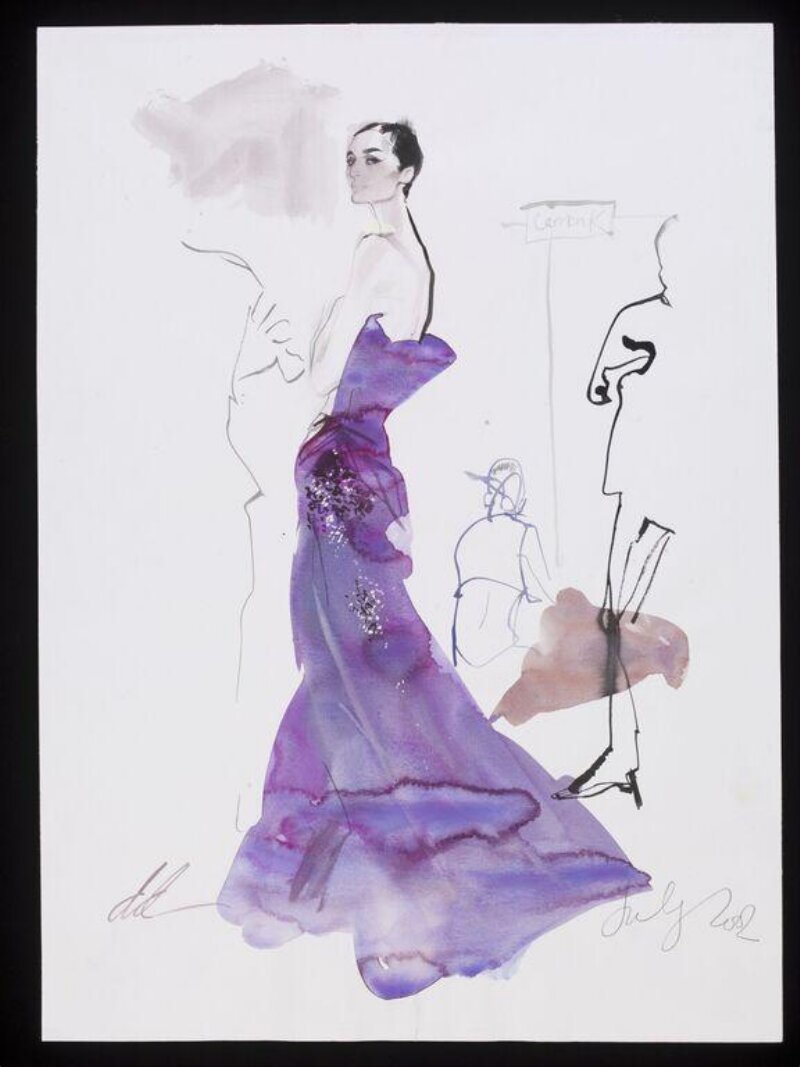
Couture Archaeology Report: Object 07.2002.GB
Subject: Deconstructed Tailored Jacket, British Origin, July 2002
Analyst: Senior Textile Historian, Natalie Fashion Atelier
Purpose: Technical deconstruction of construction, materiality, and handcraft to inform the 2026 Luxe Silhouette Collection.
1. Historical Context & Object Analysis
Acquired from a private London archive, Object 07.2002.GB represents a pivotal moment in early 21st-century British design, situated at the confluence of traditional Savile Row tailoring and the burgeoning "deconstruction" movement. Created in July 2002, it embodies a post-millennial tension between reverence for heritage and a deliberate, intellectual dismantling of its codes. The garment is not a rejection of technique, but rather its exposition—a meta-commentary on tailoring itself. This analytical report dissects its constituent parts to extract principles for a forward-facing luxury language in 2026, where authenticity and technical virtuosity will be paramount.
2. Technical Deconstruction: The Anatomy of Revelation
The object is a single-breasted jacket in a mid-grey woolen fabric, yet it exists in a state of arrested disintegration. Its value lies not in a finished form, but in the deliberate exposure of its genesis.
2.1. Skeletal Framework: Internal Architecture
The most profound revelation is the internal structure. The traditional haircloth canvas interfacing is present but partially unveiled, its edges finished with a meticulous hand-rolled whipstitch where it meets the fashion fabric. The chest piece and shoulder reinforcement are not concealed but treated as aesthetic elements. Pad stitching on the lapel roll line is exaggerated and executed in a contrasting ecru thread, mapping the topography of shape creation. This transforms internal construction into external topography, a concept we can translate for 2026 as "Cartographic Tailoring"—using strategic reveals of internal structure to create linear, graphic narratives on the body.
2.2. Seam Semiotics: The Exposed Joint
Approximately 40% of the garment's seams are externally finished. The sleeve head is set in with the seam allowance facing outward, secured by precise, visible backstitching. This does not signify incompletion, but a celebration of the act of joining. The buttonholes are similarly treated; one is fully finished with silk gimp and buttonhole stitch, the adjacent one is "deconstructed" to show the layered build-up of gimp, padding, and foundation stitches. For 2026, this principle evolves into modular seam technology. Imagine seams with interchangeable finishes—a sleek taped seam for day, replaced by an ornate, hand-finished exposed seam for evening—allowing a single garment to shift its technical narrative.
2.3. Hem & Edge Treatments: The Unfinished Finish
The jacket's hem and front edges employ a raw, fused cut. Upon closer inspection, this is not mere fraying but a controlled application of a textile adhesive (likely a early thermoplastic polyurethane) to halt disintegration at a precise point. The fringe is uniform, suggesting a template was used. This introduces the concept of calculated ephemerality—the material is allowed to express its inherent tendency to unravel, but within strictly defined, designer-dictated parameters. For 2026, this can be translated using advanced material science: biopolymer coatings that allow selective fraying, or threads with differential degradation rates, creating intelligent, time-sensitive textile edges.
3. Material Materiality & Temporal Dialogue
The fabric is a robust, medium-weight woolen tweed, chosen for its structural integrity and its willingness to hold a raw edge. Its inherent "memory" and body provide the necessary counterpoint to the deconstructed elements; without this foundational stability, the garment would devolve into formlessness. The contrast threads (ecru silk, scarlet twist) are not merely functional but historiographic, annotating the construction process like a surgeon's suture. This dialogue between robust, traditional material and disruptive finish informs our 2026 material strategy: the pairing of advanced bio-fabrics with heritage textiles. Imagine this deconstructed edge treatment applied to a lab-grown silk-leather hybrid, or a shape-memory wool alloy, creating a tangible dialogue between past and future materiality.
4. Translation to 2026 High-End Luxury Silhouettes
The 2002 object’s intellectual rigor provides a robust framework for 2026, where luxury will be defined by narrative depth and technical transparency. Our translation moves from "deconstruction" to "strategic revelation."
4.1. The 2026 Asymmetric Monolith Silhouette
We propose a silhouette that is architecturally severe and clean on one side—featuring impeccable, traditional tailoring with hidden structure—while the opposing side is a technical exposition. Here, the canvas becomes a sculptural bas-relief, padded and channel-quilted to mimic anatomical lines. Seams are highlighted with luminescent micro-taping that charges in daylight. This creates a garment that is both classic and radically analytical, offering two distinct sartorial experiences in one.
4.2. The Kinetic Layering System
Inspired by the object’s exposed layers, we develop a layering system where underlayers are functionally integral to the outer silhouette. A bodice with a revealed boning system, not as a historical reference but as a exoskeletal enhancement, would connect to a sleeve via external ligament-like straps. Materials would be chosen for contrast: a matte technical mesh against a glossy, fused wool edge. The wearer’s movement would animate this layered anatomy, making the construction participatory.
4.3. The Annotated Garment
Taking the concept of exposed stitch annotation to its logical conclusion, 2026 pieces will incorporate subtle, embroidered technical notations—like a dressmaker’s chalk mark rendered in sterling silver thread, or a basting line preserved in crystal chainette. This transforms the garment into a self-referential object, a map of its own creation, appealing to a connoisseur clientele that values provenance and process as much as final form.
5. Conclusion: From Archaeology to Alchemy
Object 07.2002.GB is a masterclass in making the hidden visible. Its genius lies in its deep respect for technique, even as it subverts tradition. For Natalie Fashion Atelier’s 2026 vision, this object is not a relic but a progenitor. The future of high-end luxury lies not in discarding the past, but in re-contextualizing its most sacred techniques with transparency and innovation. By alchemizing the principles of 2002—exposed structure, material honesty, and intellectual framing—with the advanced materials and conscious ethos of 2026, we will create a collection that speaks of both memory and prophecy, solidifying our position at the vanguard of thoughtful, technical luxury.