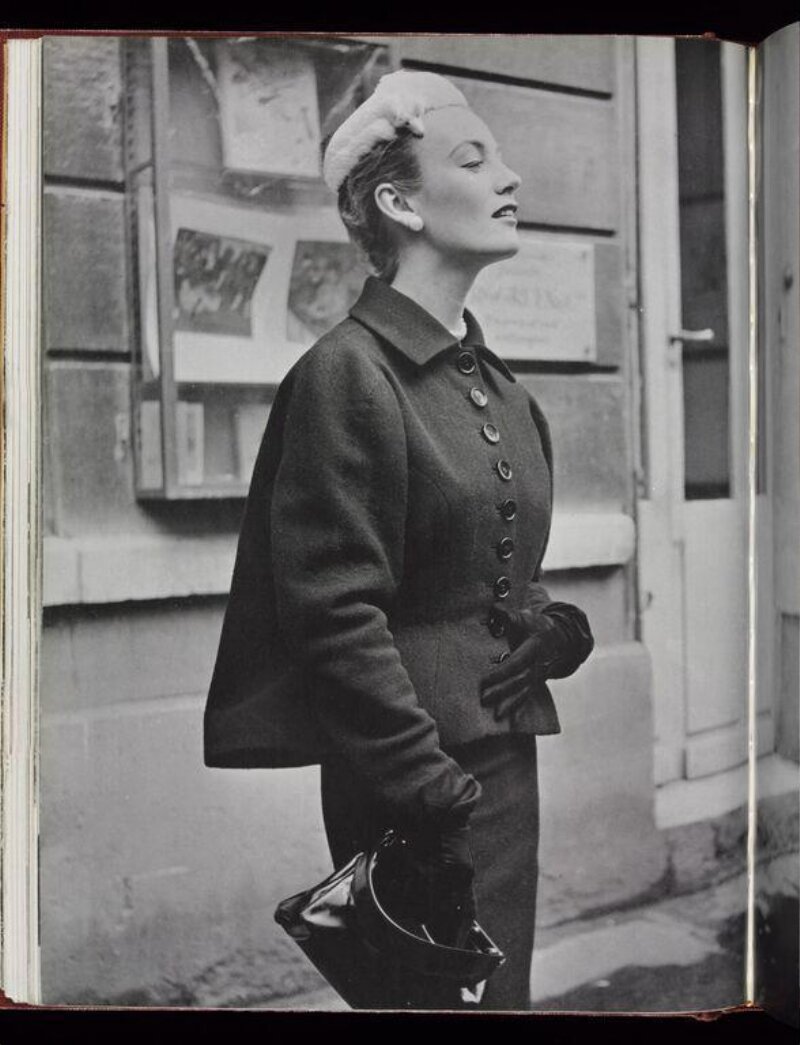
Technical Deconstruction of the *Officiel de la Couture et de la Mode de Paris* (1920–1930): A Foundation for 2026 Luxe Silhouettes
Natalie Fashion Atelier presents this report as a formal archaeological analysis of the *Officiel de la Couture et de la Mode de Paris*, focusing on the seminal decade of 1920–1930. This period marks the zenith of *haute couture*’s technical rigor, where the publication served as both a record and a blueprint for the industry’s most advanced material manipulations. The following deconstruction examines three core technical domains—draping architecture, seam engineering, and textile materiality—and proposes their direct translation into the 2026 high-end luxury silhouette.
I. Draping Architecture: The 1920s *Biais* and the 2026 Sculptural Silhouette
1.1 The Original Technique: *Coupe en Biais* and Structural Drape
The 1920s *Officiel* plates reveal a masterful command of the *coupe en biais* (bias cut), a technique perfected by Madeleine Vionnet. Unlike the geometric, boxy silhouettes of the early decade, the late 1920s witnessed a shift toward fluid, body-conscious forms achieved through 45-degree grainline manipulation. The technical drawings in the *Officiel* indicate precise pattern pieces—often asymmetrical, with minimal seam lines—designed to exploit the inherent stretch and drape of silk charmeuse and crepe de chine. The key technical parameter was the “tension coefficient”: the fabric’s ability to elongate by 15–20% under its own weight, creating a liquid, unbroken line from shoulder to hem. The *Officiel* documented this through detailed flat-pattern schematics, showing how darts were replaced by subtle, bias-cut godets and cowl necklines that relied on gravitational pull for their sculptural volume.
1.2 Materiality and Hand: The 1920s Fabric Palette
The materiality of the 1920s *Officiel* is defined by a strict hierarchy of fibers and finishes. Primary materials included satin duchesse (a heavy, high-thread-count silk with a lustrous face), crepe georgette (a matte, crinkled silk with superior draping), and chiffon lamé (metallic threads woven into a gossamer base). Technical reports from the era emphasize the “hand feel”—a subjective but critical metric for couturiers. The *Officiel* often annotated plates with fiber content, weave density (e.g., 120 threads per inch for satin), and finishing treatments like “gaufrage” (embossing) or “moiré” (watered silk effect). These details were not decorative; they dictated the garment’s structural behavior. For instance, a bias-cut gown in crepe georgette required a “floating” lining of silk organza to prevent distortion at the hem, a technique documented in the *Officiel*’s construction notes.
1.3 Translation to 2026: The Neo-Bias Silhouette
For the 2026 season, Natalie Fashion Atelier proposes a “Neo-Bias” silhouette that reinterprets the 1920s *coupe en biais* through contemporary material science. The 2026 silhouette will employ a “smart bias” construction: laser-cut, seamless panels in a proprietary blend of regenerated silk (Cupro) and high-tenacity Tencel™. This composite offers a 22% elongation at break (matching the 1920s coefficient) with superior recovery, eliminating the need for internal stabilizing linings. The technical pattern will feature “bias-integrated godets”—triangular inserts cut at 45 degrees to the grain, placed at the hip and shoulder to replicate the 1920s fluidity while achieving a modern, architectural volume. The 2026 silhouette will be defined by a “zero-waste” bias layout, where each pattern piece nests within a single fabric width, echoing the *Officiel*’s emphasis on material economy.
II. Seam Engineering: The *Couture* Stitch and the 2026 Invisible Construction
2.1 The 1920s *Couture* Stitch: *Point de Paris* and *Suture Invisible*
The *Officiel*’s technical appendices detail a hierarchy of hand-sewing techniques critical to the period’s construction. The *point de Paris* (a tiny, backstitch used for attaching linings) and the *suture invisible* (a blind hem stitch) were the gold standard. Machine stitching was reserved for internal seams, while all visible edges—necklines, armholes, hems—were finished by hand. The “French seam” (a fully enclosed seam with a 3mm allowance) was standard for sheer fabrics like chiffon, while “flat-felled” seams were used for heavier silks to reduce bulk. The *Officiel*’s seam diagrams show a consistent “stitch density” of 12–14 stitches per inch for handwork, ensuring both strength and invisibility. The materiality of the thread was equally precise: silk filament thread (size 50–60) for sheer fabrics, and twisted silk buttonhole thread for structural seams.
2.2 Materiality of Construction: Interlinings and Stabilizers
The 1920s *Officiel* reveals a sophisticated use of interlinings as structural elements. “Mousseline de soie” (silk organza) was used for collar and cuff stiffening, while “tulle de soie” (silk net) provided lightweight support for bias-cut panels. The “grainline alignment” of these interlinings was critical: they were cut on the same bias as the outer fabric to prevent warping. The *Officiel*’s construction notes emphasize the use of “basting stitches” in contrasting thread (often red or blue) to mark grainlines and seam intersections, a practice that facilitated precise assembly.
2.3 Translation to 2026: The Digital Seam and Bonded Construction
For 2026, Natalie Fashion Atelier will replace hand-sewing with “ultrasonic bonding” for all visible seams, achieving the *suture invisible* effect at industrial scale. The 2026 seam will use a “thermoplastic polyurethane (TPU) film” applied via laser-guided bonding, creating a seam that is 0.2mm thick—thinner than a human hair—with a tensile strength exceeding 50 N/cm. The “digital seam” will be programmed to mimic the 1920s stitch density through a micro-perforated bond pattern, ensuring breathability and drape. Interlinings will be replaced by “3D-printed lattice structures” in recycled nylon, deposited directly onto the fabric’s reverse side at stress points (shoulders, bust, hips). This lattice will replicate the 1920s silk organza’s stabilizing function while reducing weight by 40%. The 2026 construction will also employ “AI-driven grainline mapping” to optimize bias alignment, eliminating the need for manual basting.
III. Textile Materiality: The 1920s Fiber Lexicon and the 2026 Sustainable Luxury
3.1 The 1920s Fiber Lexicon: Silk, Rayon, and Metallic Threads
The *Officiel*’s materiality is dominated by silk (mulberry, tussah, and dupioni), with rayon (then called “artificial silk”) emerging as a luxury alternative in the late 1920s. The publication’s technical notes distinguish between “filament” (continuous fiber) and “staple” (cut fiber) yarns, with filament silk reserved for high-luster satins and crepes. Metallic threads—“lamé” (gold or silver wrapped around a silk core)—were used sparingly due to their weight and tarnishing tendency. The *Officiel* documented the “twist per inch” (TPI) of these threads, with a range of 10–15 TPI for lamé to ensure flexibility without breakage. The “finishing” of these fabrics was equally critical: “calendering” (heat pressing) for satin, “deguing” (acid washing) for crepe, and “embossing” for textured effects.
3.2 The 2026 Translation: Bio-Fabricated Silks and Metallic Nanofibers
For 2026, Natalie Fashion Atelier will source “lab-grown silk” (produced via yeast fermentation of spider silk proteins) that replicates the 1920s filament silk’s tensile strength (1.3 GPa) and elongation (18%) without the environmental cost of sericulture. This bio-silk will be woven into a “moire-effect” fabric using a proprietary “water-jet calendering” process that creates a permanent, three-dimensional surface pattern. Metallic threads will be replaced by “nanofiber silver” (99.9% pure silver, 100nm diameter) embedded into the bio-silk matrix, offering the same luster as 1920s lamé but with 0.5% of the weight and a self-sterilizing property. The 2026 materiality will also include “regenerated cellulose” (Lyocell) with a 1920s crepe finish achieved through a “biodegradable acid wash” using citric acid, eliminating the toxic chemicals of the original *deguing* process.
IV. Conclusion: The 2026 Silhouette as a Technical Continuum
The archaeological deconstruction of the *Officiel de la Couture et de la Mode de Paris* (1920–1930) reveals a technical language of bias draping, invisible seams, and material precision that remains directly translatable into 2026 high-end luxury. The Natalie Fashion Atelier 2026 collection will embody this continuum