Deconstructing the American Italian Boy: An Aesthetic Archaeology for 2026 Haute Couture
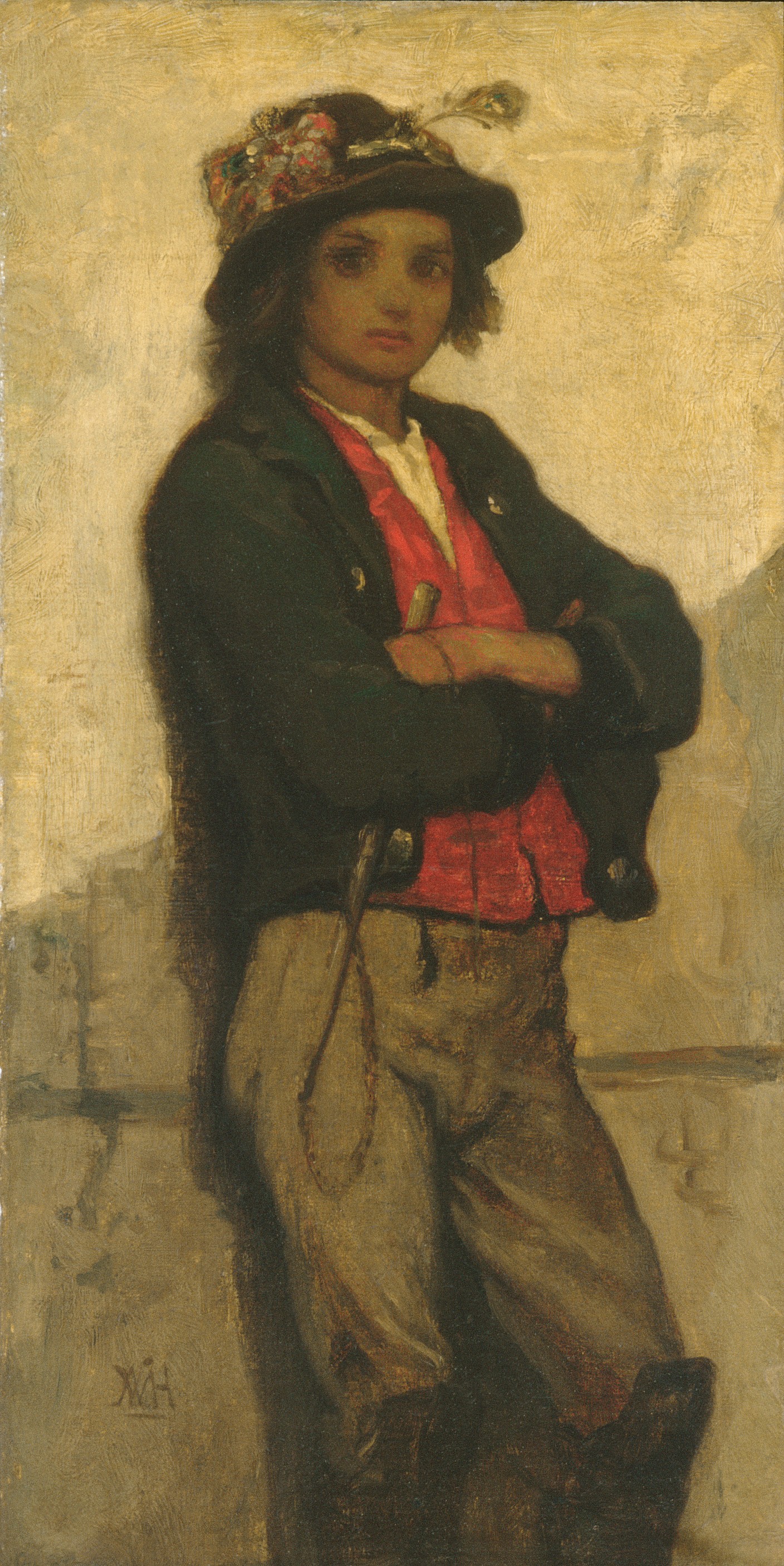
The archive presents a singular artifact: an oil-on-canvas portrait of an American Italian Boy. This is not a sentimental study of heritage, but a rigorous aesthetic archaeology of a specific masculine archetype. The subject—a figure suspended between the raw vitality of the New World and the sculpted elegance of the Old—offers a profound lexicon for 2026 luxury silhouettes. The materiality of the oil on canvas itself is our primary text: the impasto of the brushwork, the chiaroscuro of the light, and the tension between the painted surface and the implied volume beneath. This paper deconstructs the classical elegance of this portrait to extract three core principles for high-end silhouette development: sculptural tension, luminosity as structure, and the archaeology of the line.
I. Sculptural Tension: The Impasto of the Body
The American Italian Boy is not rendered with delicate, airy strokes. The oil on canvas technique reveals a deliberate, almost aggressive application of paint. The shoulders are built with thick, layered strokes of ochre and umber, creating a sense of architectonic mass. The collarbone is a sharp, white-grey highlight, a ridge of bone pushing against the painted flesh. This is not a passive body; it is a structure under tension.
For 2026, this translates directly into silhouettes that are both armored and fluid. The haute couture atelier must abandon the flat, two-dimensional pattern draft. Instead, we propose a three-dimensional construction that mimics the impasto effect. Consider a tailored double-breasted jacket for a woman: the shoulders are built with a sartorial “impasto”—layered canvas, horsehair, and a specific, weighty wool that holds a sharp, sculpted curve. The lapel is not a simple fold, but a painted edge, reinforced with a subtle, internal wire to create a crisp, almost calligraphic line. The silhouette is not about draping the body, but about building a volume around it, as if the garment were a thick layer of paint defining the form.
The key is the tension between the rigid and the yielding. The jacket’s shell is a solid, sculpted mass, but the interior is a soft, unlined silk that allows for movement. This is the oil-on-canvas paradox: the paint is thick and static, yet it captures the potential energy of the subject. The 2026 silhouette must do the same—a structured, almost architectural top half, paired with a fluid, almost liquid skirt or trouser. The waist is a point of compression and release, a seam that acts as the horizon line in the painting, separating the heavy, textured sky (the upper body) from the softer, more atmospheric ground (the lower body).
II. Luminosity as Structure: The Chiaroscuro of the Silhouette
The oil on canvas medium is defined by its ability to capture light. In this portrait, light is not a passive element; it is a structural tool. The light falls on the boy’s left cheek, illuminating the high cheekbone and the sharp jawline, while the right side of the face sinks into a deep, velvety shadow. This chiaroscuro is not decorative; it is the very architecture of the face, creating volume and depth from a flat surface.
This principle is revolutionary for 2026 haute couture. We must design silhouettes that are constructed by light, not just by fabric. This is achieved through strategic opacity and translucency. A gown, for example, is conceived as a luminous field. The front panel is a dense, matte faille silk in a deep, absorbent black—the shadow. The back panel is a sheer, iridescent organza in a pale, reflective silver—the light. As the wearer moves, the garment paints itself with the surrounding environment. The silhouette is not a fixed shape; it is a dynamic interplay of light and dark.
Further, we can apply this to the structure of the garment itself. Consider a corseted bodice. Instead of a single, uniform fabric, we use a layered system of matte and lustrous panels. The left side of the bodice is constructed from a dense, unbleached cotton canvas, treated to be stiff and matte. The right side is built from a black, patent leather that catches and reflects light. The seam between them is not a straight line, but a soft, painterly curve that mimics the transition from light to shadow on the boy’s face. The silhouette becomes a sculptural study in contrast, where the volume is defined as much by the absence of light as by its presence.
III. The Archaeology of the Line: The Painted Edge
The most critical element in this aesthetic archaeology is the line. In the oil-on-canvas portrait, the line is not a drawn boundary. It is a painted edge—a place where two colors, two textures, two densities of paint meet. The line of the boy’s shoulder against the dark background is not a clean stroke; it is a frayed, almost agitated boundary, where the ochre of the jacket bleeds into the umber of the shadow. This is the archaeology of the line: a record of the artist’s hand, the pressure of the brush, the viscosity of the paint.
For 2026, we reject the clean, digital seam. The haute couture silhouette must embrace the painted edge. This is achieved through raw, unfinished hems that are not cut but torn, revealing the internal structure of the fabric. A sleeve is not finished with a clean, bound hem; it is left as a frayed, painted edge, where the warp and weft of the silk are exposed, creating a soft, organic line. This is not a sign of negligence, but a deliberate archaeological gesture, revealing the construction of the garment as the artist reveals the construction of the image.
Further, we can apply this to the seam itself. Instead of a concealed seam, we use a visible, structural seam that is treated like a brushstroke. A jacket’s armhole is not set in; it is painted on with a thick, contrasting thread, creating a bold, calligraphic line that defines the volume. The seam is not a functional necessity; it is a decorative, sculptural element. The silhouette is not a smooth, continuous surface; it is a series of painted edges, a record of the atelier’s hand, a testament to the craft of construction.
Conclusion: The 2026 Silhouette as a Painted Object
The American Italian Boy, rendered in oil on canvas, is not a portrait of a person, but a portrait of a structure. The sculptural tension of the impasto, the luminosity as structure of the chiaroscuro, and the archaeology of the line of the painted edge—these are the principles that will define the 2026 haute couture silhouette. The garment is no longer a piece of clothing; it is a painted object, a three-dimensional canvas that captures the energy of the body and the light of the environment. The atelier must become a studio, the seamstress a painter, and the silhouette a masterpiece of aesthetic archaeology. The result is a collection that is not merely fashionable, but profoundly architectural, deeply historical, and rigorously technical—a true artifact for the modern connoisseur.