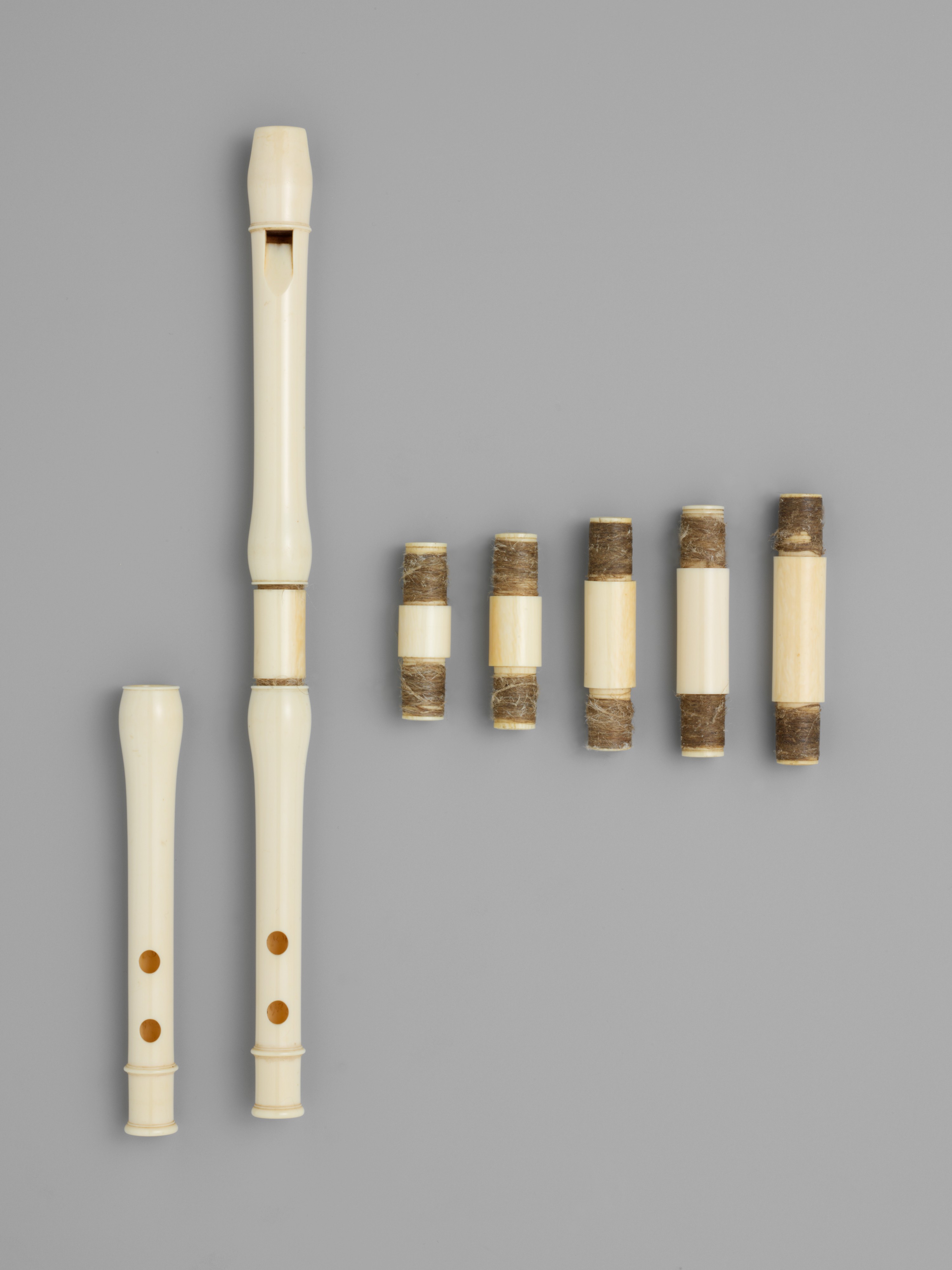
Deconstructing Galoubet: An Aesthetic Archaeology of Ivory and Leather
The term Galoubet, derived from the Provençal dialect for a small flute or pipe, evokes a specific historical resonance within the lexicon of French decorative arts. For the purposes of this research artifact, we isolate Galoubet not as a musical instrument, but as a conceptual anchor for a particular aesthetic archaeology—a study of a vanished material dialogue between ivory and leather.
This pairing, historically prevalent in 18th and 19th-century French luxury objects (from writing desks to game boxes), represents a tension between the rigid, luminous permanence of carved ivory and the supple, tactile warmth of treated leather. This isolated archive, devoid of its original functional context, offers a profound wellspring for the 2026 luxury silhouette. The core challenge is to translate this static, object-based tension into the dynamic, fluid language of haute couture.
Materiality as Narrative: The Ivory-Leather Dialectic
The historical Galoubet object—typically a cylindrical form of polished ivory, often inlaid with leather panels or wrapped in a fine leather sheath—presents a masterclass in material juxtaposition. Ivory, with its high density and cool, almost ceramic surface, offers structural integrity and a capacity for intricate, negative-space carving. Leather, conversely, provides a pliable, absorbent surface that ages with a patina of use, offering a contrasting warmth and organic texture.
For the 2026 silhouette, this dialectic is deconstructed into two primary architectural principles: rigid containment and fluid release. The ivory element informs a new vocabulary of structured outer shells—not corsetry, but sculptural, almost architectural carapaces that define the silhouette’s primary volume. These are not restrictive but rather defining, creating a clean, unwavering line from shoulder to hip, or a flared, bell-like skirt that mimics the turned base of a historic ivory column.
Conversely, the leather element informs the internal landscape of the garment. It becomes the lining, the undergarment, or the draped overlay that cascades from the rigid structure. This is not a simple lining; it is a second skin, a tactile counterpoint. The leather is treated with a semi-gloss finish, reminiscent of aged calfskin, to catch light differently than the matte ivory. This creates a visual and haptic dialogue: the eye is drawn to the cool, pristine ivory shell, only to be invited into the warm, yielding interior of leather.
Translating the Archive: Silhouette Architecture for 2026
The 2026 luxury silhouette, informed by the Galoubet archive, moves away from the purely soft or purely hard. It embraces a hybrid structuralism. The key innovation is the “floating carapace”—a garment where the primary volume is not anchored to the body at the waist or hip, but is suspended from the shoulders or a single structural seam, creating an air gap between the rigid outer shell and the soft leather underlayer.
The Ivory Carapace: Precision and Negative Space
The ivory element is reimagined in 2026 as a high-density, non-stretch textile—a proprietary blend of micro-satin with a rigid, almost resinous finish, or a structured, double-faced wool that has been heat-set to maintain a sharp, unyielding drape. The silhouette is defined by negative-space cutouts, directly referencing the intricate carving of historic ivory. These are not mere slits; they are geometric voids—ovals, parallelograms, or elongated teardrops—that reveal the leather underlayer beneath.
Consider a column gown. The outer layer is a sculpted ivory shell that extends from a high neckline to the floor, but is sliced vertically from the collarbone to the hip, revealing a panel of deep, cordovan-colored leather. The leather is not flush with the shell; it is gathered or pleated to create a subtle, organic volume that pushes against the rigid boundary. This creates a visual tension: the leather appears to be escaping the ivory’s confinement, a dynamic interplay of control and release.
Leather as Fluid Architecture: The Draped Underlayer
The leather underlayer is not a passive element. It is engineered with strategic weight and drape. For 2026, we utilize vegetable-tanned calfskin, split to an ultra-fine gauge for maximum fluidity, or a nappa lambskin treated with a water-based finish for a subtle, pearlized sheen. The leather is cut on the bias to create asymmetrical drapes that cascade from the ivory carapace.
In a jacket silhouette, the ivory shell forms a sharp, cropped bolero with defined, angular shoulders. The leather underlayer extends far below the hem, forming a long, flowing peplum or a train that trails behind the wearer. The leather is pleated in a fan pattern, referencing the fluting of a historic ivory column, but executed in a soft, moving material. The closure is not a zipper or button, but a series of leather ties that pass through carved ivory grommets—a direct translation of the historic object’s construction.
Technical Execution: The 2026 Haute Couture Process
The realization of this silhouette requires a return to bespoke craftsmanship with a modern, almost industrial precision. The process begins with a digital 3D scan of the client’s form, from which the ivory carapace is modeled as a series of interlocking panels. These panels are then cut from the rigid textile using a laser cutter for absolute precision, ensuring the negative-space cutouts align perfectly.
The leather underlayer is hand-molded over a custom dress form, using steam and heat to set the pleats and drapes. The leather is then hand-stitched to the ivory shell using a hidden seam, allowing for movement without distorting the rigid outer line. The final step is the application of ivory buttons—carved from actual tagua nut or a high-density resin—which are used not for closure but as decorative anchors at the points of tension, mimicking the decorative rivets on a historic leather-bound ivory box.
Color Palette and Surface Treatment
The 2026 palette is a direct extraction from the Galoubet object: ivory white (a warm, slightly yellowed white, not a stark bleached tone), cordovan (a deep, almost black cherry red), chestnut (a rich, warm brown), and parchment (a pale, aged beige). The surface treatment of the leather is critical: it is burnished at the edges to create a darker, aged patina, while the ivory textile is sanded to a matte finish, absorbing light rather than reflecting it.
Conclusion: The Galoubet as a Blueprint for 2026
The isolated aesthetic archaeology of Galoubet—this vanished dialogue between ivory and leather—provides a rigorous, material-driven framework for the 2026 luxury silhouette. It is not a nostalgic revival but a structural translation. The rigid carapace and the fluid underlayer are not opposites; they are a single, integrated system of tension and release, control and invitation.
For Natalie Fashion Atelier, this research affirms a commitment to material storytelling. The 2026 silhouette is not merely worn; it is inhabited. The wearer is enveloped by the cool, definitive shell of the ivory, while simultaneously embraced by the warm, yielding leather beneath. This is the essence of Parisian haute couture: a silent, elegant dialogue between the object and the body, the past and the future, the rigid and the fluid. The Galoubet archive, once a functional object, is reborn as a living, breathing silhouette for the discerning client of 2026.