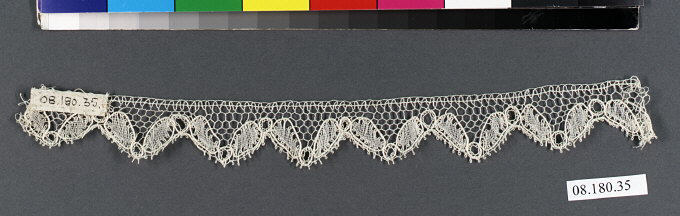
Fragment: The Archaeology of Bobbin Lace and the 2026 Silhouette
Within the quiet archives of Natalie Fashion Atelier, a singular fragment rests under conservation-grade glass. It is not a complete garment, nor a finished accessory. It is a remnant of bobbin lace, perhaps from a seventeenth-century Flemish collar or a nineteenth-century French engageante sleeve. This isolated piece, severed from its original context, represents a pure distillation of craft. For the 2026 luxury silhouette, this fragment is not a historical reference to be replicated, but a structural and aesthetic principle to be deconstructed and reanimated. The classical elegance of bobbin lace—its geometric precision, its negative-space architecture, and its paradoxical strength born from fragility—provides the foundational lexicon for a new era of Haute Couture.
The Materiality of the Fragment: Deconstructing Classical Elegance
Classical bobbin lace is defined by its rigorous technical discipline. Unlike needle lace, which builds thread upon thread, bobbin lace is a braided, twisted, and woven network of multiple threads, each wound on a separate bobbin. The fragment in our archive reveals a continuous, non-hierarchical structure. There is no warp or weft; every thread is both support and ornament. The classical elegance of this piece arises from the tension between its intricate, almost mathematical pattern and the ethereal, open ground it creates. The toile (the solid ground) and the réseau (the net-like background) are not separate elements but a single, integrated system of tension and release.
To deconstruct this elegance for 2026, we must first isolate its core principles. The fragment teaches us three essential lessons: structural transparency, where the void is as important as the thread; gradated density, where the pattern shifts from opaque to translucent through the manipulation of thread count and twist; and architectural drape, where the lace’s inherent stiffness (from the starch and the tight braiding) is counterpointed by its ability to conform to a three-dimensional form. This is not a fabric that drapes like silk; it is a fabric that sculpts the space around the body.
From Archive to Atelier: Translating Bobbin Lace into 2026 Silhouettes
The 2026 silhouette at Natalie Fashion Atelier is not a return to the corseted waist or the panniered hip. Instead, it is a post-structuralist reinterpretation of volume and line, directly derived from the bobbin lace fragment. The lace’s logic of continuous, interlocking lines informs a new approach to garment construction: the integrated seam. Where traditional couture relies on seams to join separate panels, the 2026 silhouette will use lace-like lattice structures to create seamless transitions between body and fabric.
Principle One: The Negative-Volume Silhouette
The fragment’s réseau—the open, net-like spaces—is the primary driver of the 2026 silhouette. We are developing a series of negative-volume gowns where the garment’s form is defined not by the fabric that covers the body, but by the voids it creates. This is achieved through a technique we call “tension architecture.” Using a modernized bobbin lace technique executed in high-tenacity silk filaments and laser-cut metallic threads, we construct a garment that is essentially a three-dimensional net. The body is not enclosed; it is framed.
For evening wear, this manifests as a column silhouette that appears to be woven directly onto the wearer. The lace pattern is densest at the shoulders and hips, creating a structured, architectural frame, while the torso and waist are rendered in an increasingly open réseau. The result is a silhouette that is simultaneously rigid and ethereal, a direct echo of the fragment’s own paradoxical nature. The classical elegance of the original lace is preserved in the precision of the pattern, but the silhouette is radically contemporary—a transparent armor of thread.
Principle Two: Gradated Opacity and the Layered Fragment
The fragment’s ability to shift from dense toile to open réseau informs a second key silhouette for 2026: the layered fragment gown. Here, we deconstruct the lace itself. Multiple layers of bobbin lace fragments, each with a different density and pattern scale, are suspended within a micro-engineered tulle matrix. This is not a simple overlay; it is a stratigraphic composition.
The outermost layer is a large-scale, open réseau that defines the overall silhouette—a sweeping A-line or a dramatic mermaid flare. Beneath it, a second layer of smaller, denser lace creates a secondary structure, perhaps a defined waist or a hip yoke. The innermost layer is a near-solid toile that provides opacity where needed. The eye reads these layers simultaneously, creating a moiré effect of shifting pattern and depth. The 2026 silhouette becomes a dynamic, optical experience, where the garment’s form changes as the wearer moves, revealing and concealing the body through the interplay of lace layers. This technique directly references the fragment’s own history as a severed part of a larger whole, recontextualizing it as a deliberate, multi-sensory design strategy.
Principle Three: The Architectural Drape and the Rigid-Fluid Paradox
Bobbin lace, particularly when starched, possesses a unique hand: it is stiff yet pliable, rigid yet capable of fluid folds. This rigid-fluid paradox is the foundation for the 2026 “structural drape” silhouette. We are developing a new lace composite where the bobbin lace is created from a core of shape-memory alloy filaments (Nitinol) wrapped in silk. This material can be “set” into a permanent three-dimensional shape—a sculpted shoulder, a standing collar, a floating peplum—yet it retains the visual lightness and pattern of traditional lace.
The silhouette for daywear is a tailored jacket or a sculpted top that appears to be a single, continuous piece of lace, but which holds its own architectural form without internal boning or interfacing. The lace itself is the structure. The classical elegance of the fragment’s pattern—its scrolls, its picots, its brides—is preserved, but it now functions as a load-bearing architectural element. The 2026 silhouette is no longer a soft garment draped on the body; it is a wearable structure, a fragment of architecture that the body inhabits. This is the ultimate deconstruction of classical elegance: the ornament becomes the load, the decoration becomes the structure, the fragment becomes the whole.
Conclusion: The Fragment as a Generative Principle
The isolated bobbin lace fragment in our archive is not a relic. It is a generative code. Its classical elegance, born from centuries of European craft tradition, is not a style to be copied but a logic to be extrapolated. For the 2026 luxury silhouette, we have extracted three core principles: negative-volume architecture, gradated opacity through layered fragments, and the rigid-fluid paradox of structural drape. These principles translate the fragment’s technical DNA into a new language of form—one that is simultaneously deeply historical and radically forward. The 2026 collection at Natalie Fashion Atelier will not show lace. It will show the idea of lace, manifested as silhouette, structure, and space. The fragment, in its isolated perfection, has become the blueprint for a new Haute Couture.