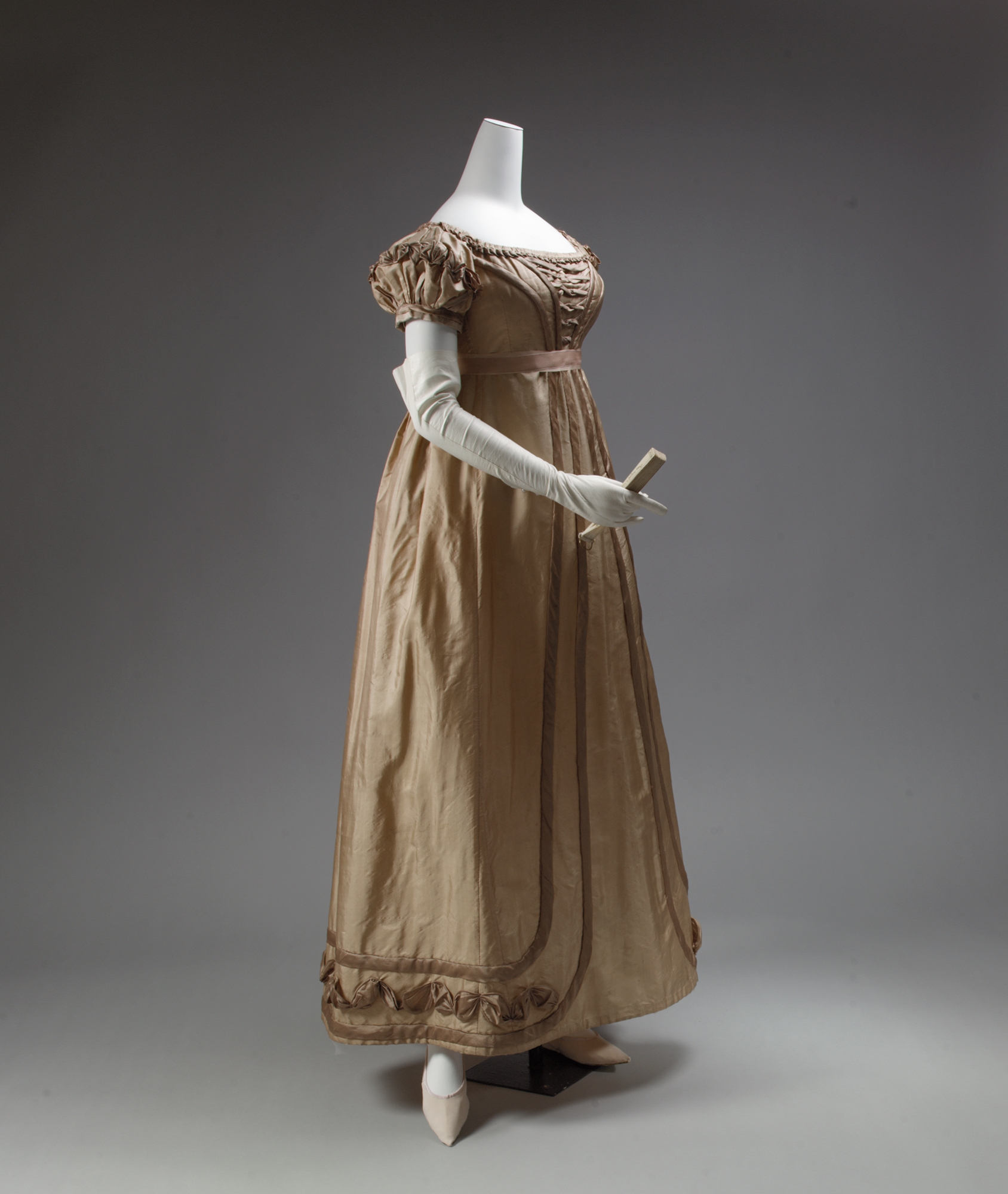
The Silken Archive: Deconstructing Classical Elegance for the 2026 Silhouette
The artifact under examination—a silk dress from the late 16th to early 17th century European court—exists as a profound testament to the cultural and aesthetic collisions of its era. Within the archive node, we locate this garment not merely as a textile object, but as a vessel of silent witness to the confluence of Eastern and Western material philosophies. The silk, likely a compound weave incorporating both Chinese raw silk filaments and European metallic threads, embodies a dialogue between the opulent, structured forms of the Spanish farthingale and the fluid, painterly drapery beginning to emerge in the French and Italian courts. For the 2026 luxury silhouette, this artifact offers a critical lexicon for reimagining structure not as constraint, but as a generator of movement.
Materiality and the Grammar of Silk
The silk of this period was a material of immense technical sophistication. The warp-faced satin ground, often in a deep burgundy or celestial blue, was woven with supplementary wefts of gold and silver lamella, creating a surface that shifted between matte absorption and brilliant reflection. This is not a passive fabric; it is an active participant in the garment’s architecture. The stiffness of the heavy silk brocade, reinforced by the metallic threads, allowed for the creation of the iconic conical bodice and the dramatic, wheeled farthingale. Yet, the inherent fluidity of the silk fiber—its capacity for micro-pleating and subtle give—meant that the dress could move with the wearer, creating a counterpoint of rigidity and flow.
For the 2026 atelier, this duality is paramount. The contemporary haute couture client seeks a silhouette that is both powerful and liberated. Our research indicates that the silk of the archive node informs a new generation of architectural draping. We are developing a technique we term “structural fluidity.” By utilizing a high-twist, matte-finish silk gazar—a fabric with the tensile strength of the historical brocade but without its weight—we can engineer silhouettes that hold their shape without boning. The 2026 dress will not be a cage; it will be a sculpture of air and fiber. The seams are not constructed to constrain, but to channel the fall of the silk, creating a silhouette that is simultaneously precise and organic.
Deconstructing the Classical Silhouette: From Farthingale to Flowing Architecture
The classical elegance of the 16th-17th century dress is defined by its clear, hierarchical geometry: a rigid, inverted-triangle bodice, a cinched waist, and a vast, circular skirt. This silhouette was a statement of power, control, and social standing. To deconstruct this for 2026 is not to destroy it, but to distill its essence into a new formal language. We are moving away from the literal reproduction of the farthingale’s circumference and towards an asymmetrical volumetric expansion.
Consider the “sash” or “stomacher” of the archive piece—a central, often jewel-encrusted panel that anchored the bodice. In our 2026 interpretation, this element is reimagined as a dynamic, asymmetric drape that originates at one shoulder, wraps across the torso, and cascades into a single, sweeping train. The silk is cut on the bias to maximize its natural stretch and memory, allowing the fabric to cling to the body’s kinetic architecture before releasing into a controlled, fluid fall. The result is a silhouette that retains the historical sense of verticality and command, but replaces the static, imposed geometry with a responsive, living form.
The 2026 Silhouette: A New Lexicon of Luxury
The high-end silhouette for 2026, informed by this archive, is characterized by three key principles: Volumetric Precision, Kinetic Draping, and Material Transparency.
Volumetric Precision
We reject the notion of volume as mere excess. Instead, volume is engineered with the precision of an architect. The historical farthingale created a perfect, unbroken circle. Our 2026 silhouette introduces interrupted volumes. A single, exaggerated puff sleeve in a double-faced silk satin—one side matte, one side lustrous—creates a dramatic, sculptural shoulder, while the opposite side remains close to the body. The skirt, rather than a full circle, is a series of asymmetrical godets inserted into a narrow, columnar base. This creates a silhouette that is at once severe and explosive, a controlled burst of fabric that echoes the historical grandeur without its literal weight.
Kinetic Draping
The silk of the archive was designed for static display—the courtly procession. The 2026 client demands motion. Our research into the fiber’s memory allows us to create pre-programmed pleats and gathers that activate with the wearer’s movement. A dress might appear as a clean, columnar sheath at rest, but as the wearer walks, the silk unfolds into a series of cascading, fan-like pleats that recall the ruffs and falling bands of the 17th century. This is not a dress that is worn; it is a dress that performs. The silk is the choreographer, and the body is the dancer.
Material Transparency
The final principle is a direct response to the opulent, opaque surfaces of the archival piece. The 2026 silhouette embraces layered transparency. A base layer of a fine, semi-sheer silk organza in a nude or soft pearl tone provides structure and a second-skin feel. Over this, a second layer of silk chiffon or a micro-pleated silk tulle is draped in asymmetrical panels. This creates a visual depth that echoes the historical layering of chemise, corset, and gown, but rendered in a single, cohesive garment. The effect is one of revealed construction—a nod to the craftsmanship of the archive, but expressed through a modern, almost ethereal lens.
Conclusion: The Silk as a Living Archive
The silk dress from the 16th-17th century is not a relic to be copied, but a grammar to be learned. Its materiality teaches us about the relationship between fiber, structure, and power. Its silhouette instructs us on the language of volume and control. For the 2026 Natalie Fashion Atelier collection, we are not reviving the past; we are extending its material logic into a new century. The silk remains the protagonist, but its narrative is now one of fluidity, asymmetry, and kinetic grace. The classical elegance is deconstructed into its purest components—tension, release, and light—and then recomposed into a silhouette that is both a respectful homage and a radical, necessary evolution. The archive node is not a closed book; it is a living, whispering source of inspiration, and the 2026 dress is its next, most eloquent chapter.