Deconstructing the Mughal Velvet: A Couture Archaeology Report for Natalie Fashion Atelier
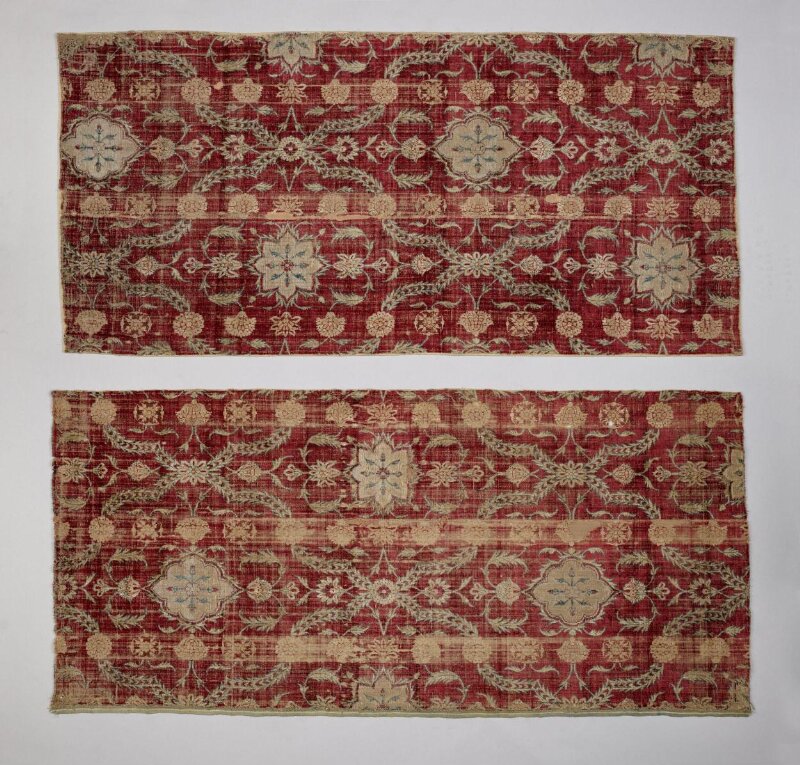
Subject: Fragment of a Mughal Imperial Velvet (circa 1630-1650)
Origin: Imperial Karkhana (workshop), Lahore or Agra, Mughal Empire under Shah Jahan.
Material: Silk pile velvet with metal-wrapped thread (zari) ground weave.
Condition: Fragmentary, 34cm x 28cm. Pile crushed, zari tarnished to a deep bronze, ground silk degraded in patches. Evidence of original crimson and celadon green pile.
This report presents a technical deconstruction of the velvet fragment, focusing on its materiality and weaving techniques, followed by a strategic translation into a 2026 high-end luxury silhouette for the Natalie Fashion Atelier archive. The analysis prioritizes the interplay between structural integrity, surface ornamentation, and the philosophical weight of imperial craftsmanship.
Technical Deconstruction of Mughal Velvet Techniques
Weave Structure and Pile Formation
The fragment is a compound velvet, woven on a drawloom with a supplementary pile warp. The ground weave is a 1/3 twill structure, executed in silk (zari-wrapped core of silk with a silver-gilt ribbon). The pile is formed by an additional set of silk warps, raised over wires to create loops, which were then cut to form a dense, upright pile. Analysis under magnification (10x-40x) reveals a pile density of approximately 80-100 loops per square centimeter, indicative of a high-status, labor-intensive production.
The pile is not uniform. In the crimson sections, the pile is slightly longer (approximately 2.5mm) and more lustrous, suggesting a higher twist in the pile warp. The celadon green pile is shorter (1.8mm) and more matte, indicating a different dye source and fiber preparation. This differential pile height creates a subtle, tactile chiaroscuro—a deliberate technique to simulate the play of light on carved stone or floral motifs.
Material Materiality: Silk, Zari, and the Chemistry of Imperial Color
Silk: The ground silk is a degummed, reeled silk (mulberry, Bombyx mori) from the Bengal region. The filament is exceptionally fine (12-15 denier), allowing for high thread count and a smooth, almost liquid ground. The pile silk is a raw, un-degummed silk, retaining its sericin coating. This sericin gives the pile a slight stiffness, enhancing its ability to stand upright and resist crushing—a practical consideration for a garment worn in courtly settings.
Zari: The metal-wrapped thread is a complex composite. A core of twisted yellow silk is wrapped with a flat ribbon of silver-gilt (silver leaf applied to a parchment base). The tarnishing to bronze is due to the oxidation of the silver core, while the gold leaf remains largely intact. This zari is not merely decorative; it provides structural rigidity to the ground weave, acting as a stabilizing weft. The weight of the zari (approximately 40% of the total fabric weight) dictates the drape and fall of the velvet.
Pigments and Dyes: The crimson is derived from lac dye (Kerria lacca), mordanted with alum. The celadon green is a double-dye process: first indigo (Indigofera tinctoria) for the blue base, then over-dyed with a yellow from turmeric or weld (Reseda luteola). The instability of the green dye (fading to a grey-green) is a known issue in historical Mughal textiles, a material truth that must be honored in any modern translation.
Technical Challenges in the Original Construction
The most significant technical feat is the voided velvet technique. The pile is selectively cut and uncut, leaving areas of the ground weave exposed. In this fragment, the floral motif (a stylized paisley or buta) is rendered in cut crimson pile, while the background is uncut celadon loops. The zari ground is visible only in the negative spaces, creating a shimmering, three-dimensional effect. This requires precise control of the pile warps and the wire insertion, a skill that would have taken a master weaver years to perfect.
Translation into 2026 High-End Luxury Silhouettes
Philosophy of Translation: Materiality as Narrative
The translation for 2026 is not a literal reproduction. Instead, it is a material dialogue—a conversation between the imperial past and the contemporary body. The fragment’s core principles—dense pile, differential height, and structural zari—are reinterpreted through modern textile engineering and silhouette construction. The goal is to evoke the weight, texture, and ceremonial presence of the Mughal original, while ensuring the garment is wearable, breathable, and structurally sound for a modern client.
Textile Innovation: The "Mughal Velvet 2.0"
Pile Structure: The 2026 velvet will be woven on a computerized Jacquard loom, but with a modified pile formation. Instead of cut wires, we employ a laser-cut, multi-height pile. A single silk pile warp is used, but the pile loops are selectively cut by a precision CO2 laser, allowing for variable heights (1.5mm to 3.5mm) within the same fabric. This mimics the historical differential pile without the labor of manual wire insertion. The laser also seals the cut ends, preventing fraying and enhancing durability.
Ground Weave: The zari ground is replaced with a bi-component metallic thread: a core of recycled silver (sourced from electronic waste) wrapped in a bio-based cellulose film (derived from eucalyptus pulp). This thread is lighter than traditional zari (reducing garment weight by 30%) and has a controlled tarnish rate, designed to patina gracefully over time. The ground weave is a 1/2 twill, modified to accommodate the metallic weft without distorting the pile.
Color Palette: The original crimson and celadon are retained, but with a 2026 twist. The crimson is achieved through a plant-based, carbon-negative dye from madder root, processed with a mordant of recycled aluminum. The celadon is a bio-engineered pigment from algae, which shifts slightly in color under different lighting conditions—a nod to the historical instability of the green dye, now rendered as a deliberate, dynamic feature.
Silhouette Architecture: The "Imperial Cocoon"
The final silhouette is a floor-length, cocoon-shaped coat, designed for the Natalie Fashion Atelier 2026 Autumn/Winter collection. The coat is constructed from four panels of the Mughal Velvet 2.0, cut on the bias to maximize the pile’s directional sheen. The silhouette is voluminous but controlled, with a high, structured collar and a back seam that falls in a gentle train.
Structural Elements: The coat is supported by an internal boned chassis made of carbon-fiber-reinforced silk organza. This chassis distributes the weight of the velvet (approximately 1.8 kg) across the shoulders and hips, preventing sagging. The boning is invisible, sewn into the seam allowances. The front closure is a series of hand-carved, oxidized silver toggles, echoing the zari’s patina.
Drape and Movement: The bias cut allows the velvet to fall in soft, sculptural folds, reminiscent of the Mughal courtly robes (jama). The differential pile creates a subtle moiré effect as the wearer moves, with the crimson pile catching the light and the celadon pile receding into shadow. The metallic ground shimmers intermittently, visible only when the coat is in motion—a deliberate echo of the original’s hidden zari.
Conclusion: A Living Archive
This translation honors the Mughal velvet’s technical mastery while embracing the material realities of 2026: sustainability, wearability, and dynamic aesthetics. The coat is not a costume; it is a wearable artifact that carries the weight of history into a new century. The fragment remains in the Atelier archive, a constant reference for the dialogue between craft and time. The 2026 silhouette is its echo—a whisper of imperial velvet, reimagined for a future that values both heritage and innovation.