Deconstructing the Princely Equestrian: An Aesthetic Archaeology of the Don Baltasar Carlos Etching
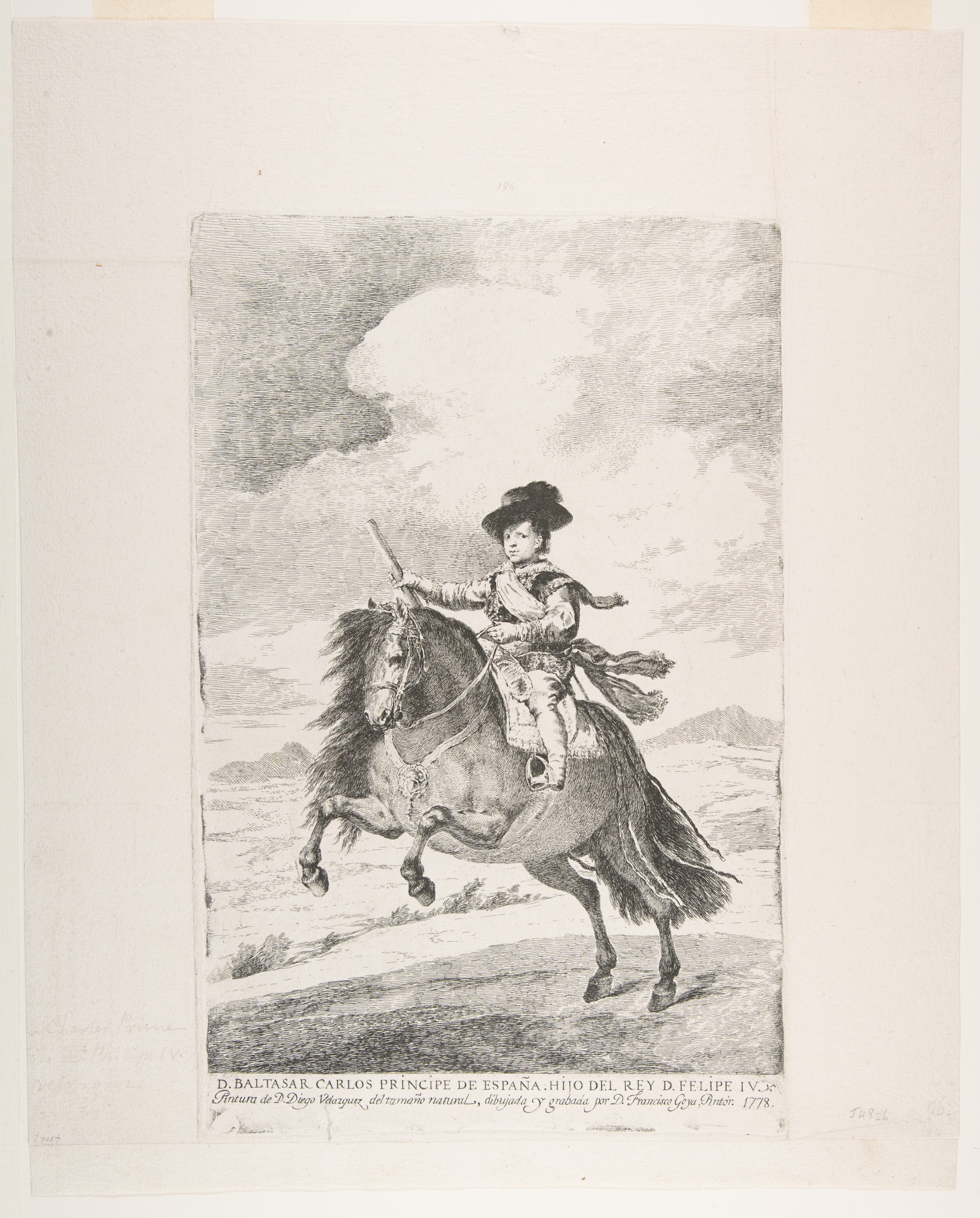
The archive of Natalie Fashion Atelier is not a repository of static relics, but a living lexicon of form, tension, and gesture. Within this collection, the isolated etching after Velázquez’s Don Baltasar Carlos on Horseback—rendered in the rigorous medium of etching and drypoint—presents a singular opportunity for aesthetic archaeology. This is not a study of the painting’s color or Baroque grandeur, but a forensic examination of the print’s materiality: the incised line, the velvety burr of the drypoint, the stark contrast of light and void. For the 2026 couture silhouette, this artifact offers a masterclass in structural tension, compressed power, and the architecture of the gaze.
The Etching Line as Couture Seam
The etching process, by its very nature, is an act of controlled aggression. The needle carves into the copper plate, creating a furrow that holds ink. In the drypoint, the burr—the raised, rough edge of the incised line—holds ink with a soft, blurred richness. This duality is the primary lesson for 2026. The haute couture silhouette must be conceived as a linear incision on the body’s volume. We are not draping; we are drawing with fabric.
Consider the horse’s powerful, arched neck in the etching. The line that defines it is not a continuous curve but a series of short, decisive strokes. This translates directly into a tailored bodice where the seams are not hidden but celebrated. The 2026 silhouette will feature exposed, structural seam lines—like the drypoint burr—that are slightly raised, perhaps through a double-stitched cord or a micro-pleated insertion. These seams do not merely join panels; they articulate the form, creating a visual tension that mimics the animal’s coiled energy. The line of the horse’s foreleg, lifted in a controlled prance, becomes the asymmetric hemline of a sculpted gown, a sharp diagonal that cuts across the body’s verticality.
Compressed Power: The Silhouette of the Princely Body
Don Baltasar Carlos, a child prince, is rendered with the formal dignity of a ruler. His posture is erect, his gaze forward, his body encased in a rigid, jeweled costume. This is not a natural body; it is a political and symbolic form. The etching captures this compression—the way the elaborate collar, the stiff doublet, and the heavy saddle create a cage of elegance around the small figure.
For 2026, this translates into a silhouette that is internally structured yet visually fluid. The concept of the “internal corset” is paramount. We will not rely on external boning, but on architectural underlayers—a second skin of micro-molded, high-tensile tulle or resin-coated silk organza. This invisible structure will create the compressed waist and the expanded hip seen in the prince’s silhouette, but without the historical constraint. The outer garment—a coat, a gown, a cape—will drape over this internal architecture, creating a dialogue between rigid control and flowing release.
The horse’s massive, muscular haunches, rendered in the etching with dense, cross-hatched lines, inform the volume of the skirt. We will not use panniers or crinolines. Instead, we will employ geometric, pleated structures that expand from a single, sharp seam at the hip. The pleats will be deep, knife-edged, and asymmetrical, echoing the drypoint’s cross-hatching. The fabric will be a double-faced wool crepe or a structured silk gazar, capable of holding a sharp, architectural fold. The result is a silhouette that is monumental without being heavy, a controlled explosion of volume that references the horse’s power while retaining the prince’s poised stillness.
The Void and the Light: Negative Space as Luxury
In the etching, the background is often a dense, velvety black, created by the deep, cross-hatched lines. The figure of the prince and the horse emerge from this darkness, their forms defined by the absence of light. This is a profound lesson in negative space. The 2026 silhouette must be defined not only by what it covers, but by what it reveals.
We will introduce strategic voids into the garment. A single, deep cut-away at the nape of the neck, echoing the space between the prince’s collar and his hair. A long, vertical slit from the shoulder to the elbow, revealing a contrasting under-sleeve in a matte, black silk. These voids are not mere cut-outs; they are architectural apertures that frame the body as the etching frame frames the prince. The drypoint’s velvety burr will be replicated through the use of devoré velvet—a fabric that is chemically etched to create a pattern of sheer and opaque areas. This technique allows the garment to have a gradated opacity, a shifting field of light and shadow that mimics the print’s tonal range.
Materiality: The Etching’s Texture in Fabric
The drypoint burr is the most tactile element of the print. It is a soft, almost furry edge that holds the ink differently than the clean, sharp line of the etching. This texture must be translated into the finish of the fabric. We will develop a custom jacquard that incorporates a raised, looped thread—a micro-bouclé—that creates a deliberate, uneven surface. This will be used for the structural panels of the garment, while the voids will be lined in a liquid, high-sheen satin that catches the light. The contrast between the matte, textured burr and the glossy, reflective void is the essence of the print’s materiality.
The ink itself—a deep, carbon black—informs the color palette. The 2026 collection will be monochromatic, a study in black, charcoal, and deepest midnight. The only accent will be a single, precise line of silver or white—like the drypoint’s scratch—to define a seam or a hem. This is not minimalism; it is maximal restraint, a concentration of visual and tactile information into a single, powerful hue.
The Gaze: The Silhouette as a Viewing Apparatus
Finally, the etching teaches us about the architecture of the gaze. The prince looks out, directly at the viewer, his small body commanding the entire composition. The horse’s eye is also visible, alert and focused. The garment of 2026 must direct the gaze. The asymmetric neckline will draw the eye to the collarbone. The sharp, diagonal seam will lead the gaze from the hip to the hem. The strategic void will frame a shoulder blade or a wrist. The silhouette is not merely a covering; it is a compositional tool, a frame within which the body becomes the subject.
In conclusion, the Don Baltasar Carlos on Horseback etching, through its incised lines, compressed power, and dramatic voids, provides a complete lexicon for the 2026 haute couture silhouette. It is a lesson in structural integrity, tactile contrast, and the art of the gaze. The resulting garments will be architectural, monochromatic, and intensely focused—a direct translation of the print’s materiality into the language of luxury fashion. The body is the copper plate; the fabric is the ink; the seam is the needle’s mark. The result is a living etching, a princely form carved from light and shadow.