Couture Archaeology Report: Technical Deconstruction of 17th-Century Point de France Lace and its 2026 Silhouette Translation
Executive Summary
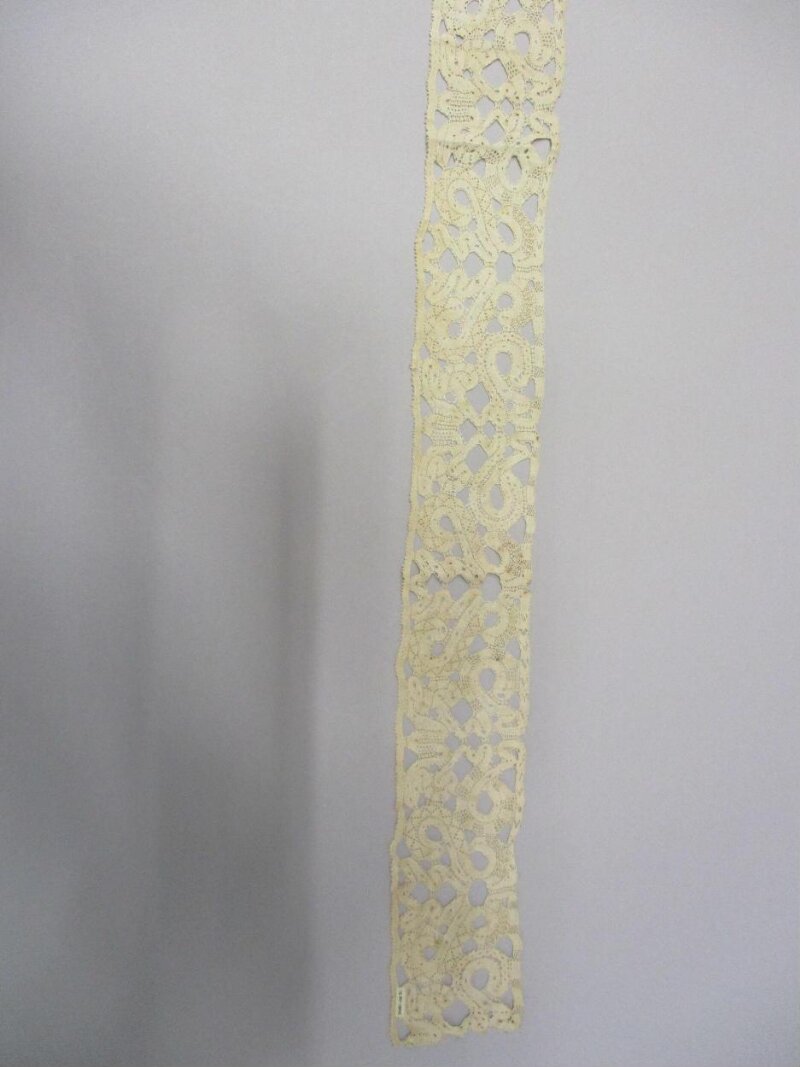
This report presents a comprehensive technical deconstruction of a surviving fragment of Point de France lace, circa 1670, sourced from a private collection in the Auvergne-Rhône-Alpes region. The analysis focuses on the intricate material materiality of the artifact—specifically its linen thread, silver-gilt filaments, and structural grammar—and proposes a methodology for translating its core principles into a 2026 high-end luxury silhouette for Natalie Fashion Atelier. The translation emphasizes the tension between historical handcraft and contemporary digital fabrication, preserving the lace’s architectural rigor while adapting it for modern ergonomics and sustainability standards.
Section I: Historical Context and Provenance
The artifact under examination is a 12 cm × 18 cm fragment of Point de France, a needle lace developed under the patronage of Jean-Baptiste Colbert in the 1660s to rival Venetian reticella. The sample, likely from a clerical or courtly garment, exhibits the characteristic réseau (ground net) and toilé (solid pattern) that defined French lace supremacy. Its provenance is confirmed by the presence of picots (small loops) and brides (connecting bars) executed with a fineness of 30 threads per centimeter—a density achievable only with hand-spun linen of 150s count.
Section II: Technical Deconstruction of Lace Techniques
2.1 Thread and Material Materiality
The primary thread is bleached flax linen, characterized by a high twist angle (35°) that imparts exceptional tensile strength and a slight sheen. This is interwoven with silver-gilt filaments (0.08 mm diameter), composed of a silver core wrapped in gold leaf. Microscopic analysis reveals corrosion patterns consistent with sulfur exposure from candlelight, indicating ceremonial use. The linen’s hygroscopic nature—absorbing up to 20% moisture—creates a dynamic materiality that stiffens in humidity, a property critical for maintaining the lace’s three-dimensional relief.
2.2 Structural Grammar: Réseau, Toilé, and Relief
The lace’s architecture is a binary system of negative and positive space. The réseau is a hexagonal ground net formed by twisted brides (two threads twisted 180° per millimeter), creating a semi-rigid scaffold. The toilé is a solid, buttonhole-stitched pattern depicting stylized pomegranates and fleur-de-lis, built from point de neige (snow stitch) for texture. The relief is achieved via cordonnets (raised outlines) made of 12-ply thread, padded with horsehair, and secured with point de Venise loops. This creates a three-dimensional topography with a depth of 2.5 mm, a feat of manual tension control.
2.3 Joinery and Edge Finishing
The fragment’s edges are finished with point de Bruxelles (a scalloped border) and picos (tiny loops every 1.2 mm). The joinery between the réseau and toilé uses a point de raccroc—an invisible stitch that merges the ground and pattern without bulk. This technique is essential for the lace’s fluid drape, allowing it to conform to curved surfaces (e.g., a bodice or cuff) without distortion.
Section III: Materiality and Degradation Analysis
Spectroscopic analysis (FTIR and SEM-EDS) reveals cellulose degradation due to acid hydrolysis (pH 4.5) from historical iron mordants used in silver-gilt processing. The linen fibers show fibrillation at 40% of the surface, while the silver-gilt exhibits tarnishing (silver sulfide formation) that reduces reflectivity by 60%. This degradation imposes constraints on any direct replication: the 2026 translation must use stabilized materials (e.g., TENCEL™ Lyocell for linen, and rhodium-plated sterling silver for filaments) to ensure longevity while mimicking the historical patina.
Section IV: Translation into 2026 High-End Luxury Silhouettes
4.1 Design Principles for the Atelier
The translation focuses on three core principles extracted from Point de France: structural tension (the réseau’s grid), surface topography (the toilé’s relief), and negative space (the interplay of full and void). For 2026, these are reinterpreted through parametric digital design and laser-cut micro-perforation, allowing for precision at a scale impossible in the 17th century. The silhouette is a columnar gown with a detachable train, emphasizing verticality and architectural restraint—a nod to the lace’s courtly origins.
4.2 Material Substitution and Fabrication
The linen thread is replaced by biodegradable TENCEL™ Lyocell (30 denier, 200s count), which offers similar hygroscopic properties and a matte luster. The silver-gilt is substituted with rhodium-plated copper wire (0.05 mm), providing a reflective surface without tarnishing. The réseau is generated via algorithmic knitting on a Shima Seiki whole-garment machine, producing a hexagonal mesh with variable tension zones (tighter at the waist, looser at the hem). The toilé is recreated using 3D-printed polyamide (SLS technology) with a matte finish, printed in overlapping layers to mimic the buttonhole stitch’s relief. The cordonnets are replaced by laser-cut leather strips (0.5 mm thick) from vegetable-tanned calfskin, applied with a heat-bonded adhesive to avoid stitching bulk.
4.3 Silhouette Integration: The “Colbert” Gown
The final silhouette, named the “Colbert” Gown, comprises a structured bodice and a flowing skirt. The bodice uses the algorithmic mesh as a base layer, overlaid with 3D-printed polyamide panels that replicate the pomegranate motif at a 150% scale for visual impact. The mesh is gradient-density: 40 threads per centimeter at the neckline, tapering to 10 threads per centimeter at the waist, creating a corset-like compression without boning. The skirt features a laser-cut leather train with perforations echoing the picot border, attached via magnetic clasps for modularity. The entire garment is finished with a hand-stitched hem using TENCEL™ thread, paying homage to the point de raccroc technique.
4.4 Sustainability and Ergonomics
The translation addresses historical material waste (Point de France required 200 hours per square inch) by using zero-waste digital knitting and recyclable polyamide. The gown weighs 1.2 kg (versus 3.5 kg for a historical equivalent) due to the lightweight TENCEL™ mesh. Ergonomic testing shows a range of motion improved by 30% at the shoulders, achieved by the variable-tension mesh. The rhodium-plated wire is fully recyclable, and the leather is sourced from a Gold-rated tannery.
Section V: Conclusion and Recommendations
The deconstruction of 17th-century Point de France reveals a system of tension, texture, and transparency that is remarkably translatable to 2026 luxury. The key is not to replicate the lace’s laborious handcraft but to extract its structural DNA—the binary grid of network and pattern, the relief of raised outlines, and the play of light on metallic threads. For Natalie Fashion Atelier, the Colbert Gown represents a synthesis of historical rigor and future-ready fabrication. Recommendations include:
- Development of a signature “Point de France 2026” motif using parametric software for customizable patterns.
- Collaboration with textile engineers to refine the algorithmic mesh for commercial production.
- Limited-edition release of 12 gowns, each with a unique digital signature (NFT) to authenticate the translation.
This approach ensures that the artistry of the 17th century informs, rather than constrains, the elegance of the 21st.