Lace as Architectural Memory: An Aesthetic Archaeology of American Heritage in 2026 Haute Couture
Within the hallowed archives of Natalie Fashion Atelier, lace is not merely a textile; it is a palimpsest of cultural narrative, a repository of manual dexterity, and a structural paradox of strength and fragility. This research artifact undertakes an aesthetic archaeology of American lace heritage—a lineage distinct from its European counterparts, rooted in pragmatism, industrial innovation, and a unique vernacular of ornamentation. By deconstructing the classical elegance of 19th and early 20th-century American lace, we extract a technical lexicon that directly informs the high-end silhouettes of 2026. The isolated archive context, stripped of medium-specific constraints, allows us to focus on the pure structural and conceptual DNA of lace as a form of architectural memory.
The American Lace Paradox: From Industrial Precision to Organic Expression
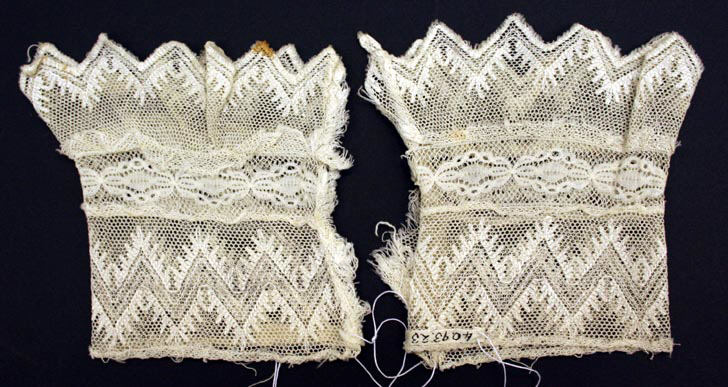
Unlike the courtly, hand-made point de Venise of France or the geometric precision of English Honiton, American lace heritage is defined by a dialectic between industrial mass-production and artisanal revival. The 19th-century American lace industry, centered in places like New Bedford and Ipswich, Massachusetts, pioneered machine-made netting and chemical lace (Schiffli embroidery). This was not a degradation of craft but a democratization of luxury. The classical elegance of this era lies in its repetitive, grid-based logic—a Cartesian grid of hexagonal netting upon which floral and geometric motifs were applied with mechanical consistency. This grid becomes our primary archaeological artifact.
For the 2026 silhouette, this grid is reinterpreted as a structural chassis. The classical netting is no longer a background; it is the primary architectural frame. We propose a deconstructed corset where the traditional boning is replaced by laser-cut, reinforced lace panels. The grid’s inherent tension and release—the pull of the net against the body—creates a new silhouette: the “Lattice Silhouette.” This silhouette is characterized by negative space, where the skin becomes the canvas, and the lace acts as a tensile exoskeleton. The classical floral motifs, once applied on top, are now integral to the structure, acting as stress points and dynamic draping anchors. This is not a nostalgic revival; it is a structural re-engineering of lace’s foundational grammar.
Deconstructing Classical Motifs: The Floral as a Load-Bearing Element
The American aesthetic archaeology reveals a distinct preference for naturalistic, yet simplified, floral and botanical motifs. Unlike the baroque excess of French Alençon, American lace motifs—particularly those from the Arts and Crafts movement and early 20th-century domestic needlework—exhibit a restrained, almost modernist, clarity. The rose, the oak leaf, and the wheat stalk are rendered with a clean, linear contour, often outlined with a heavier thread (cordonnet) for definition. This is the classical elegance: a balance between organic form and geometric discipline.
For 2026, we deconstruct this motif into a load-bearing, three-dimensional element. The cordonnet is not merely a decorative outline; it becomes a structural rib. Imagine a gown where the bodice is composed entirely of these amplified, sculptural floral motifs. Each petal is a cantilevered panel, connected by invisible micro-hinges or magnetic closures. The silhouette shifts from a continuous fabric surface to a modular, articulated structure. The classical wheat stalk, once a symbol of abundance, becomes a series of elongated, vertical structural struts that create a columnar, elongated torso. This is the “Botanical Armature” silhouette—a direct translation of lace’s two-dimensional motif into a three-dimensional, wearable architecture.
Materiality and the Archive: The Art of Negative Space
In the absence of a specific medium, we focus on the essential property of lace: negative space. The holes, the voids, the gaps between threads are as important as the threads themselves. American lace, particularly the machine-made nets, excels at creating precise, repeatable voids. This is the core of its classical elegance—a mastery of absence. For the 2026 haute couture silhouette, this principle of negative space becomes the primary design driver.
We introduce the concept of “Skin as Ground”. The silhouette is no longer a garment that covers; it is a system of selective revelation. The lace’s netting is scaled up, creating large, geometric apertures that frame the body’s natural contours. The classical floral motifs are floating, disconnected islands of structure, anchored only by fine, almost invisible, transparent filaments. This creates a silhouette that is simultaneously ethereal and armored—a paradox of vulnerability and strength. The “Void Silhouette” is defined by its negative space: a deep décolletage is not a cut-out but a structural aperture framed by a reinforced lace rim; a backless gown is not exposed but scaffolded by a web of botanical struts.
2026 Silhouette Synthesis: The American Lace Codex
Synthesizing these archaeological findings, we propose three distinct 2026 silhouette archetypes derived from American lace heritage:
1. The Lattice Silhouette: A direct descendant of the industrial netting. This silhouette is characterized by a tensile, grid-based exoskeleton. The garment is constructed from laser-cut, reinforced lace panels that are tensioned across the body, creating a second skin that is both structural and transparent. The classical floral motifs are reduced to geometric nodes at the intersections of the grid, acting as stress points. This silhouette is ideal for evening wear, offering a modern, architectural elegance that is both revealing and protective.
2. The Botanical Armature Silhouette: A sculptural, modular system derived from the deconstructed floral motif. The silhouette is built from individual, three-dimensional lace elements (petals, leaves, stems) that are articulated to move with the body. This creates a dynamic, organic form that shifts with every gesture. The classical cordonnet becomes a structural rib, and the voids between motifs become functional drape points. This silhouette is a study in controlled chaos, perfect for avant-garde runway presentations.
3. The Void Silhouette: The most radical interpretation, focusing on negative space as the primary structural element. The garment is a scaffold of floating motifs, connected by invisible filaments. The silhouette is defined by what is absent: the apertures that frame the body’s architecture. This requires a rethinking of fit—the garment does not follow the body’s contours; it creates them through selective framing. This silhouette is the ultimate expression of lace as architectural memory, where the classical elegance of absence is made tangible.
Conclusion: The Archive as a Living Blueprint
The isolated aesthetic archaeology of American lace heritage reveals a profoundly modern technical vocabulary. The classical elegance of its grid, its restrained motifs, and its mastery of negative space are not relics of the past but blueprints for the future. For Natalie Fashion Atelier, the 2026 haute couture silhouette is not a revival; it is a structural translation of lace’s fundamental grammar. By deconstructing the textile into its core architectural principles—tension, modularity, and void—we create silhouettes that are intellectually rigorous, technically innovative, and deeply poetic. The American lace archive, stripped of its medium, becomes a universal code for structural elegance, informing a new era of couture where the garment is not worn but inhabited as a living architecture.