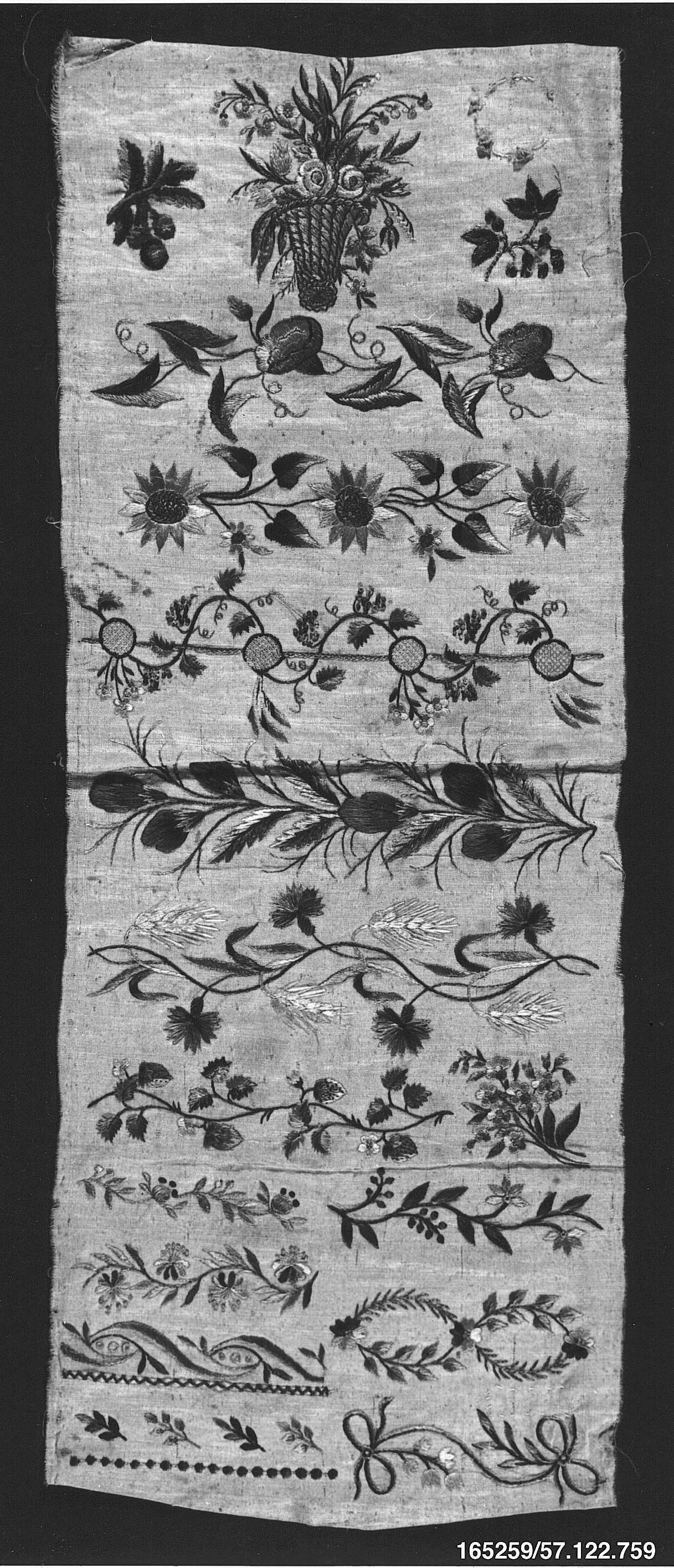
Deconstructing the Sampler: Aesthetic Archaeology for 2026 Silhouettes
The sampler, often relegated to the domain of pedagogical craft or domestic ephemera, represents a profound repository of aesthetic intelligence. At Natalie Fashion Atelier, we approach this artifact not as a quaint relic, but as a structural manifesto encoded in silk and metal thread on linen. Isolated through the lens of aesthetic archaeology, the sampler reveals a sophisticated dialogue between tension, texture, and narrative—a dialogue that directly informs the architectural purity and tactile opulence of our 2026 haute couture silhouettes. This research artifact deconstructs the classical elegance of the sampler to extract principles of controlled asymmetry, dimensional flatness, and luminous restraint, translating them into a new lexicon of luxury form.
The Structural Grammar of the Sampler
At its core, the sampler is a study in grid-based precision and narrative layering. The linen ground provides a rigid, yet breathable, foundation—a blank canvas of disciplined warp and weft. The silk thread, with its inherent luster and pliability, introduces a fluid, almost liquid, counterpoint to the linen’s austerity. The metal thread, whether gold, silver, or copper, acts as a catalyst of light, creating points of high reflectance that fracture the visual plane. This tripartite materiality—linen, silk, metal—establishes a hierarchy of surface: matte, satin, and specular.
For 2026, we deconstruct this grammar into the silhouette itself. The linen ground informs the base structure: a sharp, tailored jacket or a columnar gown with a rigid, architectural spine. The silk thread becomes the fluid draping—a single, continuous panel of bias-cut charmeuse that wraps the body, its movement echoing the embroidery’s cursive stitches. The metal thread is translated into strategic, linear embellishments that trace the body’s meridians, not as decoration, but as structural seams that define and compress the silhouette. The result is a garment that reads as a single, unified surface, yet contains within it the tension of its constituent materials.
Dimensional Flatness: The Sampler’s Volumetric Paradox
The sampler’s most compelling contribution to 2026 luxury is its mastery of dimensional flatness. Historically, the sampler’s embroidery creates relief—a raised topography of stitches—yet remains fundamentally a two-dimensional plane. This paradox is the key to a new silhouette: one that achieves volume without bulk, and depth without draping. The cross-stitch and satin stitch become volumetric algorithms. A cross-stitch is a unit of compression; a satin stitch is a unit of expansion.
We apply this principle to the 2026 “Relief Silhouette.” Consider a sleeveless sheath dress. The front panel is constructed from a single piece of double-faced silk satin. Using a technique we call “stitch-draping,” we embed rows of metal-thread embroidery along the side seams and across the bodice. These stitches are not applied post-construction; they are integrated into the seam allowance, pulling the fabric into a subtle, three-dimensional curve. The result is a garment that appears to have been carved from a single block of light, its surface alive with the micro-topography of the stitch. The metal thread catches the light at each curve, creating a luminous contour that defines the body without a single dart or princess seam. This is the sampler’s volumetric paradox realized in couture: a flat plane that breathes into form.
Luminous Restraint and the Metal Thread Dialectic
The metal thread in the sampler is not merely a decorative element; it is a dialectical tool. It creates a conversation between the matte absorption of the linen and the specular reflection of the metal. In 2026, we harness this dialectic to control the optical weight of a silhouette. The goal is not maximal shimmer, but luminous restraint—a controlled, almost architectural, distribution of light.
For a high-end evening silhouette, we propose the “Lattice Gown.” The base is a column of heavy silk crepe, its surface matte and dense. A lattice of gold-plated silver thread is embroidered directly onto the crepe, following a geometric Fibonacci sequence that expands from the waist to the hem. The metal thread is not a pattern; it is a structural membrane. At the waist, the lattice is tight, compressing the fabric and creating a corseted effect. As it descends, the lattice widens, allowing the crepe to fall in soft, unbroken folds. The light is captured and released in a rhythmic pulse, the gold thread acting as a light-conducting vein that animates the entire form. The silhouette is severe, almost monastic, yet it is electrified by the controlled, archaeological shimmer of the metal thread. This is not embellishment; it is material logic.
Narrative Lineage: The Sampler as Structural Blueprint
The sampler’s most profound legacy for 2026 is its role as a narrative blueprint. Each stitch in a historical sampler is a record of a hand, a moment, a technique. For the atelier, this translates into a design philosophy of visible construction. The 2026 silhouette must not hide its making; it must celebrate it. The seam is no longer a necessary evil but a design element. The stitch is no longer a functional necessity but a signature gesture.
We propose the “Codex Jacket” for the 2026 collection. Its silhouette is a classic, single-breasted blazer, but its construction is a direct transcription of the sampler’s logic. The linen ground is a double-faced wool crepe. The silk thread is a continuous, hand-stitched chain-stitch seam that runs from the shoulder to the hem, mimicking the sampler’s border. The metal thread is woven into the buttonholes, each one a miniature metal-thread rosette. The jacket’s internal structure—the canvas, the pad stitching—is left visible along the lapel edge, stitched with a contrasting silk thread. The garment is a palimpsest, revealing its own history of construction. The wearer does not simply wear a jacket; they wear a document of craftsmanship, a narrative of hand and thread. This is the ultimate luxury: a garment that is both object and archive.
Conclusion: The Sampler as a Living Lexicon
The sampler, when isolated through aesthetic archaeology, ceases to be a historical artifact and becomes a living lexicon for 2026 haute couture. Its principles of grid-based precision, dimensional flatness, luminous restraint, and narrative lineage offer a rigorous alternative to the ephemeral trends of fast fashion. At Natalie Fashion Atelier, we do not merely reference the sampler; we decode its material syntax and re-encode it into the very structure of our silhouettes. The result is a collection that is architecturally pure, tactilely profound, and historically resonant—a testament to the enduring power of a single, stitched line. The silk and metal thread on linen is not a memory; it is a blueprint for the future of form.