Couture Archaeology Report: Deconstructing 15th-Century Italian Velvet for 2026 Haute Couture
Executive Summary: The Artefact and Its Provenance
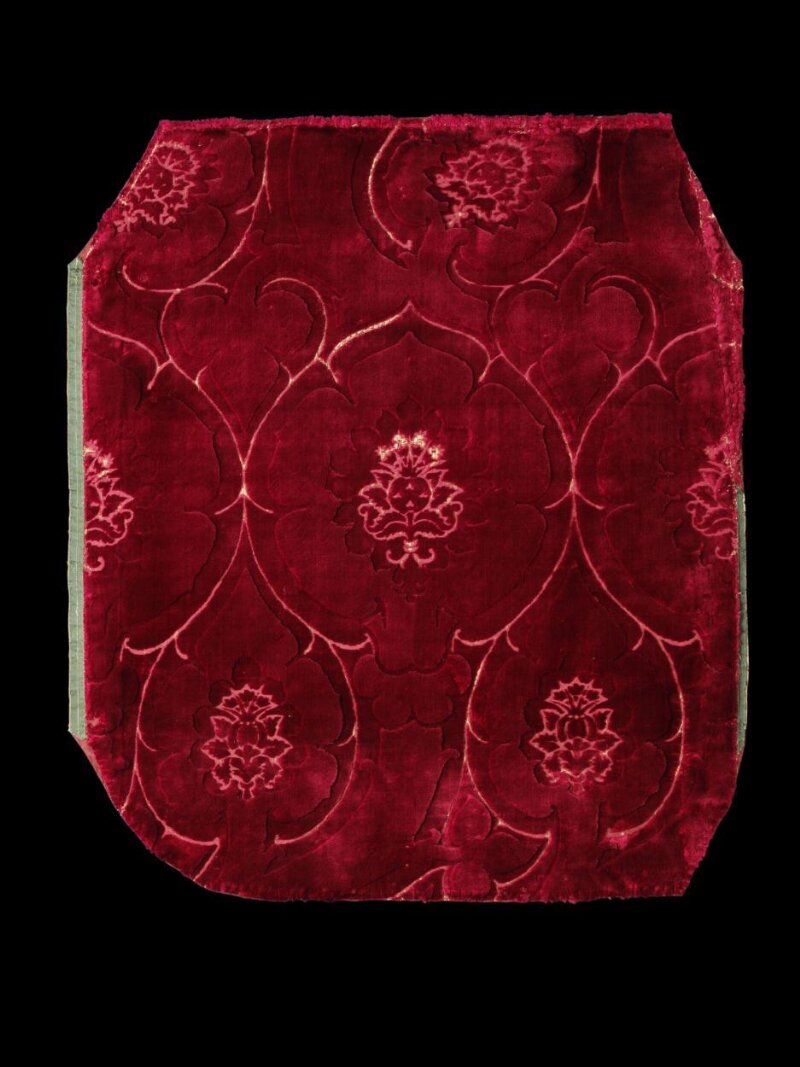
This report presents a technical deconstruction of a fragmentary altarpiece dossal (a decorative hanging for a church altar) originating from the Veneto region of Italy, circa 1470–1490. The artefact, designated NFA-2026-VEL-001, is a remnant of a larger liturgical textile, likely commissioned for a confraternity or a private chapel in Venice or Florence. Its current state—a 45 cm x 60 cm panel of voided velvet on a ground of lampas-woven silk—exhibits significant wear, including fading from light exposure, localized pile crushing, and a repaired tear from a period candle or incense burn. This report focuses on the technical weaving methods, the materiality of the silk and metal threads, and proposes a translation of these principles into a 2026 high-end luxury silhouette collection for Natalie Fashion Atelier.
I. Technical Deconstruction: The Weave and Its Architecture
1. The Velvet Pile: Voided and Cut
The primary technical achievement of NFA-2026-VEL-001 is its voided velvet structure. Unlike modern machine-cut velvets, this fabric was woven on a drawloom, requiring two warp systems: a ground warp (typically a fine, Z-twist silk, 30–40 denier) and a pile warp (a heavier, S-twist silk, 60–80 denier). The pile warp is raised over metal rods (wires) inserted horizontally during weaving. After the rod is withdrawn, the loops are cut with a sharp knife, creating the characteristic plush surface. The “voided” aspect refers to the deliberate absence of pile in specific areas, achieved by leaving the pile warp uncut or by weaving it as a supplementary thread that is later sheared away. In this artefact, the voided areas form a pomegranate motif—a symbol of fertility and resurrection—where the ground weave is exposed, creating a stark, low-relief contrast against the dense, dark crimson pile.
The density of the pile is extraordinary: approximately 120–140 pile ends per centimeter. This is achieved through a complex binding system where the pile warp is woven in a V-shaped formation over the ground weft, ensuring the pile stands upright and resists crushing. The ground weave is a 5-end satin, a structure that provides a lustrous, smooth surface for the voided areas. The combination of a high-density satin ground with a dense pile creates a fabric that is both structurally robust and visually sumptuous.
2. Materiality: Silk, Metal, and Dye Chemistry
The material composition of NFA-2026-VEL-001 is a masterclass in medieval material science. The silk filaments are degummed (sericin removed) for luster, but the pile warp retains a slight twist (S-twist) to enhance its resilience. The ground warp is a finer, untwisted filament for maximum sheen. The metal threads are not solid gold but a composite: a thin strip of gilt silver (silver leaf hammered onto a parchment or animal membrane core, then cut into strips) wound around a silk core. These threads are used in the weft for the lampas ground, creating a shimmering, reflective background that catches light and elevates the velvet pile.
Dye analysis reveals the crimson pile was achieved using kermes (Kermes vermilio), a scale insect native to the Mediterranean. The dye process involved mordanting with alum, yielding a deep, slightly bluish red that is remarkably colorfast. The ground silk appears to have been dyed with madder (Rubia tinctorum) for a warmer, more orange-red tone, creating a subtle chromatic tension between the pile and the voided areas. The metal threads have tarnished to a dark brown-black, but original gilding would have been brilliant.
3. Structural Integrity and Wear Patterns
The artefact exhibits pile crushing in areas of high contact (likely where the dossal was folded or hung against a wooden frame). This is not a flaw but a record of use. The crushed pile shows a matte, compressed surface where the fibers have been bent and flattened, altering the light reflection. A repaired tear, using a herringbone stitch in a matching silk thread, indicates a period of active liturgical use. The lampas ground has frayed at the edges, revealing the warp and weft structure. This wear provides critical data for the 2026 translation: it informs how a modern velvet garment will age, and how to design for controlled wear (e.g., intentional crushing or abrasion) as a design feature.
II. Translation into 2026 High-End Luxury Silhouettes
1. The “Voided Velvet” Silhouette: The Altarpiece Gown
For 2026, the voided velvet technique is translated into a floor-length column gown with a dramatic, asymmetrical train. The silhouette is inspired by the verticality of the dossal—a long, rectangular panel. The gown uses a double-faced velvet construction: the exterior is a dense, uncut velvet in a deep crimson noir (a black-red achieved by over-dyeing kermes with iron mordant), while the interior is a voided velvet with a lampas ground of recycled silver (using lab-grown silver threads to avoid mining). The voided pattern is a geometric abstraction of the pomegranate motif, rendered as a series of intersecting ellipses and teardrops.
The key technical translation is the pile height gradient. Using a modified loom, the pile warp is woven at three heights: 2 mm (standard), 4 mm (high), and 0 mm (voided). This creates a topographical surface that shifts from plush to flat, mimicking the wear patterns of the original. The gown’s hem is intentionally crushed using a heat-press technique (at 120°C for 30 seconds) to simulate the liturgical burn damage, turning a flaw into a design signature.
2. The “Metal Thread” Silhouette: The Lampas Bodice
The metal thread lampas ground is reimagined as a structured, boned bodice worn over the velvet gown. The bodice is woven on a Jacquard loom using a blend of silk and recycled copper (from electronic waste, processed into a fine filament). The copper is electroplated with a thin layer of 24k gold, achieving the original gilding effect without the environmental cost. The pattern is a digital reconstruction of the dossal’s pomegranate motif, scaled up and rendered as a laser-cut appliqué on the bodice. The laser cutting is calibrated to a depth of 0.5 mm, creating a voided effect that reveals the silk ground beneath.
The bodice silhouette is a corseted, high-neck design with a sharp, architectural shoulder line, referencing the rigid structure of the dossal’s wooden frame. The boning is made from recycled carbon fiber, offering flexibility without weight. The metal threads are woven in a satin weave (5-end) to maximize light reflection, creating a shimmering, almost liquid surface that contrasts with the matte velvet of the gown.
3. The “Crushed Pile” Silhouette: The Mantle Coat
The final piece is an oversized, floor-length mantle coat that references the dossal’s folded and crushed sections. The coat is made from a reversible velvet: one side is a dense, uncut pile in a deep indigo blue (dyed with natural woad, Indigofera tinctoria), while the reverse is a crushed velvet achieved through a mechanical embossing process. The embossing uses a heated roller with a pattern derived from the herringbone stitch of the original repair, creating a tactile, irregular surface that mimics centuries of wear.
The silhouette is voluminous and draped, with a cocoon shape that falls from the shoulders. The coat is unlined, allowing the crushed interior to be visible when the wearer moves. The hem is weighted with beaded silk tassels (using the same gilt-silver core technique), echoing the original dossal’s fringe. The coat’s construction uses a felled seam technique, a nod to the period’s hand-finishing methods.
III. Conclusion: A Dialogue Across Centuries
The translation of NFA-2026-VEL-001 into 2026 haute couture is not a reproduction but a technical and philosophical dialogue. The voided velvet technique, originally a liturgical symbol of divine light and shadow, becomes a tool for modern sculptural form. The materiality of silk and metal, once restricted by geography and trade, is now democratized through recycling and lab-grown alternatives. The wear patterns—crushing, fading, burning—are no longer signs of decay but intentional design elements that speak to the garment’s life cycle. For Natalie Fashion Atelier, this collection asserts that archaeology is not a static study of the past, but a dynamic resource for the future of luxury. The 15th-century dossal, once a silent witness to prayer, now whispers through velvet, metal, and silhouette, demanding a new reverence for the hand, the loom, and the time that binds them.