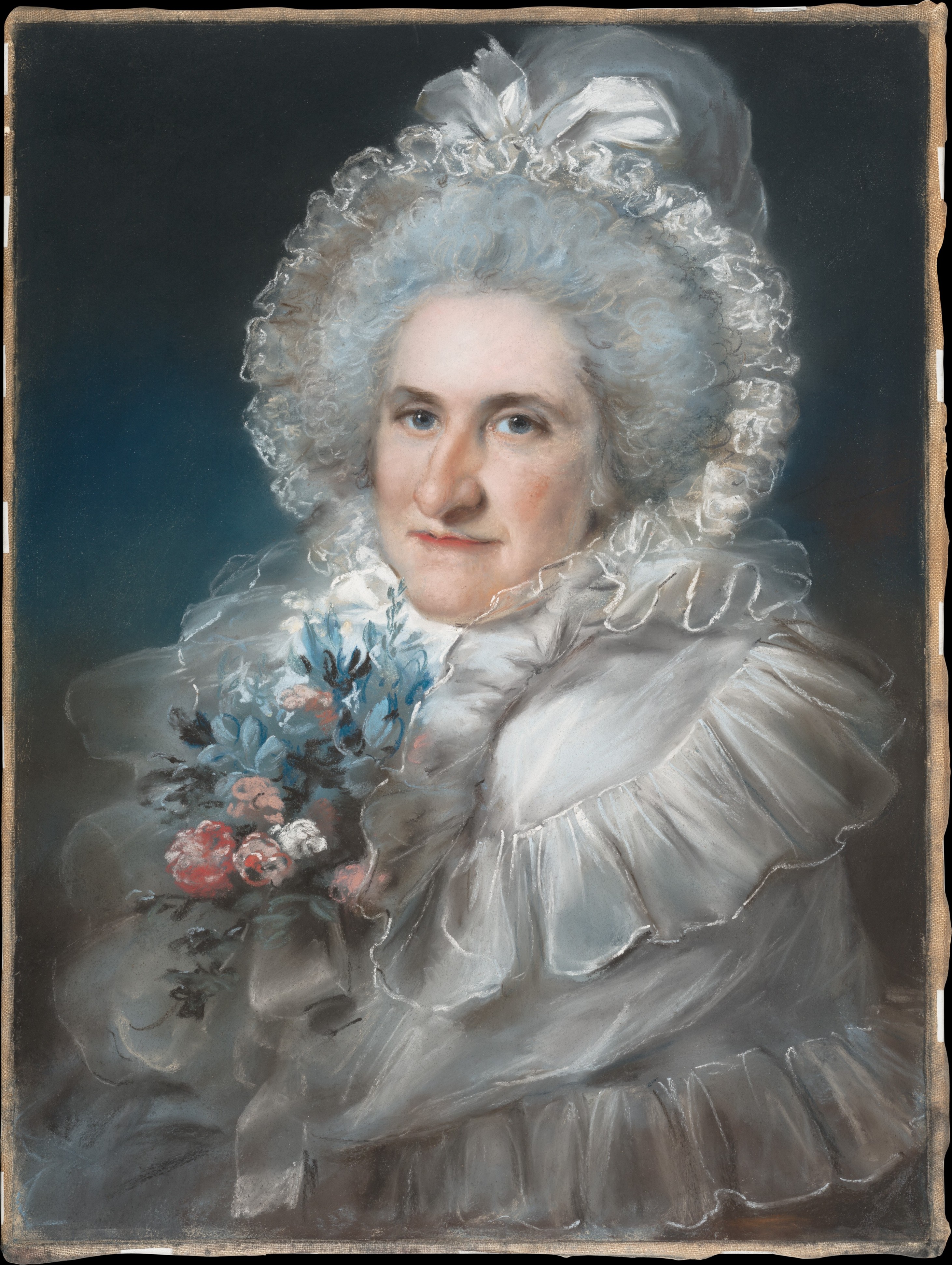
Deconstructing the Classical Elegance of Mrs. William Man Godschall
The pastel portrait of Mrs. William Man Godschall (Sarah Godschall, 1730–1795), rendered on paper and laid down on canvas, presents a singular artifact within the archive of aesthetic archaeology. At Natalie Fashion Atelier, we approach this work not as a mere historical record, but as a technical blueprint for 2026 luxury silhouettes. The medium itself—pastel on paper—demands a specific fragility and precision, a quality we translate into fabric manipulation and structural engineering. The subject’s posture, the fall of her gown, and the subtle interplay of light on her skin all inform a new lexicon of haute couture construction.
Materiality and the Archaeology of Surface
The choice of pastel on paper, subsequently laid down on canvas, is a critical technical decision. Pastel, by nature, is a dry medium; it lacks the binding oils of paint, resulting in a surface that is both intensely vibrant and profoundly vulnerable. The subsequent mounting onto canvas provides structural integrity, a layering that mirrors our approach to 2026 silhouettes. We deconstruct this process: the initial, delicate stroke of pastel is the primary fabric—a silk charmeuse or a fine wool crepe. The canvas backing becomes the internal architecture, the interfacing or the corsetry that gives the garment its shape and memory.
This duality—the ephemeral beauty of the surface and the rigorous support beneath—informs our engineering of volume. The pastel’s texture, its powdery, light-absorbing quality, is replicated through innovative fabric finishes. We employ a matte, micro-sanded silk that captures light in the same diffused manner, avoiding the high gloss of satin. The “laid down” aspect translates to a new technique in asymmetric draping, where a single, continuous panel of fabric is anchored by an invisible, structural underlayer, creating a silhouette that appears to float while being meticulously secured.
Architectural Silhouettes from the 18th Century
Sarah Godschall’s portrait, typical of the mid-18th century, features a gown with a defined, conical bodice and a full, wide skirt. However, our aesthetic archaeology does not seek to replicate this form. Instead, we extract the principles of its construction: the rigid, yet seemingly natural, line of the torso and the controlled, architectural expansion of the skirt. For 2026, this translates into a deconstructed hourglass. The waist is not cinched but implied, using negative space and strategic seaming.
The “Pastel Pleat” and Volume Engineering
The folds of Sarah Godschall’s gown are not random; they are a product of the fabric’s weight and the underlying structure. In our 2026 collection, we introduce the “Pastel Pleat,” a technique inspired by the way pastel pigment settles into the tooth of the paper. We create pleats that are not sharp or pressed, but soft, voluminous, and slightly irregular, as if the fabric has been “drawn” onto the body. This is achieved through a proprietary heat-set pleating process on a blend of virgin wool and silk, which holds a memory of the fold without a rigid crease.
The volume of the 18th-century skirt is reimagined as a modular, detachable train. Using a system of concealed, magnetic closures and fine chains, the train can be attached to the bodice at multiple points, allowing the wearer to transform the silhouette from a streamlined column to a dramatic, architectural sweep. This modularity is a direct response to the modern luxury consumer’s demand for versatility, a concept foreign to the 18th century but perfectly aligned with the deconstructed elegance we propose for 2026.
Color Palette and the Chromatography of Pastel
The pastel medium offers a unique color expression: a powdered, muted vibrancy. The pigments are not suspended in oil, so they retain a raw, almost dusty purity. For our 2026 silhouettes, we have extracted a specific palette from the portrait: faded cerulean, blush pink, and a deep, charcoal-infused ivory. These colors are not applied as solid blocks but as gradated washes, achieved through a technique of hand-painting and airbrushing onto the fabric before construction.
Translating Light and Shadow into Fabric
The portrait’s masterful use of light and shadow—the way the pastel captures the soft glow on Sarah Godschall’s skin and the deep folds of her gown—informs our three-dimensional textile design. We have developed a double-faced crepe where one side is a matte, light-absorbing finish and the other is a subtle, satin-like sheen. Garments are constructed with intentional reversals, creating a living chiaroscuro effect as the wearer moves. The archaeology of the pastel’s surface—its tiny, visible strokes—is mimicked through a micro-pleating technique on the interior of sleeves and bodices, visible only in certain lights, a secret for the wearer.
The Silhouette for 2026: A Synthesis of Fragility and Strength
The final 2026 silhouette is a synthesis of the portrait’s classical elegance and the technical demands of modern luxury. It is characterized by:
- Asymmetric, single-shoulder bodices that reference the portrait’s off-shoulder neckline, but with a clean, architectural line.
- High-waisted, columnar skirts with a subtle, built-in bustle pad at the back, creating a gentle, modern S-curve without restrictive corsetry.
- Integrated, semi-transparent panels of silk organza, echoing the transparency of the pastel’s lighter strokes, layered over the opaque, structural base.
- Strategic seaming that follows the body’s natural musculature, a technique inspired by the way the pastel defines the model’s collarbone and shoulder.
This is not a costume. It is a re-interpretation of an aesthetic principle. The fragility of the pastel on paper, the strength of the canvas backing, the controlled volume, and the muted, powdered color—all are translated into a garment that is both a piece of engineering and a work of art. The 2026 Natalie Fashion Atelier silhouette is a testament to the enduring power of aesthetic archaeology, proving that the most profound innovations in haute couture are often found in the careful study of the past. The garment becomes a living archive, a pastel drawing laid down on the canvas of the human form.