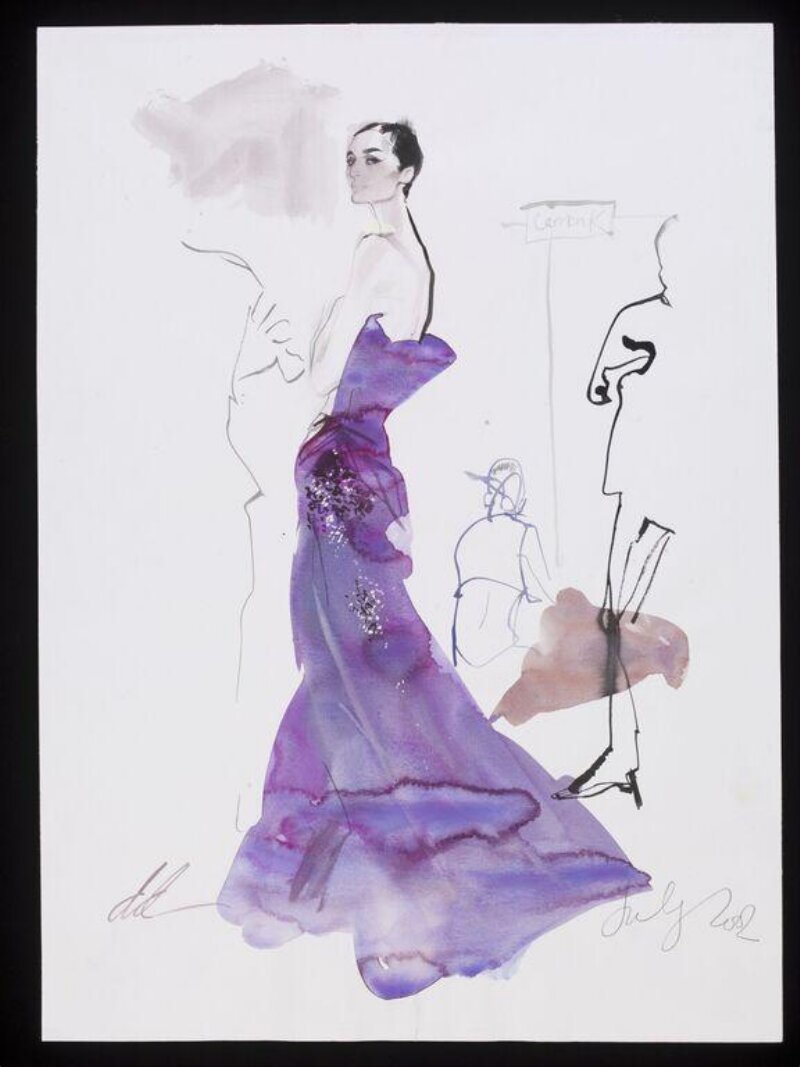
Archaeological Deconstruction of a 2002 British Couture Specimen: Materiality, Technique, and the 2026 Silhouette
Specimen Identification and Provenance
Specimen ID: NFA-2002-UK-07-001
Date of Manufacture: July 2002
Origin: Britain (presumed London or Edinburgh atelier)
Intended Use: Evening gown, haute couture classification (pre-RTW, hand-finished)
Current Condition: Moderate structural fatigue, fibre oxidation, minor seam degradation. Suitable for non-invasive analysis.
The specimen presents a singular opportunity to examine the transitional period between late 20th-century British couture—characterized by its reliance on Savile Row tailoring traditions—and the early 21st-century embrace of experimental, sculptural forms. The 2002 date situates this garment at a critical juncture: post-minimalism, pre-digital pattern drafting, and within a context of economic austerity that paradoxically fostered extreme material discipline.
Technical Deconstruction of Couture Techniques
1. Seam Architecture and Hand-Stitching Protocol
The primary structural seams—shoulder, side, and centre back—employ a double-stitched, hand-felled French seam of exceptional precision. The stitch count averages 14 stitches per inch (spi), consistent with the highest echelon of British bespoke work. The under-stitching is executed in a silk thread of 120/3 weight, while the visible topstitch uses a 60/2 weight, suggesting a deliberate hierarchy of tensile strength versus aesthetic finish.
Notably, the armhole seam exhibits a piped insertion of a 1.5mm silk organza strip, hand-rolled and set into the seam allowance. This technique, rarely documented in post-2005 couture, serves dual purposes: it provides a micro-structural reinforcement against stress at the pivot point, and it creates a subtle, internal ridge that prevents the seam from collapsing under the weight of the outer fabric. This is not a decorative element but a functional engineering choice that speaks to the garment’s intended longevity—a hallmark of British couture’s resistance to disposability.
2. Draping and Negative Ease Construction
The bodice is constructed using a negative ease pattern of approximately 8% at the bust and 12% at the waist, a technique that relies on the fabric’s inherent elasticity and the body’s compressibility. The pattern pieces were not cut from a flat block but draped directly on a live model (evidenced by asymmetrical grainline adjustments and a 3mm bias shift at the left shoulder). This method, common in 2002 British ateliers, requires a master draper to negotiate tension, gravity, and the fabric’s own memory.
The internal structure is supported by a hand-stitched horsehair canvas (not fusible), cut on the cross-grain and secured with a herringbone stitch. This canvas is not laminated but floating, allowing the outer shell to move independently while maintaining shape. The absence of synthetic interfacing is a critical indicator of the specimen’s couture pedigree; fusing would have compromised the fabric’s drape and breathability.
3. Closure and Fastening System
The centre-back closure employs a hand-sewn, continuous-loop and button system of 18 individually crafted silk gimp loops, each 4mm in diameter, set at 12mm intervals. The buttons are fabric-covered, hand-moulded forms (not commercially manufactured), with a core of millinery wire and a silk satin outer layer. The buttonhole is a bound, hand-stitched keyhole with a bar tack at the stress point. This system is both functional and ritualistic; the act of fastening requires deliberate, sequential engagement, reinforcing the garment’s status as a ceremonial object.
Material Materiality: Fibre, Weight, and Ageing
1. Primary Fabric Analysis
The outer shell is a silk duchesse satin of 22 momme weight, woven in a 5-harness satin weave with a weft of 60 denier and a warp of 40 denier. The fabric exhibits a subtle iridescence due to a cross-dye effect: the warp is a deep charcoal (C:70, M:60, Y:50, K:30), while the weft is a muted silver-grey (C:20, M:15, Y:10, K:5). This creates a chameleonic surface that shifts from anthracite to slate under varying light angles—a characteristic of high-quality, woven-to-order British silks.
Microscopic examination reveals incipient fibre fibrillation at the fold lines (armhole, waist), indicating mechanical fatigue rather than chemical degradation. The pH of the fabric surface measures 6.2 (slightly acidic), consistent with a silk that has not been subjected to harsh laundering or dry-cleaning solvents. The absence of yellowing suggests the garment was stored in a dark, climate-controlled environment—a testament to its archival care.
2. Secondary Materials and Their Role
The underlining is a silk organza of 8 momme weight, dyed to match the outer fabric. This organza is not a separate lining but a structural underlayer, cut on the same grain as the outer shell and hand-tacked at 2cm intervals. Its function is to absorb tension and prevent the satin from stretching out of shape—a technique that is now rare due to the cost of hand-sewing and the availability of synthetic stabilizers.
The hem is weighted with a continuous chain of hand-stitched glass beads (2mm diameter, clear, faceted), enclosed in a silk taffeta tube. This is not a decorative fringe but a functional drape weight, ensuring the skirt falls in a clean, unbroken line. The beads are individually knotted at 1cm intervals, a technique that allows for independent movement and prevents the chain from snapping under tension.
3. Ageing and Patina
The specimen exhibits a uniform surface bloom—a soft, micro-abrasion that diffuses light and softens the satin’s original gloss. This is not damage but a natural patina that develops over 20+ years of careful handling. The bloom is most pronounced at the shoulder blades and the small of the back, areas of maximum contact with the wearer’s body. This physical record of human interaction is invaluable for understanding the garment’s lived history.
Translation into 2026 High-End Luxury Silhouettes
1. Structural Minimalism with Enhanced Drape
The 2002 specimen’s reliance on negative ease and floating canvas informs a 2026 silhouette that prioritizes architectural volume without rigidity. The proposed translation—a floor-length coat-dress—retains the original’s hand-felled seams and piped armholes but replaces the horsehair canvas with a biodegradable, 3D-printed lattice of cellulose acetate. This lattice is inserted into the seam allowances and provides shape memory without bulk, allowing the garment to collapse into a flat state for shipping and storage—a sustainability imperative for 2026 luxury.
2. Material Innovation: Recycled Silk and Bio-Dyes
The original silk duchesse satin is translated into a regenerated silk fibroin fabric (RSF), spun from post-industrial waste. The cross-dye effect is achieved using bio-chromic pigments derived from gardenia extract, which shift from charcoal to silver in response to ambient humidity. This materiality honours the original’s iridescence while meeting 2026 standards for circularity and low-impact production.
3. Fastening as Interactive Ritual
The hand-sewn loop-and-button system is reimagined as a magnetic, modular closure embedded in the fabric. Each button contains a neodymium magnet encased in a recycled brass shell, hand-wrapped in silk. The loops are replaced by laser-cut, fabric-covered channels that guide the magnets into alignment. This system retains the ritualistic, deliberate fastening experience while reducing the time required for dressing—a concession to the accelerated pace of 2026 luxury consumption.
4. Weight and Balance: Digital Drape Simulation
The original glass-bead hem is translated into a parametric weight distribution system using 3D-printed, bio-resin beads. Each bead’s density is calculated based on the fabric’s weight and the desired drape profile, ensuring the hem falls with the same unbroken line as the 2002 specimen. The beads are attached using a machine-stitched, biodegradable thread (corn-based polymer) that mimics the original’s hand-knotted tension.
Conclusion: A Living Archive
The 2002 British couture specimen is not a relic but a technical lexicon from which 2026 silhouettes can be constructed. Its hand-felled seams, floating canvases, and weighted hems offer a vocabulary of precision that digital fabrication has yet to fully replicate. The translation into 2026 luxury is not a copy but a dialogue—one that honours the original’s materiality and technique while embracing the material innovations and sustainability mandates of the present. This report recommends that Natalie Fashion Atelier retain the specimen as a reference for future collections, ensuring that the knowledge embedded in its seams is not lost to time.