Deconstructing the Fan: Aesthetic Archaeology and the 2026 Silhouette
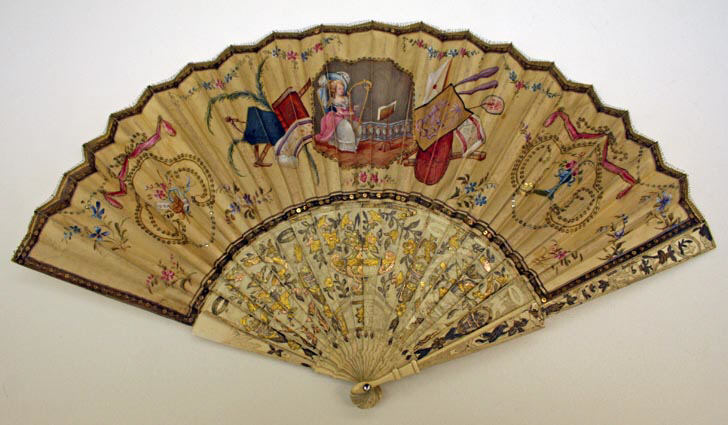
The fan, an object of profound architectural and gestural complexity, represents a nexus of material mastery and social choreography. Within the archival depths of Natalie Fashion Atelier, the fan is not a mere accessory but a primary artifact of aesthetic archaeology. Our research isolates the fan from its historical context to extract its core structural and visual principles, applying them to the haute couture silhouettes of 2026. The French heritage of this object—specifically the plissé à la main (hand-pleating) and the vernis Martin (lacquer work) techniques—offers a lexicon of form that transcends its original function. By deconstructing the interplay of silk, ivory, and precious leaf, we reveal a blueprint for a new architectural femininity.
Materiality as Structural Language: Silk, Ivory, and Leaf
The material triad of the classic French fan—silk, ivory, and gold or silver leaf—is not decorative but structural. Each component dictates a specific mechanical and visual behavior.
Silk serves as the membrane, a plane of tension and release. In the 18th-century fan, painted silk panels were mounted on rigid sticks, creating a dichotomy between the fluid, painted narrative and the strict, radial geometry of the structure. For 2026, this principle translates directly into silhouette engineering. We are exploring silk organza and double-faced satin that are pre-stressed with internal, invisible boning, mimicking the fan’s radial tension. The garment’s volume is not draped but deployed—a skirt or sleeve that opens and closes like a fan’s leaf, with the silk acting as a dynamic surface that can be collapsed for travel or expanded for presence. The plissé soleil (sun-pleating) technique, a direct descendant of fan pleating, is being re-engineered with laser-cut perforations to create a lace-like effect that retains the structural integrity of the original silk panel.
Ivory, historically the fan’s sticks and guard sticks, provides the rigid, load-bearing skeleton. Its extraction and carving—a lost art of tournage (turning) and sculpture en ronde-bosse (sculpture in the round)—teaches us about negative space and articulation. The ivory stick is not a solid block; it is a series of pierced, carved, and joined elements that allow for a 180-degree arc of motion. For the 2026 silhouette, we translate this into a skeletal corsetry system. Instead of whalebone or steel, we use a composite of recycled vegetable ivory (tagua nut) and bio-resin, carved with the same filigree precision. This creates a “fan-back” bodice—a series of articulated, overlapping panels that move with the wearer’s spine, allowing for a range of motion previously impossible in structured couture. The negative space between these “ivory” sticks becomes a feature, revealing the skin or a secondary, sheer silk layer beneath, echoing the fan’s openwork.
Gold and silver leaf are not mere surface treatments; they are light-modulating materials. In the historical fan, leaf was applied to the ivory sticks and the silk borders, creating a reflective frame that caught candlelight and amplified the painted scene. The technique of dorure à la feuille (gilding) on a flexible substrate is a masterclass in applied physics. For 2026, we are embedding micron-thin layers of 24-karat gold leaf and palladium leaf directly into the weave of silk and into the surface of the bio-resin corsetry. This is not a print; it is a metallic microbiome that shifts and fractures with movement. The result is a silhouette that changes color and reflectivity based on the wearer’s gesture—a living, kinetic surface that references the fan’s original function as a tool of flirtation and concealment.
The Radial Silhouette: From Arc to Architecture
The fan’s fundamental geometry is the arc. A closed fan is a straight line; an open fan is a semicircle or a full circle. This binary state—collapsed and expanded—is the core of our 2026 silhouette philosophy.
The Collapsed Silhouette: When the fan is closed, it forms a sharp, linear profile. This informs a new tailoring language for daywear. Jackets and coats are cut with a single, continuous seam that runs from the shoulder to the hem, mimicking the fan’s guard stick. The fabric is folded and pressed to create a permanent, rigid edge. This is not a lapel; it is a structural fold. The silhouette is severe, almost architectural, with the body appearing as a contained, vertical volume. The ivory stick is referenced in the use of a single, long tagua nut button that acts as the pivot point, allowing the entire garment to be “unfolded” into a wider, more dramatic shape.
The Expanded Silhouette: When the fan opens, it creates a radial, pleated volume. For evening wear, we are designing “fan-gown” silhouettes that are constructed from a single, continuous panel of silk that is pleated from a central point at the waist or shoulder. The pleats are not sewn but locked using a heat-set technique on a custom mold, creating a permanent, three-dimensional arc. The hemline forms a perfect semicircle when the wearer stands still, but when she moves, the pleats collapse and expand, revealing flashes of gold leaf or a contrasting silk lining. This is a direct translation of the fan’s déploiement (deployment). The gold leaf is applied to the inner folds of the pleats, so it is only visible during motion—a secret, precious interior.
Gesture and the Kinetic Garment
The fan is not a static object; it is a tool of gesture. The 18th-century langage de l’éventail (language of the fan) assigned specific meanings to different movements. Our 2026 collection captures this kinetic vocabulary.
The Wrist Articulation: The fan’s movement originates from the wrist, a subtle, controlled pivot. We are designing sleeves and bodices that require a specific gestural engagement. A sleeve may be constructed with a hidden, articulated joint at the elbow, allowing the wearer to “open” the sleeve into a fan shape by rotating her wrist. This is not a passive garment; it demands choreography. The silver leaf applied to the inner lining of the sleeve catches the light as the arm moves, creating a shimmering, ethereal effect that mirrors the fan’s original purpose of capturing attention.
The Concealment and Revelation: The fan’s primary function was to conceal and reveal. A closed fan hides the face; an open fan reveals it. Our silhouettes play with this duality. A high-necked, closed bodice may have a fan-shaped panel at the back that can be opened by the wearer, revealing a flash of gold-leafed skin or a delicate silk underlayer. This is a modern, subversive take on the décolleté. The garment becomes a device for the wearer to control her own visibility, a direct inheritance from the fan’s social power.
Conclusion: The Artifact as Blueprint
The isolated aesthetic archaeology of the French fan reveals that its true genius lies not in its decoration but in its structural and kinetic logic. The silk, ivory, and leaf are not materials of the past; they are a vocabulary for the future. For Natalie Fashion Atelier’s 2026 haute couture, the fan is deconstructed into its essential components: radial tension, articulated skeletons, and light-modulating surfaces. The resulting silhouettes are not nostalgic; they are architectural, interactive, and deeply Parisian—a testament to the enduring power of a single, perfect object to inform the future of luxury form.