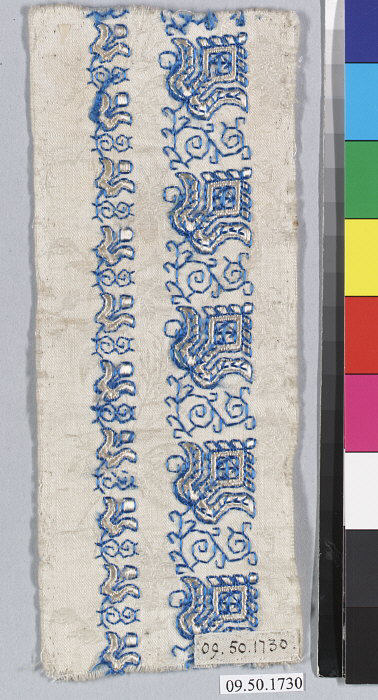
Fragments (2): An Aesthetic Archaeology of Silk on Linen
The second fragment in our ongoing series, Fragments (2), is not a garment in the traditional sense. It is a relic of process, a preserved moment of tension between two antithetical materialities. Housed within the Natalie Fashion Atelier archive, this piece—a swatch of raw, unbleached linen partially overlaid with a single, hand-painted silk panel—represents a critical juncture in aesthetic archaeology. It is a study in controlled friction, where the humble, tactile ground of linen is interrupted by the luminous, fluid surface of silk. For the 2026 luxury silhouette, this fragment offers a blueprint for a new kind of elegance: one that is not about seamless perfection, but about the deliberate, poetic articulation of material memory.
Materiality as Narrative: The Dialectic of Silk and Linen
The core of this fragment’s power lies in its material dialogue. Linen, derived from the flax plant, carries an inherent narrative of earth, labor, and time. Its natural slubs, irregularities, and crisp hand speak to a pre-industrial honesty. Silk, conversely, is the epitome of cultivated luxury—a continuous filament spun by the silkworm, representing refinement, luminosity, and a smooth, almost liquid drape. To place silk upon linen is to stage a conversation between the vernacular and the aristocratic, the rustic and the rarefied.
In this fragment, the silk is not applied as a full overlay. It is a fragment itself—a roughly torn rectangle, its edges left raw and unhemmed. This is a critical technical decision. The raw edge prevents the silk from becoming a mere appliqué; instead, it becomes an insert, a window into another dimension of texture. The linen ground remains dominant, providing structure and a matte, absorbent base. The silk, painted with a single, sweeping stroke of indigo and cochineal, floats above the linen, catching light and creating a subtle, shifting moiré effect. This is not a surface decoration; it is a material intervention that redefines the structural integrity of the composite.
Deconstructing Classical Elegance: The Fragment as Form
Classical elegance, in the Western couture tradition, has long been predicated on the principle of the whole. A gown is a complete, unbroken narrative, from shoulder to hem, with seams hidden and surfaces polished. The fragment challenges this totality. By presenting an incomplete, isolated piece of material archaeology, we are forced to confront the beauty of the partial. The ripped edge of the silk is not a flaw; it is a deliberate aesthetic choice that signals a shift from the finished to the processual.
This deconstruction manifests in the 2026 silhouette through a re-evaluation of the seam as a site of expression. Where classical couture would seek to conceal the join between silk and linen, Fragments (2) makes it the focal point. The raw edge is left exposed, sometimes even exaggerated with a hand-stitched running thread in a contrasting color. This technique, which we term “exposed assembly,” transforms the garment’s construction into its primary decorative element. The silhouette is no longer a smooth, monolithic form, but a layered, archaeological excavation of its own making.
Informing the 2026 Silhouette: Structural Lightness and Tactile Depth
How, then, does this isolated fragment translate into a complete garment for the high-end clientele of 2026? The answer lies in three key principles derived from the fragment’s materiality: asymmetric tension, architectural transparency, and tactile layering.
Asymmetric Tension: The fragment’s placement of silk on one side of the linen creates an inherent imbalance. For 2026, we propose a silhouette that embraces this imbalance. Consider a floor-length column dress in heavy, unbleached linen. The left side remains pure, unadorned, and grounded. The right side, however, is interrupted by a single, sweeping panel of silk charmeuse that begins at the hip and cascades to the hem, its raw edge left to fray slightly. This creates a dynamic visual weight, drawing the eye diagonally across the body. The silhouette is not symmetrical, but it is balanced—balanced through the tension between the linen’s gravity and the silk’s fluidity. The garment breathes with the wearer’s movement, the silk panel lifting and falling like a second skin.
Architectural Transparency: The fragment’s torn edge also suggests a new approach to transparency. In classical couture, transparency is often achieved through sheer fabrics like tulle or organza. Here, the transparency is structural. The linen ground is opaque, but the silk panel, particularly when painted with a thin wash of pigment, becomes a semi-transparent veil. For 2026, we are developing a silhouette where a linen bodice is cut with a large, asymmetrical aperture—a “window” into the body. This aperture is then filled with a single, hand-painted silk panel, stitched only at the top and bottom edges. The raw side edges of the silk are left free, allowing them to flutter and curl away from the linen. This creates a living, breathing architecture where the garment’s interior is partially revealed, not through nudity, but through the layered interplay of materials. The silhouette becomes a study in depth, with the linen providing the frame and the silk providing the luminous, shifting content.
Tactile Layering: Finally, the fragment teaches us about the power of opposing textures. The crisp, almost papery feel of the linen against the smooth, cool touch of the silk creates a sensory experience that is both jarring and luxurious. For 2026, we are exploring silhouettes that deliberately juxtapose these textures in a single garment. A jacket, for example, might be constructed entirely of linen, but with the interior of the sleeves lined in silk. As the wearer moves, the silk lining brushes against the arm, a private sensation of luxury. Alternatively, a skirt might be composed of alternating vertical panels of linen and silk, each panel cut with a raw edge. The silhouette would appear to be a series of vertical stripes, but upon closer inspection, the stripes are tactile events, shifting from matte to sheen, from rigid to fluid. This is not a visual pattern; it is a haptic pattern, designed to be felt as much as seen.
Conclusion: The Fragment as a Complete Statement
Fragments (2) is not a preparatory study; it is a finished statement in its own right. It argues that elegance is not found in the erasure of process, but in its celebration. For the 2026 luxury silhouette, this means a move away from the sterile, digitally-perfected form and toward a more archaeological, hand-wrought aesthetic. The raw edge, the exposed seam, the deliberate imbalance of materials—these are not signs of incompletion, but markers of a new, sophisticated luxury that values the authenticity of making over the illusion of perfection. The client of 2026 is not seeking a garment that hides its origins; she seeks a garment that tells a story of its creation, a story written in the language of silk on linen.