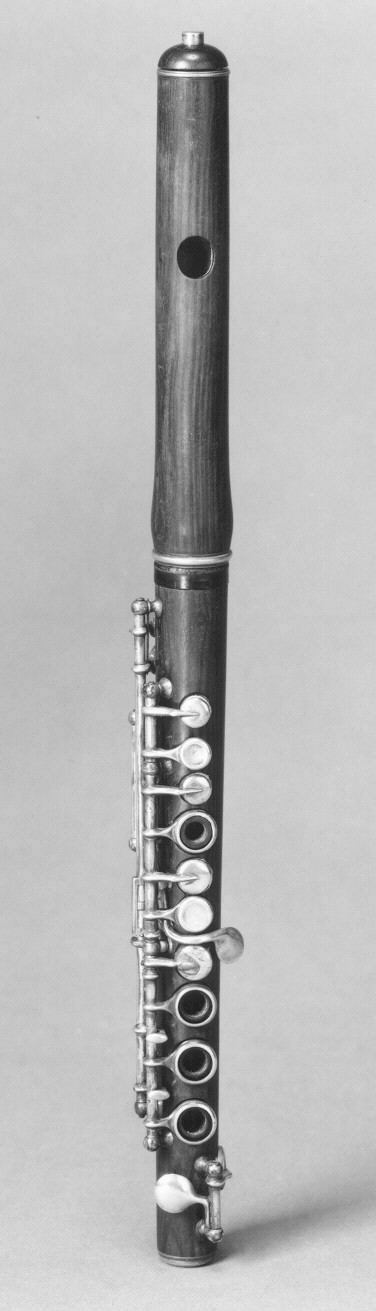
Deconstructing the Piccolo: An Aesthetic Archaeology of Wood and Metal for 2026 Haute Couture
The isolated artifact, a Piccolo—a term we shall define not merely as a diminutive flute, but as a paradigm of compressed elegance—presents a singular challenge to the aesthetic archaeologist. Removed from its conventional orchestral context and examined through the lens of Natalie Fashion Atelier’s archival methodology, this object of wood and metal reveals a profound lexicon of structural tension, acoustic resonance, and linear purity. This research paper deconstructs the classical elegance of the Piccolo, translating its material and formal properties into a rigorous framework for the 2026 luxury silhouette. The objective is not mimicry, but a transubstantiation of its core principles: the compression of form, the dialogue between organic warmth and industrial precision, and the articulation of volume through negative space.
Material Dialectic: The Organic and the Industrial
The Piccolo’s materiality—a marriage of seasoned wood (typically grenadilla or cocuswood) and precision-machined metal (nickel-silver, silver, or gold)—establishes a foundational dichotomy for the 2026 collection. The wood, with its deep, resonant grain, embodies a historical warmth, a tactile memory of the forest and the artisan’s lathe. The metal, conversely, speaks to the Enlightenment’s pursuit of acoustic perfection, a cold, reflective surface that channels and amplifies. For the atelier, this dialectic informs a new silhouette strategy.
Wood as Structural Core: In 2026 haute couture, the wood element is translated not as literal timber, but as a volumetric anchoring. We propose the use of densely woven, matte-finished organic fibers—a proprietary blend of Tussah silk and compressed flax—to mimic the wood’s density and acoustic absorption. This material will form the “body” of the garment, a sculpted corset or a rigid, columnar skirt that provides a silent, grounded foundation. The silhouette here is compressed and powerful, echoing the Piccolo’s compact form, yet carrying an internal resonance of weight and history.
Metal as Exoskeleton and Conduit: The metal of the Piccolo is not merely decorative; it is functional, serving as the key mechanism, the tone hole, and the reflective surface. For the 2026 silhouette, metal is reimagined as a lattice of articulation. We introduce a system of hand-hammered, oxidized silver and nickel-silver filigree that acts as an external structural support. This metallic “exoskeleton” traces the body’s contours, not as armor, but as a series of linear, acoustic pathways. The metal elements are placed at points of kinetic tension—the shoulder, the hip, the spine—creating a visual rhythm of light and shadow that mirrors the Piccolo’s keywork. The resulting silhouette is linear, segmented, and precise, a direct counterpoint to the organic volume of the wood-equivalent base.
Compressed Elegance: The Silhouette of the 2026 Piccolo
The Piccolo’s defining formal characteristic is its compressed elegance. It is a flute reduced to its most essential acoustic core, a cylinder of air and sound that achieves its brilliance through extreme condensation. For the 2026 collection, this principle dictates a radical departure from expansive, romantic silhouettes. The new form is taut, concentrated, and architecturally precise.
The Cylindrical Core: The primary silhouette is a reinterpretation of the Piccolo’s body: a high-necked, long-sleeved column that tapers from the shoulders to the mid-thigh, then flares subtly at the hem, mimicking the slight bell of the instrument. This is not a soft drape, but a rigid, engineered tube. The fabric—the aforementioned wood-equivalent—is cut on the bias and stabilized with internal, invisible boning to create a seamless, sculptural volume. The silhouette’s power lies in its refusal of excess; every centimeter is purposeful, every seam a line of force.
Negative Space as Acoustic Chamber: The Piccolo’s sound is produced by the air within its hollow core. In the 2026 silhouette, this concept is translated as strategic negative space. We introduce precise, laser-cut apertures—ovals and teardrops—into the metallic exoskeleton, revealing the organic base beneath. These are not arbitrary cutouts; they are positioned at the waist, the inner elbow, and the nape of the neck, creating visual “tone holes” that allow the garment to breathe and the body to emerge as the instrument’s true resonator. The silhouette thus becomes a dialogue between solid and void, a three-dimensional score of light and shadow.
Articulation and Kinetic Resonance
The Piccolo is an instrument of rapid articulation, demanding precise fingerwork and breath control. This kinetic energy is a critical vector for the 2026 collection. The silhouette must not be static; it must suggest movement, a latent potential for sound and action.
Segmented Panels and Hinged Construction: The metallic lattice is not a single piece, but a series of articulated, hinged panels. Each panel is connected by a tiny, hand-set rivet, allowing for a controlled range of motion. This is most evident in the sleeves and the torso, where the metal segments slide and overlap as the wearer moves, creating a subtle, percussive rustle. The silhouette is thus modular and kinetic, a living architecture that responds to the body’s breath and gesture. This echoes the Piccolo’s keywork, where each lever is a precise, independent action contributing to a unified acoustic event.
The Shoulder as Embouchure: The embouchure—the point where the musician’s breath meets the instrument—is a critical zone of energy transfer. In the 2026 silhouette, this is reimagined as the shoulder construction. A sculpted, asymmetrical shoulder piece, crafted from layered, burnished metal, extends from the neckline to the deltoid, forming a rigid, protective “lip.” This element is not merely structural; it is a visual anchor, a point of departure for the garment’s linear energy. The silhouette is defined by this sharp, architectural shoulder, a deliberate departure from the soft, natural shoulder of previous seasons.
Acoustic Chromatics and Surface Treatment
Finally, the Piccolo’s acoustic properties—its bright, piercing timbre—inform the collection’s surface treatment and color palette. The garment’s surface must not only look but also resonate.
Monochromatic Tension: The palette is restricted to a monochromatic spectrum of charcoal, anthracite, and oxidized silver, mirroring the wood and metal of the artifact. The wood-equivalent base is a deep, matte charcoal, absorbing light and creating a sense of depth. The metallic exoskeleton is a high-contrast, burnished silver, reflecting light in sharp, linear flashes. This creates a visual chromatic tension, a dialogue between absorption and reflection that mimics the acoustic properties of the instrument.
Textural Resonance: The surface is treated with a proprietary acoustic pleating technique. The wood-equivalent fabric is pleated in extremely narrow, parallel ridges—1.5mm wide—that run vertically along the cylindrical core. This pleating is not merely decorative; it creates a micro-texture that catches and scatters light, producing a subtle, visual “vibration.” The metallic lattice is hand-patined to a matte, slightly granular finish, further enhancing the tactile and visual resonance. The garment becomes a surface of sound and silence, a silent instrument that speaks through its form.
In conclusion, the isolated aesthetic archaeology of the Piccolo yields a rigorous, elegant blueprint for the 2026 haute couture silhouette. By deconstructing its material dialectic, compressed form, kinetic articulation, and acoustic surface, Natalie Fashion Atelier proposes a collection where the garment is not a covering, but a resonant, architectural instrument—a testament to the enduring power of classical elegance, reimagined for the future.