Stucco Fragment: Aesthetic Archaeology and the 2026 Silhouette
Heritage Provenance and Material Lexicon
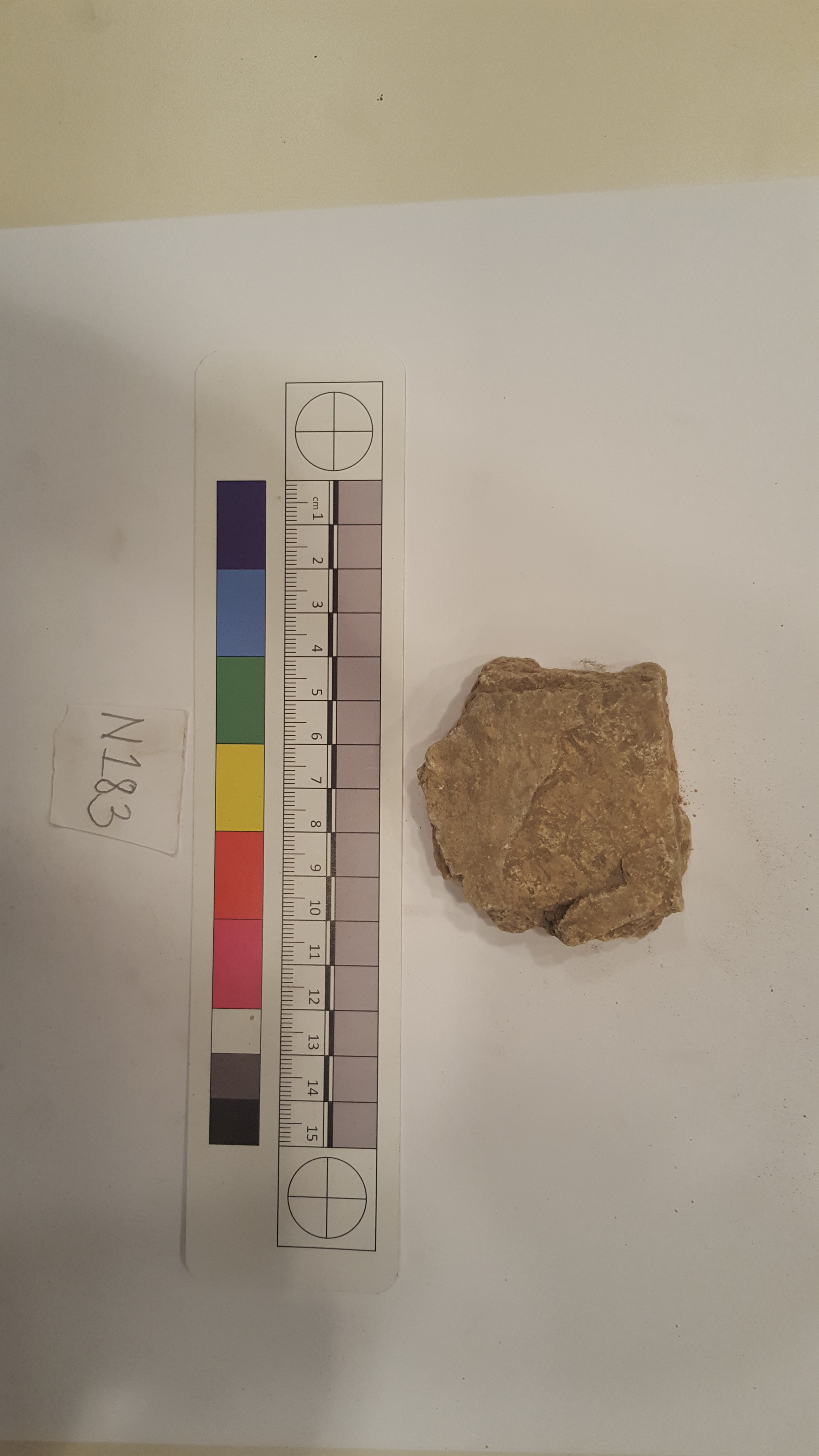
The stucco fragment under examination—a carved and painted relic from an unspecified yet palpably classical lineage—represents a singular node within the broader tapestry of Global Heritage. Its materiality, comprising a lime-based plaster matrix rendered malleable by artisans, was subsequently incised with geometric precision and adorned with a restrained palette of mineral pigments. This object, isolated from its original architectural or sculptural context, functions as a pure artifact of aesthetic archaeology. It compels the contemporary couturier to engage not with narrative reconstruction, but with the distilled essence of form, texture, and chromatic memory. The fragment’s survival as an isolated entity paradoxically amplifies its authority, allowing for a direct, unmediated dialogue between historical craftsmanship and 2026 luxury silhouettes.
Deconstructing Classical Elegance: Formal and Textural Analysis
The elegance inherent in this stucco fragment is not derived from ornamentation alone, but from a rigorous adherence to proportional harmony. The carved elements—whether a fluted motif, a foliate arabesque, or a residual cornice line—exhibit a controlled asymmetry that speaks to the human hand. The painted surface, now patinated and fissured, reveals a stratigraphy of application: a ground layer of lime white, followed by washes of ochre, terre verte, and a faded azurite. This chromatic sequence is not decorative in the superficial sense; it is a record of light absorption and reflection, a dialogue between the applied pigment and the underlying plaster’s absorbent character.
For the 2026 silhouette, this translates into a re-evaluation of surface as structure. The stucco fragment teaches that elegance is achieved through the tension between the carved negative space and the painted positive form. In haute couture, this manifests as architectural draping where the fabric’s surface is not merely a canvas but a three-dimensional plane of relief. The fragment’s fissures—its craquelure—are not flaws but evidence of temporal integrity. They inform a new appreciation for imperfect luxury, where seams are not hidden but articulated, where the weave of a silk gazar or the hand of a wool crepe is allowed to speak with the same honesty as the stucco’s aged surface.
Materiality as Couture Imperative: Carved, Painted, Constructed
The dual actions of carving and painting on stucco provide a direct technical parallel for 2026 high-end silhouettes. Carving implies subtraction, a removal of material to reveal form. In couture, this is mirrored by negative tailoring—the strategic excision of fabric through laser-cut motifs or hand-cut appliqués that create a lattice of light and shadow. The stucco fragment’s carved lines, whether shallow or deep, dictate the eye’s movement across the surface. Similarly, a 2026 gown might feature sculptural boning that carves the silhouette from within, creating a structural topography that mimics the fragment’s relief.
Painting, in the context of stucco, is an additive process that respects the substrate. The pigments are absorbed into the plaster, becoming one with the material. This principle informs integral coloration in luxury textiles. Rather than printing or dyeing a finished fabric, the 2026 atelier will explore pigment-infused weaves where color is intrinsic to the fiber, much like the mineral pigment is intrinsic to the stucco. The fragment’s faded palette—a study in desaturated earth tones punctuated by a single, surviving blue—suggests a 2026 color story of archival neutrals: limestone, weathered terracotta, and oxidized copper, offset by a singular accent of lapis or malachite.
Silhouette Translation: From Fragment to Form
The isolated nature of the stucco fragment—its lack of a complete architectural context—liberates the designer to extrapolate form from fragment. The 2026 silhouette will not be a literal reproduction of a classical garment, but a fragmented silhouette that honors the logic of the artifact. This can be achieved through modular construction: a jacket that appears as a detached architectural element, a skirt that floats as a discrete volume, a bodice that functions as a sculpted carapace. The fragment’s inherent incompleteness becomes a design principle, encouraging the wearer to engage with the garment as a series of resolved parts that form a cohesive whole.
Specifically, the carved concave lines of the stucco suggest asymmetric waistlines and offset shoulder lines that create a sense of dynamic equilibrium. The painted surface, with its layered transparency, inspires sheer overlays and gossamer organza that reveal a structured underlayer—a direct translation of the stucco’s painted surface over its carved base. The silhouette for 2026, therefore, is one of controlled volume: a columnar shape that flares at the hem, a cocoon back that envelops the form, a sharp, geometric neckline that references the fragment’s angular edges. The overall effect is one of monumental simplicity, where each line and color is justified by the artifact’s authority.
Conclusion: The Fragment as Future Lexicon
This stucco fragment, isolated and silent, speaks with profound clarity to the 2026 couture landscape. It demands a departure from transient trends and a return to material truth. The carved and painted surface is not a decoration but a structural and chromatic imperative. For Natalie Fashion Atelier, this artifact becomes a foundational text. The 2026 collection will be a study in aesthetic archaeology, where each silhouette is a fragment of a greater, unspoken heritage. The luxury lies not in completeness, but in the integrity of the part. The stucco fragment teaches that elegance is not an addition, but a subtraction; not a surface, but a depth; not a narrative, but a presence. This is the 2026 silhouette: a carved, painted, and constructed homage to the isolated, yet eternal, voice of the artifact.