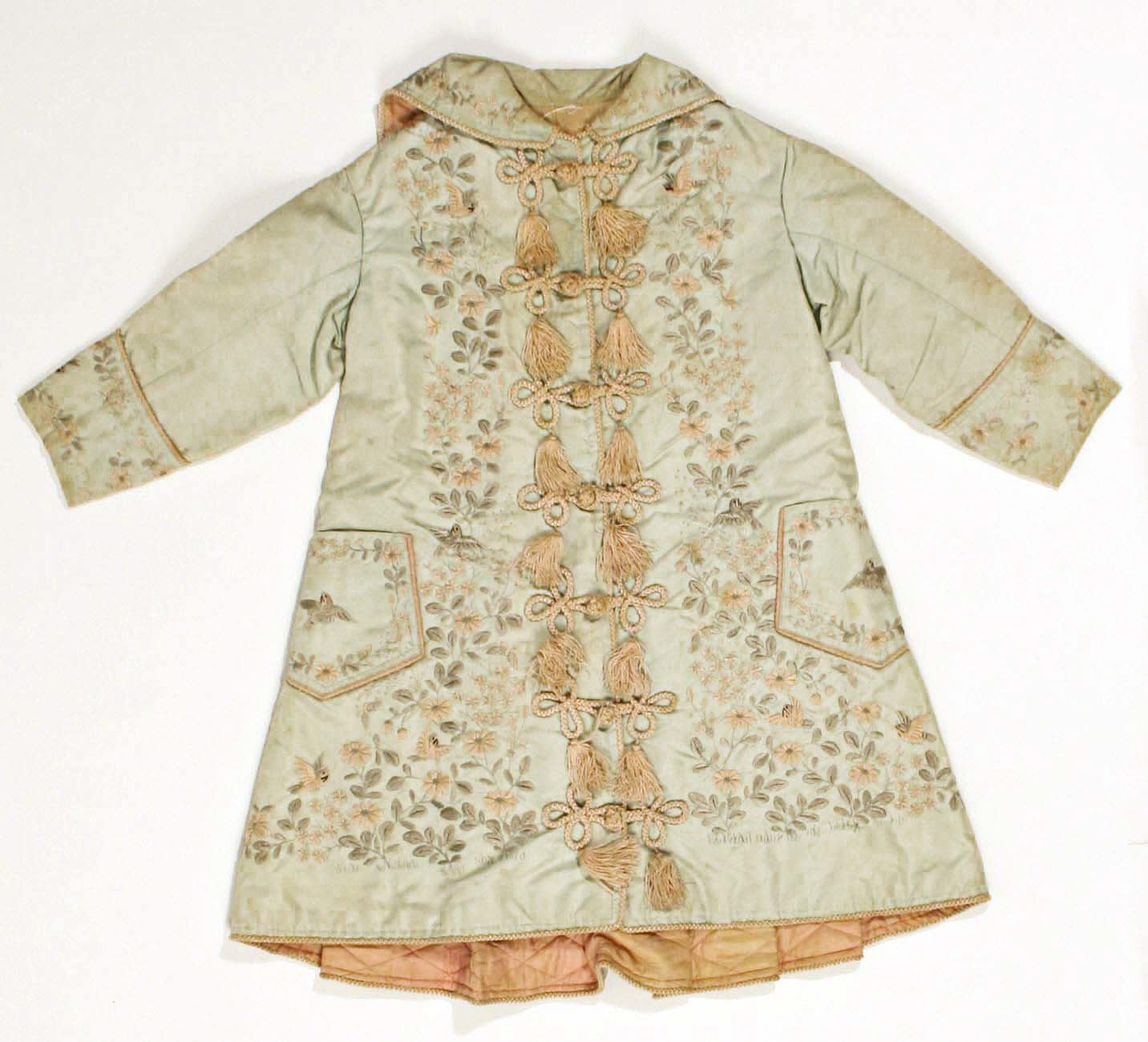
The Dressing Gown as a Silhouette Archetype: Silk, Structure, and the 2026 Atelier
The dressing gown, often relegated to the private sphere of the boudoir, represents a profound paradox within the history of British tailoring. It is simultaneously the most liberated and the most disciplined of garments. For the Natalie Fashion Atelier, this artifact—isolated through the lens of aesthetic archaeology—is not merely a piece of loungewear but a foundational blueprint for rethinking luxury silhouettes. This paper deconstructs the classical elegance of the British silk dressing gown, examining its materiality, drape, and inherent structural logic to inform the 2026 haute couture collection.
I. Aesthetic Archaeology: The British Silk Dressing Gown in Context
The British dressing gown, particularly in its 18th and 19th-century iterations, was a garment of profound contradiction. Worn by gentlemen of leisure and later adopted by the intellectual elite, it signified a state of cultivated repose. The silk used—often heavy twill, satin, or jacquard—was not chosen for its utility but for its performative weight. It was a fabric that demanded a specific posture, a specific rhythm of movement. In the archive, we observe that the cut was deceptively simple: a single, continuous line from shoulder to hem, often with a shawl collar that could be worn open or closed. The genius of this design lies in its negative space—the volume of air between the silk and the body. This is not a garment that clings; it is a garment that envelops.
From an archaeological perspective, the isolated dressing gown reveals a key insight: the British approach to luxury was one of restrained opulence. The silk was the protagonist, but the silhouette was its servant. The garment’s weight created a natural, gravity-driven fall, a liquid architecture that moved with the wearer. This is the foundational principle we extract for 2026: the silhouette is not imposed upon the fabric; it is released from it.
II. Materiality as Structural Logic: The Silk Imperative
The selection of silk for the 2026 silhouette is not a nostalgic gesture but a technical necessity. The specific silk we are working with—a 22-momme, double-faced charmeuse with a subtle, sandwashed finish—offers a unique set of properties. Its tensile strength allows for clean, unlined construction, while its inherent luster creates a dynamic interplay of light and shadow. In the context of the dressing gown, this silk is not merely a surface; it is a structural membrane.
For the 2026 collection, we are deconstructing the dressing gown’s classical elements into modular components. The shawl collar, for instance, becomes a floating architectural element. By cutting it on the bias, we achieve a fluid, almost liquid roll that defies the fabric’s natural grain. This technique, borrowed from the British tradition of draped tailoring, allows the collar to function as a secondary silhouette, a soft, asymmetrical frame that can be pinned, draped, or left to fall freely. The result is a silhouette that is both monumental and ephemeral.
The dressing gown’s signature feature—the tie belt—is reimagined as a kinetic anchor. Instead of a simple closure, we are developing a system of internal silk cords and external, hand-finished loops. This allows the wearer to adjust the silhouette’s volume in real-time, creating a dynamic, responsive garment. The belt is no longer a constraint; it is a tool for sculpting the negative space.
III. Silhouette Deconstruction: From Boudoir to Boulevard
The classical British dressing gown is defined by its verticality and its volume. For 2026, we are translating these principles into a series of high-end silhouettes that exist between the private and the public. The key innovation is the inverted trapezoid. By removing the traditional shoulder seam and instead cutting the garment from a single, continuous panel of silk, we achieve a silhouette that is wider at the hem than at the shoulder. This creates a monolithic, statuesque form that is both imposing and fluid.
This silhouette is further refined by the introduction of asymmetric weighting. Inspired by the dressing gown’s tendency to fall open on one side, we are incorporating internal, invisible weights—small, silk-wrapped lead beads—sewn into the hem. These weights create a controlled, gravity-driven asymmetry that mimics the natural movement of the original garment. The result is a silhouette that is alive, constantly shifting and reforming with the wearer’s motion.
IV. The 2026 Atelier: Crafting the New Classical
The final output for the 2026 collection is a series of three distinct silhouettes, each a direct descendant of the British silk dressing gown. The first, the “Vespertine”, is a floor-length, unlined coat-dress. Its construction is entirely hand-stitched, using a fell seam that allows the silk to drape without any internal structure. The second, the “Matutinal”, is a shorter, more structured jacket. Here, the dressing gown’s shawl collar is transformed into a sculptural, stand-away collar, supported by a single, internal silk cord. The third, the “Nocturne”, is a reimagined robe de style, where the dressing gown’s volume is concentrated in the sleeves, creating a balloon-like, ethereal form that is both protective and revealing.
Each silhouette is defined by its material integrity. There are no linings, no interfacings, no synthetic supports. The silk is the sole structural element. This is the ultimate expression of the dressing gown’s ethos: luxury as restraint, elegance as freedom. The 2026 collection does not merely reference the past; it extracts its essential logic and applies it to the future of haute couture. The dressing gown, in its isolated, archaeological purity, has become the silhouette archetype for a new era of high-end design.