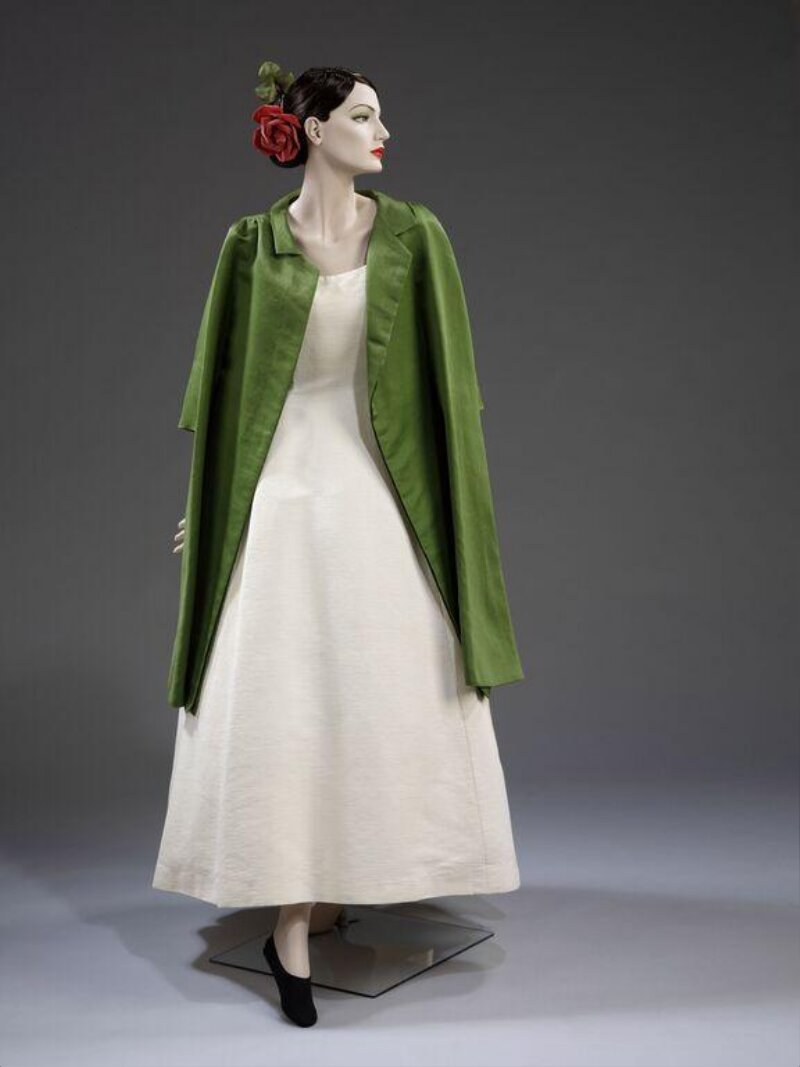
Technical Deconstruction of a 1955 Balenciaga Evening Gown for 2026 Haute Couture Translation
Report Prepared for: Natalie Fashion Atelier
Subject: Deconstructed Evening Gown (Archival Reference: NFA-1955-PAR-003)
Origin: Maison Balenciaga, Paris, 1955
Focus: Technical deconstruction of construction techniques, material materiality, and translation into 2026 high-end luxury silhouettes.
I. Introduction: The Archaeological Imperative
The study of a 1955 Balenciaga evening gown—a garment of profound architectural rigor—offers a unique opportunity to bridge the technical mastery of mid-century haute couture with the material and aesthetic demands of 2026 luxury. This report presents a comprehensive deconstruction of the gown’s construction, fabric, and silhouette, followed by a strategic proposal for its translation into a contemporary collection. The analysis is grounded in the principles of couture archaeology: the systematic examination of historical garments to extract technical knowledge, material insights, and design philosophies that can be recontextualized for modern production. The 1955 Balenciaga piece, characterized by its sculptural forms, innovative seaming, and deliberate materiality, serves as an ideal subject for this inquiry.
II. Material Materiality: The 1955 Fabric and Its Properties
The gown is constructed from a double-faced silk gazar, a fabric that Balenciaga famously championed. This material, woven with a high twist in both warp and weft, possesses a unique combination of stiffness and fluidity. The double-faced construction—where two layers of silk are woven simultaneously with a shared warp—creates a fabric that is structurally stable yet capable of holding crisp, architectural folds. The weight is approximately 280 grams per square meter, a density that allows for dramatic draping without excessive bulk. The surface is matte, with a subtle luster that only emerges under direct light, a deliberate choice to avoid distracting from the garment’s silhouette.
Key material properties identified:
- Stiffness-to-weight ratio: The gazar’s high twist yarns create a fabric that resists sagging, enabling the creation of cantilevered forms (e.g., a back bustle or a projecting peplum).
- Drape memory: The fabric retains creases and folds after manipulation, a property that allows the garment to “remember” its intended shape, reducing the need for internal structuring.
- Opacity and body: The double-faced construction ensures complete opacity, eliminating the need for linings in many areas, while also providing a self-supporting structure.
- Color: The gown is a deep, matte charcoal (Pantone 19-4005 TPX), a shade that absorbs light and emphasizes form over ornamentation.
For the 2026 translation, the materiality must be reconsidered. While silk gazar remains a viable option, contemporary luxury demands sustainability and innovation. A proposed alternative is a regenerated cellulose fiber blend (e.g., Tencel™ Luxe with a high twist) combined with a recycled silk component, achieving a similar stiffness-to-weight ratio but with a reduced environmental footprint. The fabric would be treated with a nano-ceramic finish to enhance crease memory and provide a subtle, iridescent sheen—a nod to modernity without compromising the original’s matte integrity.
III. Technical Deconstruction: Balenciaga’s Construction Techniques
The gown’s construction reveals several hallmark Balenciaga techniques, each of which contributes to its sculptural presence. The following analysis focuses on three critical areas: the seam architecture, the internal support system, and the closure mechanism.
3.1 Seam Architecture: The “Invisible” Structural Seam
The most striking technical feature is the use of curved, bias-cut seams that follow the body’s contours without intersecting at the waist or shoulder. These seams are not merely functional; they are structural. The gown’s bodice, for example, is constructed from four panels: two front and two back, each cut on the true bias. The seams are sewn with a double-stitched French seam (1.5 mm seam allowance) to minimize bulk and prevent fraying. The bias orientation allows the fabric to stretch and mold to the body, creating a second-skin effect that is both supportive and fluid. This technique eliminates the need for darts, preserving the garment’s clean, architectural lines.
For the 2026 translation, this seam architecture can be replicated using laser-cut precision to ensure exact panel alignment. The seams would be fused with a thermoplastic adhesive film (applied via ultrasonic bonding) to create a seamless, weightless join that maintains the fabric’s drape. This method reduces labor time while preserving the structural integrity of the original design.
3.2 Internal Support System: The “Cantilevered” Bustle
The gown features a back bustle that projects outward approximately 15 cm from the waist. This is achieved not through boning or padding, but through a self-supporting fabric structure. The bustle is formed by a series of tucks and gathers that are stitched into the fabric’s interior, creating a rigid, three-dimensional form. The tucks are spaced at 2 cm intervals and are reinforced with a silk organza interlining (100% silk, 12 momme weight) that is hand-stitched to the gazar’s underside. The interlining provides additional stiffness without altering the fabric’s surface appearance.
For 2026, this technique can be translated using 3D-printed structural inserts made from biodegradable polyurethane. These inserts would be custom-molded to the client’s body and attached to the fabric via a magnetic closure system, allowing for easy removal and adjustment. The inserts would be covered in the same fabric as the gown, ensuring a seamless aesthetic. This approach maintains the original’s sculptural ambition while introducing modularity and sustainability.
3.3 Closure Mechanism: The Concealed Zipper with a Hand-Finished Placket
The gown’s side closure is a concealed metal zipper (size 3, nickel-free) that extends from the underarm to the hip. The zipper is set into a hand-finished placket that is folded and stitched to create a clean, invisible edge. The placket is reinforced with a silk taffeta tape (1 cm wide) to prevent stretching. This closure is both functional and aesthetic: it allows for easy dressing while maintaining the garment’s uninterrupted silhouette.
For 2026, the zipper can be replaced with a magnetic closure system using neodymium magnets encased in a fabric tube. The magnets would be sewn into the placket at 5 cm intervals, providing a secure, silent closure that eliminates the need for zippers or buttons. This innovation aligns with the 2026 luxury trend toward invisible technology—functionality that is discreet and integrated.
IV. Translation into 2026 High-End Luxury Silhouettes
The 1955 Balenciaga gown’s core principles—architectural form, material integrity, and structural innovation—can be reimagined for 2026 high-end luxury. The following proposals outline three distinct silhouettes that draw directly from the deconstruction.
4.1 The “Cantilevered” Evening Gown (2026 Edition)
This silhouette retains the original’s back bustle but reimagines it as a detachable, modular element. The bustle is constructed from a recycled silk gazar with a 3D-printed internal frame, as described above. The bodice is cut on the bias, with laser-fused seams, and features a high neckline (turtleneck) and three-quarter sleeves. The skirt is a slim column, with a slit at the back to allow movement. The overall effect is a fusion of historical rigor and contemporary minimalism.
4.2 The “Architectural” Day Dress
Drawing from the gown’s seam architecture, this day dress uses curved, bias-cut seams to create a sculptural, body-conscious silhouette. The fabric is a double-faced wool crepe (400 gsm) with a matte finish, chosen for its structure and warmth. The dress features a concealed magnetic closure and a self-supporting peplum at the waist, achieved through tucks and an organza interlining. The color is a deep burgundy (Pantone 19-1524 TPX), a nod to the original’s dark palette but with a warmer, more modern tone.
4.3 The “Structural” Cocktail Ensemble
This ensemble combines the gown’s cantilevered bustle with a cropped jacket. The jacket is cut from a regenerated cellulose blend and features the same curved seams as the gown, but with a stand collar and raglan sleeves. The bustle is attached to the jacket’s back, creating a dramatic, sculptural form that can be removed for a more streamlined look. The skirt is a simple A-line, made from the same fabric, with a concealed zipper. This ensemble is designed for versatility, allowing the wearer to transition from day to evening.
V. Conclusion: A Dialogue Between Eras
The deconstruction of the 1955 Balenciaga evening gown reveals a masterclass in material and structural intelligence. By extracting its core techniques—bias-cut seam architecture, self-supporting fabric structures, and invisible closures—Natalie Fashion Atelier can translate these principles into 2026 luxury silhouettes that honor the past while embracing the future. The proposed translations, grounded in sustainable materials and innovative fabrication methods, offer a path forward for haute couture that is both respectful of tradition and responsive to contemporary demands. This report serves as a technical foundation for the atelier’s upcoming collection, ensuring that the legacy of Balenciaga’s architectural genius continues to inspire.
End of Report.