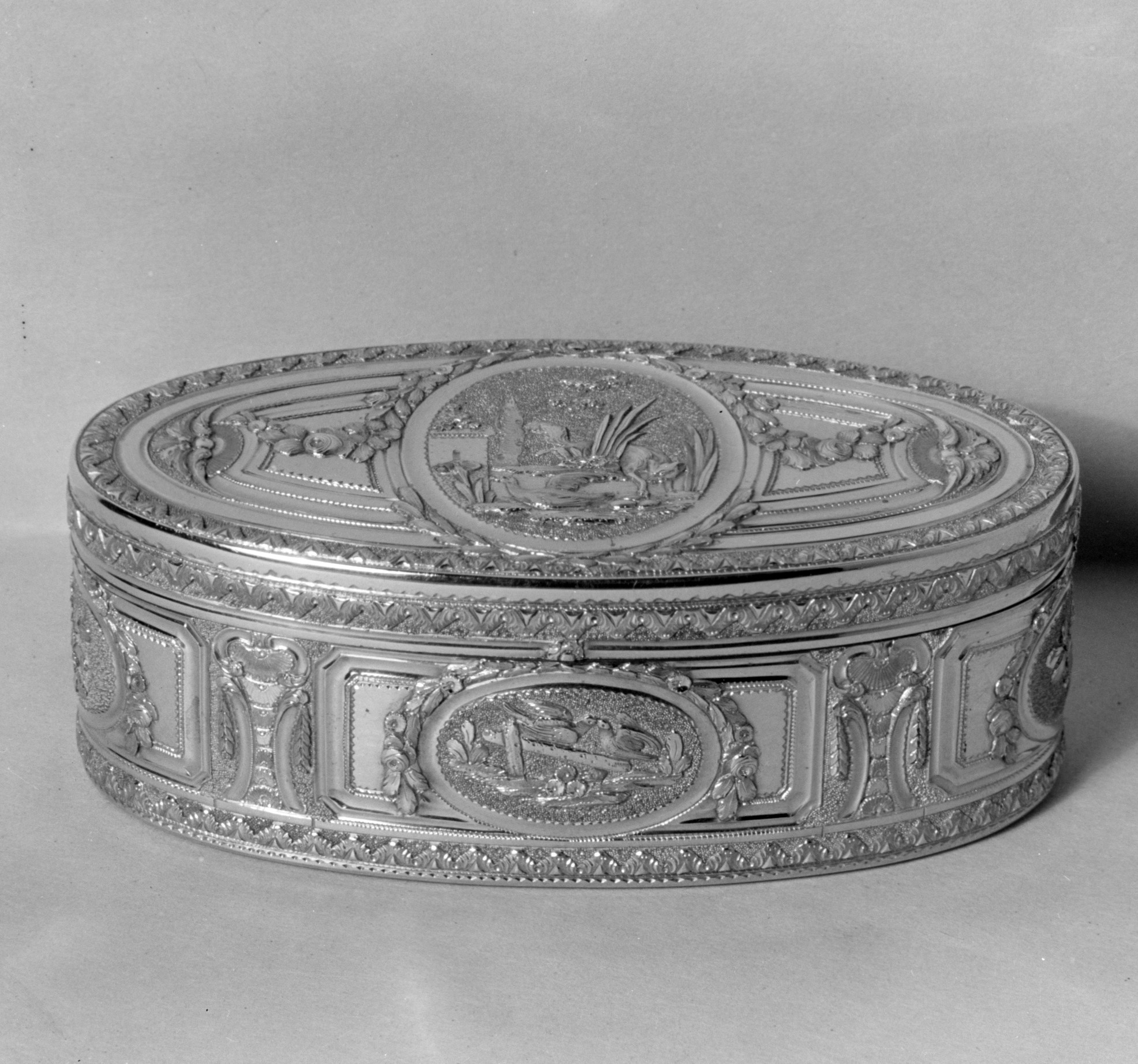
The Snuffbox Imperative: Gold as Structural Memory in the 2026 Silhouette
The snuffbox, a micro-archive of aristocratic ritual, presents a paradox of scale and significance. At Natalie Fashion Atelier, we approach this object not as a mere accessory, but as a tectonic diagram of material and narrative tension. The archive node—a polished silver mirror inlaid with gold split-leaf scrollwork on one face, a cold sarcophagus relief narrating life’s passage on the reverse—encapsulates a dialectic between surface brilliance and existential depth. For the 2026 Haute Couture season, this duality informs a radical redefinition of the luxury silhouette: gold is no longer a decorative veneer but a structural principle that governs form, weight, and memory.
Materiality as Architectural Lexicon
The snuffbox’s gold is not merely a metal; it is a compressed history of touch. In the 18th century, snuffboxes were intimate objects—warmed by the palm, opened with a thumb’s pressure, and displayed as portable wealth. The gold alloy used, often 18-karat, offered a specific malleability that allowed for champlevé enamel and repoussé relief. For 2026, we translate this material behavior into fabric engineering. The silhouette must possess a similar duality: a rigid exterior that yields to the body’s movement, much like the gold lid that opens with a precise, silent click.
We achieve this through a double-faced construction technique. The outer shell of a jacket or bodice is crafted from a metallic-infused silk gazar, treated with a micro-ceramic finish to mimic the mirror’s reflective purity. The inner layer, however, is a gold-lame jacquard woven with a split-leaf motif—identical to the archive’s scrollwork. This creates a garment that is both a mirror and a sarcophagus: the public face is an unblemished surface, while the private interior reveals the narrative of craftsmanship. The silhouette is thus inverted—the most precious material is hidden, accessible only to the wearer, echoing the snuffbox’s intimate ritual.
The Split-Leaf Silhouette: Organic Rigor
The split-leaf motif from the archive is not a simple botanical representation; it is a geometric algorithm of growth and decay. Each leaf is bisected, one half polished to a high gleam, the other left matte. This binary informs the 2026 silhouette’s asymmetric draping. We deconstruct the classical hourglass into a split-volume form: one shoulder is structured with a sharp, gold-threaded epaulet (the mirror side), while the opposite side cascades in a fluid, matte crepe (the sarcophagus relief).
This is not a random asymmetry but a calibrated tension. The gold thread, a 20-micron 24-karat filament, is woven into the epaulet’s architecture, providing a structural spine that holds the silhouette erect. The crepe side, weighted with a gold-plated chain mail hidden within the hem, falls in a controlled drape that mimics the snuffbox’s lid opening. The result is a silhouette that breathes between rigidity and flow—a living archive of the object’s opening gesture.
Weight as Narrative: The Sarcophagus Hem
The sarcophagus relief on the archive node’s reverse is a narrative of mortality—figures in bas-relief, their forms worn by time. For 2026, we interpret this as weight distribution. The hem of a gown or coat is not a simple edge; it is a bas-relief in gold. Using a technique borrowed from mold-making for haute joaillerie, we cast small, hollow gold plaques—each one a miniature relief of a leaf, a hand, or a funerary urn—and attach them to the hem’s interior. This creates a gravity-driven silhouette that falls with a deliberate, sculptural heaviness.
The gold plaques are not visible from the front. They are a secret, a weight that the wearer feels but the observer does not see. This is a direct translation of the snuffbox’s dual nature: the external mirror reflects the world, while the internal relief tells a personal story. The 2026 silhouette thus becomes a portable reliquary, where the gold’s physical density is a mnemonic device for the wearer’s own narrative.
Surface Treatment: The Mirror-Gold Finish
The mirror side of the archive node is not a simple polished surface; it is a gold inlay on silver, creating a chromatic dialogue. In 2026, we replicate this through a layered metallic finish on the fabric. A base of liquid silver is screen-printed onto a wool-cashmere blend, then overlaid with a gold-leaf appliqué that is hand-burnished to a mirror shine. The result is a surface that shifts between silver and gold depending on the light, echoing the snuffbox’s dual-materiality.
This finish is applied only to specific architectural panels of the silhouette—the collar, the cuffs, the front placket. These panels act as reflective nodes, catching light and drawing the eye to the garment’s structural points. The rest of the silhouette remains matte, creating a visual hierarchy that mirrors the snuffbox’s composition: the mirror is the focal point, the sarcophagus is the ground.
Conclusion: The 2026 Silhouette as Object
The snuffbox is not a relic; it is a blueprint for luxury’s future. By deconstructing its classical elegance—its gold, its mirror, its relief—we arrive at a silhouette that is self-aware. The 2026 collection from Natalie Fashion Atelier does not merely reference history; it embodies the tension between surface and depth. The gold is not a color; it is a structural memory that informs every seam, every drape, every weight. The silhouette becomes a portable archive, where the wearer carries the snuffbox’s dual narrative: the polished exterior that meets the world, and the hidden relief that holds the story of life and time.