The Bronze Kylix: An Archaeology of Form for 2026 Haute Couture
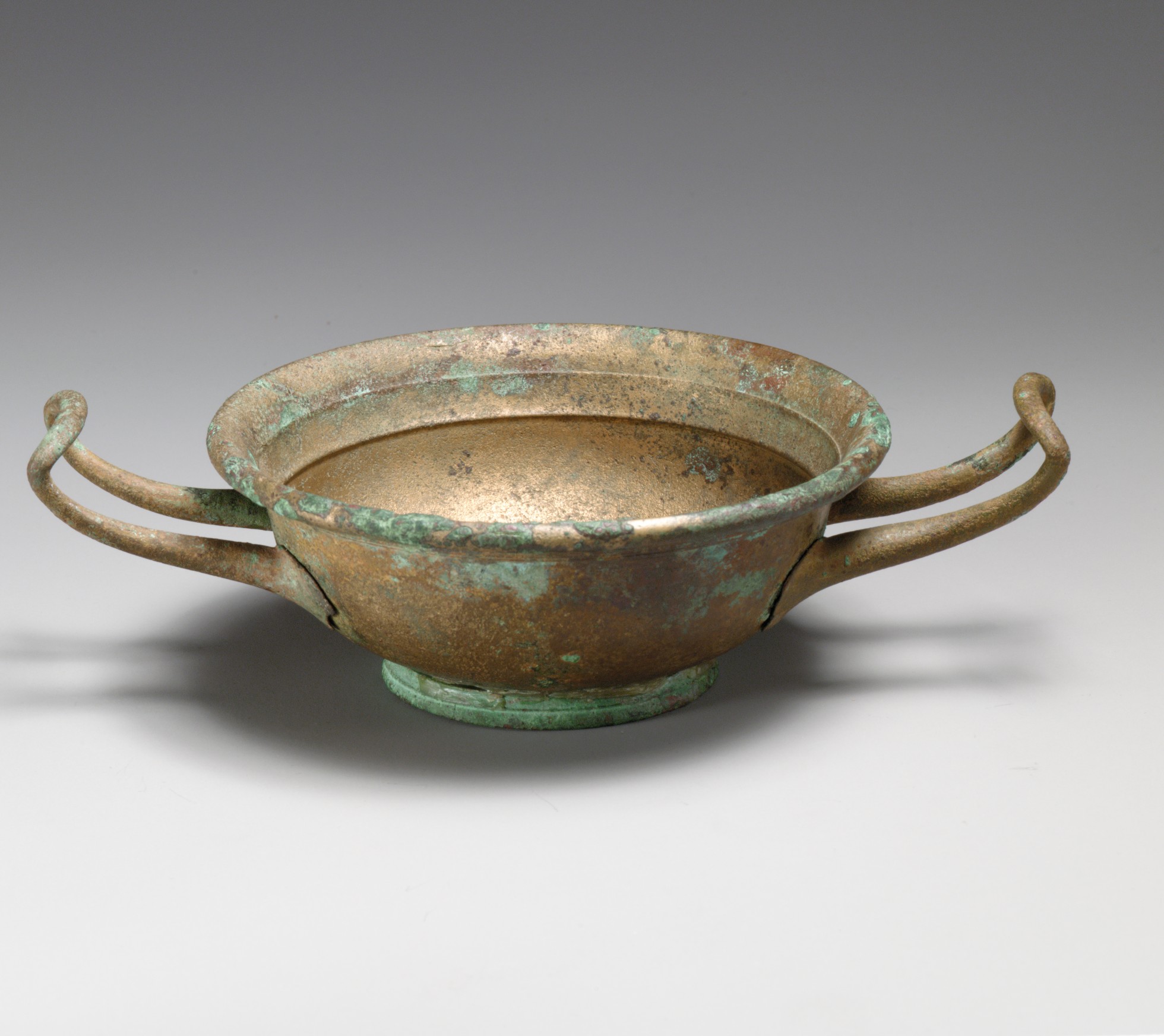
The Bronze kylix, a shallow drinking cup with two horizontal handles and a stemmed foot, represents a pinnacle of Greek sympotic culture. Its form is not merely functional; it is a study in controlled tension, balanced asymmetry, and the articulation of volume through negative space. For the 2026 Haute Couture collection at Natalie Fashion Atelier, this artifact serves as a primary morphological catalyst. Its materiality—cold, reflective, and patinated—and its silhouette—a wide, low bowl rising from a slender, fluted stem—offer a direct counterpoint to the soft, draped volumes that have dominated recent seasons. We propose a deconstruction of the kylix’s classical elegance into a new architectural lexicon for the female form.
Materiality and Surface: The Patina of Luxury
The bronze surface of the kylix, particularly after centuries of burial, develops a verdigris patina—a complex layering of copper carbonates and chlorides. This is not a degradation but a material narrative. For 2026, we translate this into a textile strategy of controlled oxidation. We employ a double-faced silk gazar, one side woven with a metallic copper thread, the other with a matte, jade-green silk. Through a proprietary chemical wash, the copper thread is partially oxidized, creating a surface that shifts from warm bronze to cool malachite depending on the light and the wearer’s movement. This technique, which we term “patina weaving,” mimics the kylix’s surface depth without compromising the fabric’s structural integrity. The resultant textile is not a print; it is a living surface, a chronological skin that recalls the archive node linking the 《Rock in the form of a fantastic mountain》 and the 《Jar in the shape of bronze container (hu)》. Both artifacts, though disparate in origin, share a fascination with surface as a record of time—the rock’s eroded texture and the hu’s ritualistic patina are both dialogues between object and environment. Our 2026 silhouette will wear this dialogue, not as a costume, but as a structural membrane.
Silhouette Architecture: The Kylix’s Inverted Tension
The kylix’s silhouette is defined by a paradox of stability and instability. The wide, shallow bowl (the *kylix* proper) appears to float precariously on a slender, often fluted stem. This creates a visual tension between the horizontal expanse and the vertical support. For 2026, we deconstruct this into a shoulder-to-hem proportion that inverts the traditional couture silhouette. Instead of a fitted bodice and full skirt, we propose a wide, rigid shoulder yoke—the *kylix bowl*—supported by a narrow, columnar skirt—the *stem*. This is not a simple shoulder pad; it is a sculptural cantilever. The yoke is constructed from a thermoformed horsehair and silk organza, molded into a shallow, convex curve that extends 15 cm beyond the natural shoulder line. The fabric is pleated radially from a central point at the nape of the neck, mimicking the fluting of the kylix’s stem. The skirt, in contrast, is a single, unbroken column of patina-woven silk, falling straight from the hip to the floor. The hem is weighted with a bronze chain—a direct material reference—to ensure a clean, vertical drape.
Handle Logic: The Articulation of Movement
The kylix’s two horizontal handles are not merely grips; they are articulated appendages that define the object’s gesture. In the 2026 silhouette, these handles are reimagined as detachable, structural sleeves. Each sleeve is a separate, self-supporting form—a tube of bronze-impregnated leather, laser-cut with a pattern of negative-space circles that echo the kylix’s rim. The sleeve attaches to the shoulder yoke via a series of magnetic bronze clasps, allowing the wearer to choose between a sleeved or sleeveless silhouette. When attached, the sleeve does not follow the arm’s natural line; instead, it projects outward at a 45-degree angle, creating a dynamic, asymmetrical volume that recalls the kylix’s handles reaching outward from the bowl. This is a deliberate break from the body’s anatomy, a prosthetic extension that introduces a new gestural language. The wearer becomes a living kylix, her arms the handles, her torso the bowl.
Archive Resonance: The Fantastic Rock and the Ritual Jar
The connection between the 《Rock in the form of a fantastic mountain》 and the 《Jar in the shape of bronze container (hu)》 is not one of form but of ontological status. Both are objects that perform as something other than themselves. The rock is a mountain in miniature, a microcosm of a landscape; the hu is a bronze container that mimics a ceramic prototype, a material translation. The kylix, too, is a threshold object—a cup that is also a social instrument, a vessel for wine and for discourse. For 2026, we apply this logic of translation and performance to the silhouette itself. The garment is not a dress; it is a sculptural proposition that performs as a dress. The patina-weave fabric performs as bronze. The shoulder yoke performs as a kylix bowl. This is not trompe-l’œil; it is material alchemy. The wearer is not costumed; she is architecturally inhabited by the object’s logic. The silhouette becomes a portable archive, a wearable node that connects the symposia of ancient Greece to the atelier of 2026.
Construction and Craft: The Bronze Seam
To realize this vision, we have developed a new seam technique: the “bronze seam.” It is a structural join that does not rely on thread. Instead, two edges of the patina-weave fabric are overlapped by 2 cm and bonded with a heat-activated, copper-infused adhesive film. The seam is then hammered flat with a cold bronze tool, creating a rigid, metallic ridge that echoes the kylix’s hammered rim. This seam is not hidden; it is celebrated as a line of construction, a visible articulation of the garment’s architecture. It appears at the shoulder yoke’s outer edge, along the hem of the skirt, and at the attachment points for the sleeves. The bronze seam is a signature of the 2026 collection, a technical signature that links the hand of the artisan to the hand of the ancient metalsmith.
Conclusion: The Silhouette as Symposion
The 2026 silhouette informed by the Bronze kylix is not a revival of antiquity. It is a structural translation of a specific formal logic: the tension between a wide, shallow volume and a slender support; the articulation of handles as dynamic appendages; the material narrative of patina. This silhouette is a symposion in cloth—a gathering of historical references, material innovations, and architectural principles. It is a garment that demands a specific posture, a specific gesture, a specific way of inhabiting space. The wearer becomes a living artifact, not frozen in time, but activated in the present by the enduring logic of the kylix. This is the essence of Haute Couture: not to copy the past, but to extract its structural DNA and re-express it in a new material language. The Bronze kylix, for Natalie Fashion Atelier, is not a historical reference; it is a technical blueprint for 2026.