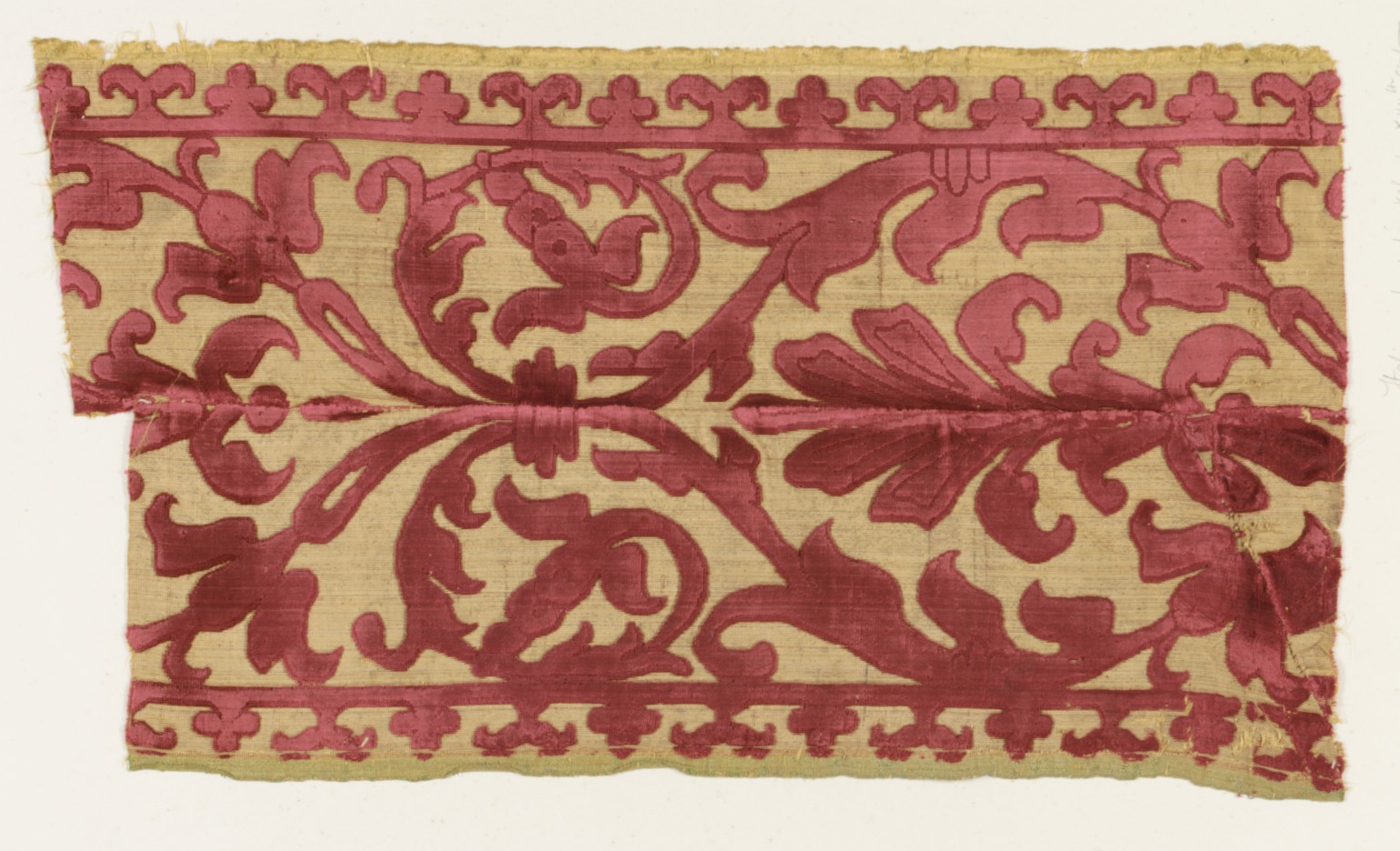
The Fragment as a Locus of Power: Silk and the 2026 Silhouette
Within the hallowed archives of Natalie Fashion Atelier, the concept of the fragment is not a sign of loss, but a catalyst for genesis. It is a deliberate act of aesthetic archaeology, where a single, isolated piece of silk—perhaps a remnant of an 18th-century grande tenue or a scrap of a Byzantine dalmatic—becomes the primary source of design intelligence. This research artifact deconstructs the classical elegance embedded in such a fragment, specifically focusing on the materiality of silk, and explicates how its inherent properties and historical connotations are being algorithmically translated into the defining silhouettes of the 2026 haute couture season.
The Archaeology of the Isolated Fragment
An isolated silk fragment, removed from its original garment and context, presents a paradox. It is simultaneously a ruin and a blueprint. Its classical elegance is not found in a complete hemline or a perfect sleeve, but in the tension of its weave, the fading of its dye, and the geometry of its tear. For the Atelier, this is not a romanticized decay; it is a data set. The fragment’s edge—whether a clean scissor cut, a frayed warp, or a chemically degraded selvedge—dictates the new silhouette’s boundary. The 2026 collection, titled Reliquiae, treats these fragments as primary architectural elements.
The classical elegance of a silk fragment is rooted in its structural integrity. A piece of gros de Tours from a 19th-century court dress, for example, possesses a ribbed stiffness that resists draping. This resistance informs a new, rigid silhouette: the “Fossilized Corsage.” Conversely, a fragment of charmeuse from a 1930s bias-cut gown, with its fluid, liquid weight, dictates a silhouette of controlled collapse. The 2026 line will not mimic the original garment; it will extrapolate the fragment’s internal logic—its modulus of elasticity, its warp/weft ratio, its dye migration patterns—to generate novel forms.
Materiality: Silk as a Computational Substrate
Silk is not merely a fabric; it is a biological composite of fibroin and sericin, a protein polymer with a tensile strength comparable to steel. For the 2026 silhouette, this materiality is exploited at a granular level. The Atelier’s research into “fragment topology” involves mapping the silk’s physical memory. A fragment that has been folded for centuries retains a crease memory; this is not a flaw to be pressed out, but a pre-stressed architectural line.
This leads to the development of the “Crease-Bound Silhouette.” Instead of cutting new patterns, the design team uses the fragment’s existing creases as the primary seams. The garment is assembled around the fragment’s own history of compression. The result is a silhouette that appears both ancient and futuristic—a dress that stands away from the body, its volume dictated by the fossilized folds of a past era. The silk’s luster is also a key parameter. A fragment of satin duchesse with a high refractive index creates a hard, mirror-like surface, reflecting light to define the silhouette’s edge. A fragment of matte habotai absorbs light, creating a volumetric void. The 2026 silhouette is thus a study in light absorption and reflection, directly derived from the fragment’s surface chemistry.
Deconstructing Classical Elegance: The Asymmetric Drape and the Structural Void
Classical elegance in haute couture has traditionally been associated with symmetry, balance, and the unbroken line. The fragment deconstructs this. Its irregular edges and missing sections necessitate a new definition of elegance based on asymmetrical equilibrium. The 2026 silhouette will feature the “Fragment Shoulder,” where one side of a jacket is fully constructed from a single, large silk panel (a complete fragment of a paletot), while the other side is a negative space, defined only by a single, floating seam. The elegance lies in the tension between the present and the absent.
This concept extends to the “Structural Void.” A fragment of silk with a missing corner or a chemical burn is not discarded. Instead, the void is framed with a micro-engineered silk organza, creating a window into the garment’s interior. This is not a cut-out for skin; it is a cut-out for the history of the silk itself. The void becomes a silhouette element, a negative volume that defines the positive space. The classical elegance of the column dress is thus reimagined as a fragmented column, where the missing pieces are as important as the present ones.
From Fragment to Silhouette: The 2026 Technical Manifesto
The translation of the isolated silk fragment into a 2026 high-end silhouette follows a rigorous, three-phase protocol:
Phase I: Fragment Digitization and Stress Analysis. Each fragment is scanned using a 3D photogrammetry rig to capture its exact topology, including its thickness gradient and fray pattern. A finite element analysis (FEA) is performed to calculate the fragment’s natural drape and stress points. This data generates a “silhouette probability cloud”—a series of potential forms the fragment would assume if suspended or structured.
Phase II: Architectural Extrapolation. The Atelier’s pattern makers, trained in both couture and parametric design, use the probability cloud as a base. They do not force the silk into a predetermined shape. Instead, they build a supporting armature—a micro-crinoline of horsehair and silk tulle—that catalyzes the fragment’s natural tendencies. If the FEA shows the fragment wants to buckle, the armature encourages a controlled buckle into a defined, architectural pleat. This yields the “Buckled Silhouette” for evening wear, where the skirt appears to be a single, monumental fold of silk, frozen in mid-collapse.
Phase III: The Final Silhouette. The 2026 collection will feature three primary silhouette families derived from this process:
- The Reliquary Sheath: A narrow, columnar silhouette where the silk fragment is used as a central panel, its edges left raw and frayed, bound by a transparent, laser-welded silk seam. The silhouette is defined by the fragment’s own internal structure, not by external cutting.
- The Tension Sphere: A voluminous, spherical silhouette for outerwear, where multiple silk fragments are joined not by stitching, but by tension cables of twisted silk filament. The garment holds its shape through the opposing forces of the fragments’ own weight and the cables’ pull. The elegance is in the dynamic equilibrium.
- The Negative Silhouette: A gown where the primary form is defined by a large, central void—a missing section of a historic silk panier. The void is bordered by a fine, embroidered edge, and the body is seen through the absence. The silhouette is the space itself.
Conclusion: The Fragment as a Future Lexicon
The isolated silk fragment, when approached with the rigor of aesthetic archaeology and the precision of material science, ceases to be a relic. It becomes a generative algorithm for the 2026 silhouette. The classical elegance of the past is not replicated; it is deconstructed, analyzed, and reborn as a new, rigorous form of beauty. For Natalie Fashion Atelier, the fragment is the most potent tool for innovation, proving that the future of haute couture is not in creating something from nothing, but in listening to the profound, silent instructions embedded in the fabric of history.