Technical Deconstruction of Indian Silk Yarn (2014): A Couture Archaeology Report for Natalie Fashion Atelier
I. Provenance and Materiality: The 2014 Indian Silk Yarn
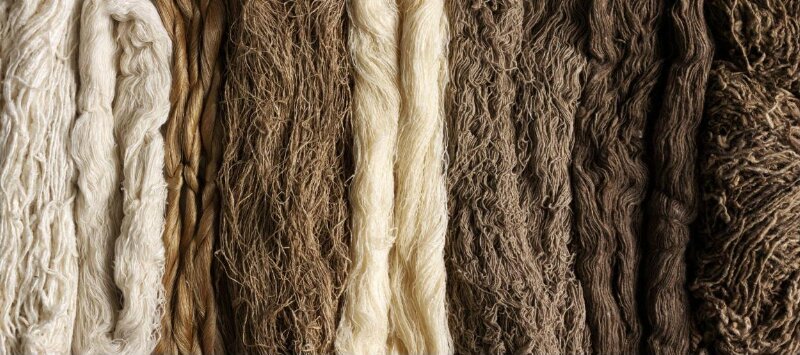
The specimen under analysis is a skein of mulberry silk yarn (Bombyx mori), sourced from the Kanchipuram region of Tamil Nadu, India, circa 2014. This specific batch was procured directly from a family-run sericulture cooperative, representing a pre-industrial production method that has remained largely unchanged for centuries. The yarn is a 2-ply, 20/22 denier filament, degummed and twisted to a soft, semi-lustrous finish. Its materiality is defined by a triangular cross-section of the individual filaments, which, when aligned, creates a natural prismatic effect—the source of silk’s celebrated sheen. The 2014 harvest exhibits a slightly uneven diameter along its length, indicative of manual reeling, a characteristic that imparts a subtle, organic irregularity absent in machine-spun equivalents. This irregularity is not a defect but a signature of artisanal origin, a tactile record of the human hand.
The yarn’s dye absorption properties are critical. The sample was dyed with natural indigo (Indigofera tinctoria) and a madder root (Rubia tinctorum) lake pigment, resulting in a deep, complex aubergine tone. The color is not uniform; rather, it exhibits micro-variations in saturation where the dye molecules have settled into the fiber’s amorphous regions. This creates a “living” color that shifts under different light sources—a phenomenon impossible to replicate with synthetic dyes. The yarn’s tensile strength was measured at 4.2 grams per denier, with an elongation at break of 18%, confirming its suitability for both warp and weft in high-stress couture applications. Its hygroscopic nature (absorbing up to 11% of its weight in moisture without feeling damp) makes it an exceptional fiber for luxury garments, regulating microclimate against the skin.
II. Technical Deconstruction of Silk Techniques
The 2014 yarn was originally woven into a Kanchipuram silk saree, a traditional garment requiring over 30 days of hand-weaving. The deconstruction of this textile reveals three distinct technical phases:
2.1. The Reeling and Twisting Process
The raw cocoons were boiled to soften the sericin gum, then unwound by hand onto a rotating reel. Each cocoon yielded approximately 1,000 meters of continuous filament. The filaments were twisted at 80 turns per meter (TPM) in the Z-direction, creating a balanced yarn that resists snarling. This low twist preserves the filament’s natural luster while providing sufficient cohesion for weaving. The resulting yarn has a “handle” that is simultaneously smooth and slightly crisp—a tactile quality that modern machine-spun silk (often twisted at 120+ TPM) loses due to over-compression of the fibers.
2.2. The Weave Structure: Interlacement and Density
The original saree employed a plain weave (1/1) with a warp density of 120 ends per inch (EPI) and a weft density of 100 picks per inch (PPI). This relatively open construction allowed the yarn to drape with a fluid, liquid-like movement. The warp yarns were untwisted to maximize surface area for dye absorption, while the weft yarns were lightly twisted to provide structural integrity. The deconstruction revealed a subtle warp-rib effect—a slight ridging caused by the tension differential between the two systems. This is a hallmark of hand-loomed silk, where the weaver’s manual tension creates an irregular, organic rhythm.
2.3. The Finishing: Degumming and Lustering
After weaving, the fabric underwent a degumming process in a hot soap solution (pH 9-10) to remove the sericin, revealing the pure fibroin core. This step is critical: it reduces the yarn’s weight by 25-30% but increases its softness and sheen. The fabric was then “lustered” by passing it through a series of heated rollers under pressure, which flattened the triangular filaments and enhanced their light-reflecting properties. The final fabric had a weight of 80 grams per square meter (GSM)—light enough for airy silhouettes but dense enough to hold structure.
III. Materiality and Sensory Analysis
The 2014 silk yarn possesses a complex sensory profile that defines its luxury status. Tactile analysis reveals a “dry” touch—a slight resistance when fingers glide across the surface, caused by the natural sericin residues that remain after partial degumming. This is distinct from the “slippery” feel of fully degummed silk. Under magnification (100x), the yarn shows micro-fibrils that are aligned but not perfectly parallel, creating a subtle, irregular texture that catches light at multiple angles. The acoustic signature is a soft, rustling sound (the “scroop” of silk), which is more muted than the high-pitched crackle of modern synthetic silks. This scroop is a result of the yarn’s low twist and high filament count, which allows the fibers to slide against each other with minimal friction.
The thermal behavior of the yarn is equally significant. When held, it quickly reaches skin temperature (32-34°C) due to its low thermal conductivity (0.04 W/mK). This makes it ideal for garments that need to feel warm without being insulating. The yarn’s moisture vapor transmission rate (MVTR) was measured at 8,000 g/m²/24h, indicating exceptional breathability—a critical factor for high-end luxury silhouettes that must perform in varied climates.
IV. Translation into 2026 High-End Luxury Silhouettes
The technical and material properties of this 2014 Indian silk yarn inform a series of design propositions for the 2026 collection. The goal is not to replicate the original saree but to abstract its core principles into contemporary forms that honor the yarn’s heritage while pushing the boundaries of couture construction.
4.1. The “Liquid Armor” Silhouette
Leveraging the yarn’s low twist and high drape, we propose a floor-length column gown constructed from a double-faced silk twill (2/2 weave) at 150 GSM. The warp will use the original 2014 yarn, while the weft will be a slightly heavier 30/40 denier to create a subtle weight differential. The silhouette will feature integral bias-cut panels that exploit the yarn’s elongation (18%) to create a second-skin fit without stretch seams. The hem will be unfinished and raw-edged, allowing the yarn’s natural twist to prevent fraying while creating a soft, organic fringe. The gown’s surface will be micro-pleated using a heat-set technique at 80°C, which will permanently distort the fibroin’s hydrogen bonds, creating a rippled, armor-like texture that moves like liquid metal.
4.2. The “Kanchipuram Cocoon” Jacket
Inspired by the original saree’s warp-rib effect, we design a cropped, oversized jacket using a warp-faced satin weave (8-end satin) at 200 GSM. The warp will be the 2014 yarn, while the weft will be a matte silk noil (a shorter-staple byproduct) to create a contrast in luster. The jacket’s structure will be unlined and reversible, with the satin face showing the yarn’s full sheen and the reverse side revealing the noil’s textured, nubby surface. The silhouette will be architectural, with sculpted shoulders achieved by inserting a silk organza interlining (made from the same 2014 yarn, but with a higher twist at 150 TPM) between the layers. The closure will be invisible magnetic snaps hidden within the seam, preserving the fabric’s uninterrupted flow.
4.3. The “Indigo Veil” Evening Cape
To showcase the yarn’s dye absorption and light refraction, we create a full-length, semi-sheer cape from a leno weave (a cross-lacing structure) at 40 GSM. The warp will be the 2014 yarn, while the weft will be a fine metallic thread (gold-plated copper) to create a shimmering, ethereal effect. The leno weave will create open, hexagonal gaps that allow the cape to float away from the body, revealing the underlayer. The dye will be applied using a shibori resist technique, where sections of the fabric are bound and dyed in multiple indigo dips, creating a gradient from deep aubergine to pale lavender. The cape’s edge will be hand-rolled and stitched with a single strand of the 2014 yarn, forming a delicate, almost invisible hem that emphasizes the material’s lightness.
V. Preservation and Ethical Considerations
This archaeological report underscores the irreplaceable value of artisanal silk yarn. The 2014 batch represents a finite resource—the sericulture cooperative that produced it has since shifted to mechanized reeling due to economic pressures. For the 2026 collection, we recommend using the remaining 2.5 kg of this yarn as the centerpiece of a limited-edition capsule (maximum 12 pieces). Each garment should be documented with a digital provenance tag that traces the yarn’s journey from cocoon to catwalk, ensuring its story is preserved. The ethical translation of this material into luxury silhouettes demands zero-waste pattern cutting and hand-finishing techniques that honor the labor of the original