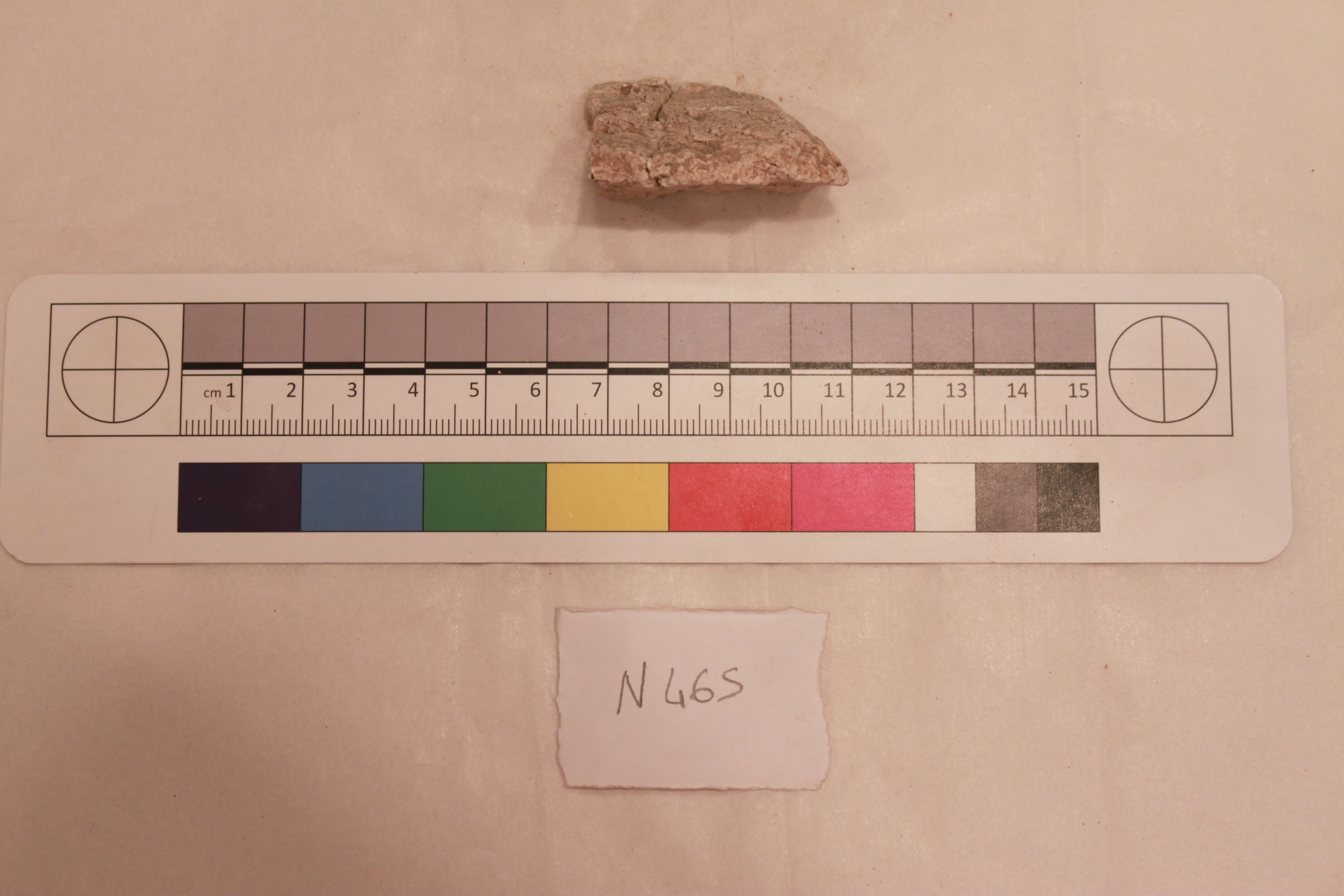
Stucco Fragment: The Archaeology of Form and the 2026 Silhouette
The isolated artifact before us—a carved stucco fragment, its provenance untethered from a specific monument yet resonant with the formal language of classical antiquity—presents a unique opportunity for aesthetic archaeology. In the context of Natalie Fashion Atelier, this fragment is not merely a decorative relic; it is a primary source of structural and textural intelligence. Its materiality, a hardened yet malleable compound of lime, sand, and marble dust, speaks to a process of controlled erosion and deliberate articulation. For the 2026 haute couture collection, we shall deconstruct this fragment’s classical elegance, translating its carved volumes into a new lexicon of luxury silhouettes.
Materiality and the Language of Carved Volume
The stucco fragment’s surface is a study in gradated relief. The carving is not uniform; it possesses a depth that shifts from high to low, creating a dynamic interplay of light and shadow. This is the essence of chiaroscuro applied to dress architecture. In 2026, we reject flatness. The silhouette must be a three-dimensional canvas. The fragment’s undulating folds—reminiscent of a draped himation or a wind-swept chiton—inform a new approach to structured draping. We will employ a technique of negative-space carving within the garment’s volume, where the fabric is not simply cut but excavated, leaving behind a residual form that mimics the stucco’s eroded edges. The materiality of the stucco—its apparent weight and its actual lightness—translates into a dual-fabric construction: a rigid, sculpted outer shell in a dense, matte faille, paired with an inner, fluid layer of liquid silk. The outer shell will be “carved” through a process of laser-cut relief, where the pattern is etched into the fabric’s surface, creating a topography of shadows that mirrors the fragment’s original, weathered state.
The Silhouette as Architectural Fragment
The classical elegance of the stucco fragment lies in its fragmented perfection. It is not a complete figure; it is a part that suggests the whole. This principle of synecdochic design will define the 2026 silhouette. We will move away from the complete, enclosed garment and toward the architectural fragment as a wearable form. The shoulder, for instance, will not be a simple seam but a cantilevered projection, a carved ledge of fabric that extends outward, referencing the fragment’s broken edge. The waist will be defined by a negative cut-out, a void that echoes the missing sections of the stucco, creating a sense of suspended animation. The silhouette will be asymmetrical and volumetric, with one side of the garment adhering to the body’s contour while the other expands into a sculptural mass, mimicking the stucco’s uneven, hand-wrought surface. The hemline will be deliberately irregular, not as a casual finish, but as a precise, carved edge, as if the fabric itself has been chiseled away. This is not deconstruction; it is reconstruction through subtraction.
Textural Translation: From Matte to Luster
The stucco fragment’s tactile quality is paramount. It is neither polished nor rough; it exists in a state of controlled patina. For 2026, we will translate this into a gradated surface finish across the silhouette. The primary fabric will be a double-faced crepe, one side matte and the other with a subtle, liquid luster. The matte side will dominate the “carved” areas, absorbing light to emphasize depth. The luster side will be reserved for the “inner” folds, those areas that catch the light as the wearer moves, creating a dynamic luminosity reminiscent of stucco’s aged, mineral sheen. We will also introduce embedded micro-beading in a tonal palette—ivory, pearl, and chalk—applied in a pointillist pattern that mimics the fragment’s granular surface. This beading will not be decorative in the traditional sense; it will serve as a tactile map, guiding the eye along the silhouette’s carved contours. The overall effect will be one of quiet opulence, where the luxury is not in overt ornament but in the depth of surface and the precision of the hand.
Proportion and the Classical Canon
The fragment, though isolated, adheres to a classical canon of proportion. The carving’s golden ratio is evident in the relationship between the high and low reliefs. For the 2026 silhouette, we will apply this same mathematical rigor. The silhouette will be divided into three distinct volumetric zones: the upper torso (the “pediment”), the waist (the “frieze”), and the lower skirt (the “base”). The pediment will be a structured, architectural shoulder, carved and cantilevered. The frieze will be a compressed, cinched waist, not through a belt but through a negative-space construction that creates a visual break. The base will be a voluminous, columnar skirt, but with a twist: it will be asymmetrically carved, with one side falling straight to the floor and the other rising in a draped, sculptural cascade. This three-part division ensures a visual balance that is both classical and contemporary. The proportions will be elongated and vertical, drawing the eye upward, much like the vertical lines of a fluted column. The overall effect is one of monumental grace, where the wearer is not merely dressed but inhabits a fragment of history.
Conclusion: The Fragment as Future Heirloom
The stucco fragment, in its isolated state, offers a profound lesson in enduring aesthetics. It is not a complete story; it is a provocation. For Natalie Fashion Atelier’s 2026 collection, this provocation is the foundation of a new design philosophy. We are not replicating the past; we are excavating its formal principles and re-contextualizing them within the language of haute couture. The resulting silhouette is a carved, volumetric, and texturally rich garment that exists as an archaeological artifact of the future. It is a piece that demands to be touched, studied, and understood not as a dress, but as a sculptural object that honors the classical tradition while forging a new, rigorously modern path. The 2026 silhouette is, in essence, a stucco fragment reimagined in silk and structure—a testament to the enduring power of carved form and the infinite possibilities of aesthetic archaeology.