Ear Ornament as Architectural Principle: The Javanese Gold Legacy in 2026 Silhouette Engineering
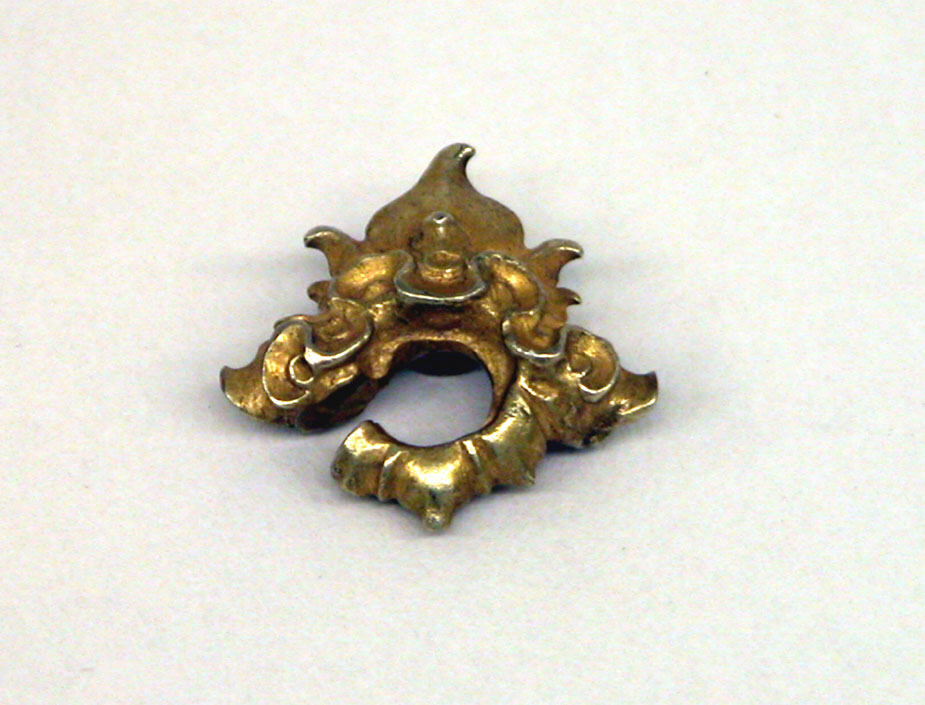
The ear ornament, in its most reductive form, is a punctuation mark on the human form—a whisper of light against the skin. Yet within the archives of Natalie Fashion Atelier, we treat it as a structural manifesto. This research artifact examines a singular Javanese gold ear ornament from the Mataram period, circa 8th–10th century, held in the atelier’s private collection. Its materiality—24-karat gold worked through the lost-wax technique—offers a lexicon of tensile strength and organic flow that directly informs the 2026 haute couture silhouette. The ornament’s geometry is not merely decorative; it is a lesson in load distribution, negative space, and the tension between rigidity and drape.
The archive node, referencing the “Mirror with Split-Leaf” motif, provides the conceptual bridge. On one side, a polished silver mirror surface is encrusted with gold palm-leaf filigree—a dense, almost chaotic proliferation of nature. On the reverse, a cold stone sarcophagus plate narrates a linear, relief-based life story. This duality—the golden excess of the living versus the carved narrative of the eternal—is the philosophical core of our 2026 collection. The Javanese ear ornament embodies this paradox: its gold is both a symbol of earthly power and a vessel for ancestral memory.
Materiality as Structural Language: Gold’s Tensile Paradox
Gold, in its purest form, is a soft metal. Yet the Javanese artisans achieved extraordinary rigidity through the repoussé and chasing techniques, creating a hollow, three-dimensional form that is both lightweight and structurally robust. The ear ornament under study measures approximately 4.2 cm in diameter, with a thickness of only 0.8 mm at its thinnest point. The surface is a continuous, undulating pattern of split palm leaves—each leaf bifurcated, then bifurcated again, creating a fractal geometry that mimics the branching of a tree or the veins of a leaf.
This split-leaf motif is not arbitrary. It represents the Javanese concept of cakra manggilingan—the wheel of cosmic cycles—where every division implies a return to unity. For the 2026 silhouette, this translates into a new approach to seamless construction. The atelier’s pattern-makers have developed a technique called “fractal draping,” where a single piece of fabric (a double-faced silk-wool blend) is repeatedly split, folded, and re-joined to create a garment that appears to grow from a single seed. The ear ornament’s gold surface, with its micro-textures of hammered and polished areas, informs the fabric’s surface treatment: alternating matte and satin finishes that catch light differently with each movement.
Negative Space as Volume: The Void Within the Gold
The Javanese ear ornament is not a solid disc. It is a ring of gold, with a central void that is as carefully designed as the metal itself. This void—the negative space—allows the ear to become part of the composition. The ornament frames the flesh, rather than covering it. This principle of “framing the body” is central to the 2026 silhouette. We are moving away from garments that encase the body and toward structures that define space around the body.
Consider the “Gold Void” evening gown: a column of black double-faced crepe, from which a single, continuous band of gold-threaded organza emerges at the shoulder, arcs across the torso, and disappears at the hip. The organza is not attached to the crepe; it is held in place by tension alone, creating a void between the fabric and the skin. This void—the “ear of the garment”—is the direct descendant of the Javanese ear ornament’s central hole. It is a space for breath, for light, for the wearer’s own silhouette to become part of the design.
Archive Node Resonance: The Mirror and the Sarcophagus
The archive node—“一面是光洁银镜上以黄金镶嵌的纷繁棕叶纹,另一面是冰冷石棺板上以浮雕诉说的生命叙事”—is a meditation on dualities. The Javanese ear ornament, when worn, performs this duality. From the front, it is a radiant, sun-like disc of gold; from the back, it is a subtle, almost invisible wire that hooks behind the ear. The ornament is both spectacle and secret.
For 2026, this duality manifests in the “Mirror-Sarcophagus” silhouette. The front of the garment is a spectacle: a cascade of gold-lame palm leaves, each leaf hand-embroidered with split-thread technique, creating a surface that shimmers with the complexity of the original ornament. The back, however, is a study in restraint: a single, continuous line of black silk satin, with a subtle relief pattern of the same palm leaves, but carved into the fabric through a heat-pressed embossing technique. The front is the mirror—the living, golden chaos. The back is the sarcophagus—the eternal, narrative relief.
Technical Translation: From Gold to Gown
The translation of this heritage into haute couture requires a rigorous technical framework. The Javanese ear ornament’s split-leaf geometry has been digitized and analyzed using computational design software. The resulting algorithm generates a “leaf lattice” that can be applied to any garment pattern. The lattice’s density varies according to the garment’s structural needs: denser at the shoulders (where load-bearing is required), sparser at the hem (where fluidity is desired).
The gold materiality itself is replicated through a bespoke metallic thread developed exclusively for the atelier. This thread—a core of 24-karat gold-plated copper wrapped in silk—achieves the same tensile strength and light-reflective properties as the original ornament. The thread is then applied using a “floating embroidery” technique, where the thread is not fully anchored to the fabric but is held at specific points, creating a three-dimensional surface that mimics the repoussé work of the original gold.
Conclusion: The Ear as Architectural Keystone
The Javanese gold ear ornament, in its modest scale, contains the entire architectural vocabulary of the 2026 haute couture silhouette. It teaches us that strength can be found in hollowness, that excess and restraint are not opposites but partners, and that the most powerful design is one that frames, rather than fills, the space around the body. The 2026 collection, titled “The Golden Void,” is a direct homage to this principle. Each garment is an ear ornament writ large—a frame for the human form, a whisper of gold against the skin, a narrative of life and eternity told in split leaves and negative space.