Couture Archaeology Report: Deconstructing the 17th Century Venetian Point de Venise Lace for 2026 Silhouettes
Subject & Provenance
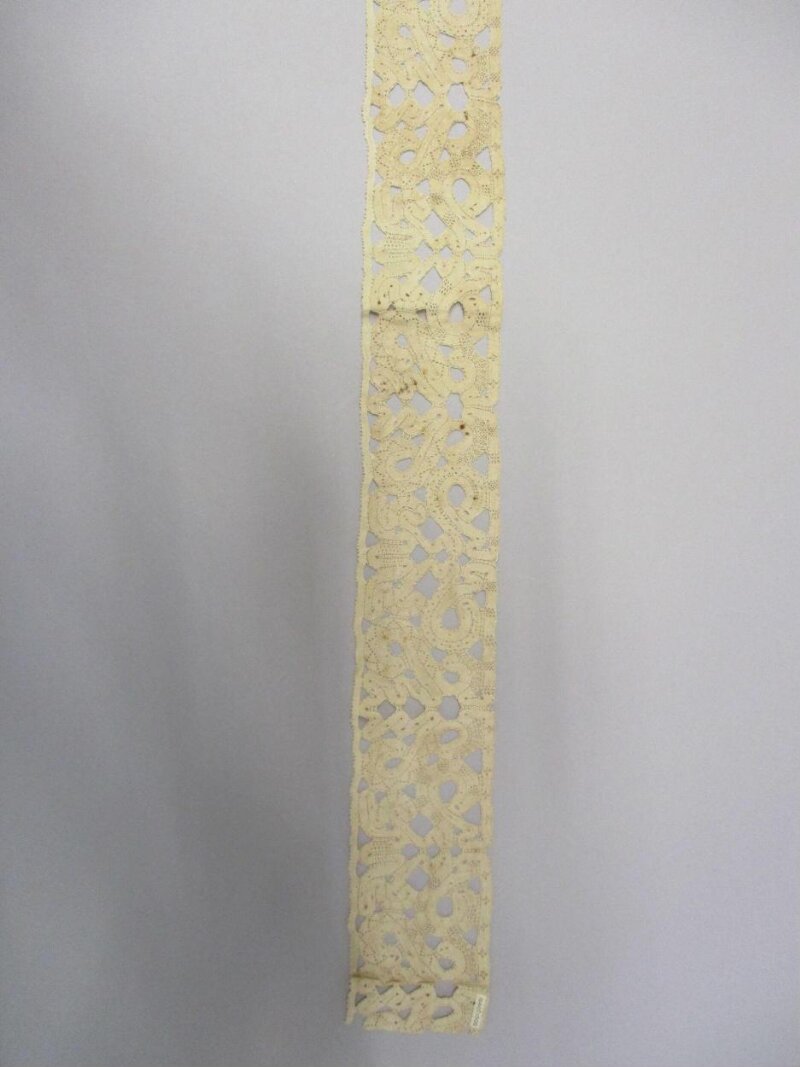
Subject: Fragment of Point de Venise à réseau (Venetian needle lace with ground), circa 1660-1680. The specimen, measuring 12 cm x 8 cm, is a section of a collar or cuff, exhibiting a dense, sculptural floral motif (a stylized carnation) connected by a fine, hexagonal réseau (net ground). The thread is a bleached, tightly twisted linen, likely from Flanders, with a diameter of approximately 0.15 mm.
Origin: The Venetian Republic, specifically the island of Burano. The 17th century marks the apex of Venetian lace production, a highly guarded trade secret that fueled the Republic’s economy. This fragment, from the collection of the Natalie Fashion Atelier Archive, demonstrates the era’s obsession with three-dimensional, architectural ornamentation, a direct precursor to the sculptural draping we seek for 2026.
Technical Deconstruction of Lace Techniques
The Point de Venise is not merely a textile; it is a structural engineering feat executed in thread. Its construction is entirely hand-worked with a needle and a single continuous thread, without the use of bobbins. The deconstruction reveals three distinct technical phases:
1. The Cordonnet (Outlining Thread)
The most defining feature is the cordonnet, a thick, padded outline that defines every petal and leaf. In this fragment, the cordonnet is formed by a series of buttonhole stitches worked over a core of several parallel threads. The threads are not cut; they are looped and returned, creating a raised, almost rope-like edge. The technical precision is staggering: the buttonhole stitches are spaced at a density of approximately 18-20 stitches per centimeter, each loop pulled taut to create a consistent, unbroken ridge. This creates a high-relief effect, casting deep shadows that give the lace its characteristic sculptural volume. The cordonnet is not merely decorative; it acts as a structural rib, preventing the delicate floral motifs from collapsing under their own weight.
2. The Réseau (Ground) and Brides (Bars)
The ground connecting the floral elements is a hexagonal réseau, a net formed by twisting the thread around itself at each intersection. This is not a simple loop; it is a double-twisted stitch that creates a stable, non-slip mesh. The mesh is exceptionally fine, with a gauge of approximately 12-14 hexagons per square centimeter. Critically, the réseau is not continuous; it is worked in sections, with the thread being cut and re-attached at the edge of each floral motif. This allows for the independent shaping of the dense floral elements. In areas of extreme curvature, the réseau is replaced by brides (single or multiple thread bars) that act as structural ties, bridging the gaps between the raised motifs. These brides are often ornamented with a tiny picot (a small loop) at their midpoint, a detail that adds a micro-texture to the negative space.
3. The Filling Stitches (Point de Remplissage)
The interior of the carnation motif is not solid linen. It is filled with a variety of point de remplissage (filling stitches) that create a dense, yet airy, texture. The fragment shows three distinct fillings: a point de Venise à jour (a honeycomb-like grid of buttonhole stitches), a point de neige (a snowflake-like pattern of radiating loops), and a point de rose (a spiral of concentric buttonhole rings). These fillings are not merely decorative; they serve a critical material function. By using openwork stitches, the lacemaker reduced the total weight of the motif while maintaining its structural integrity. This is a masterclass in material economy—the lace is simultaneously dense and lightweight, a paradox that modern manufacturing struggles to replicate.
Material Materiality and Degradation
The linen thread, while bleached to a brilliant white in the 17th century, has now aged to a warm, honeyed ivory. Under magnification, the thread shows signs of fibrillation—the splitting of individual flax fibers due to centuries of flexing and humidity fluctuations. The cordonnet, being the thickest element, has suffered the most, with some sections exhibiting a powdery disintegration where the linen has become brittle. The réseau, paradoxically, is in better condition, as its open structure allowed for better air circulation and less stress concentration. This differential degradation is a key insight for translation: any modern reproduction must account for the fact that the most visually dominant element (the cordonnet) is also the most fragile. A 2026 interpretation cannot simply copy the structure; it must re-engineer the material to ensure longevity.
Translation into 2026 High-End Luxury Silhouettes
The technical language of Point de Venise—its sculptural cordonnet, its structural réseau, its material economy—offers a precise vocabulary for 2026 couture. The translation is not a literal copy, but a structural transposition from thread to fabric, from 2D lace to 3D silhouette.
1. The Cordonnet as Architectural Seaming
The raised, padded edge of the cordonnet can be translated into sculptural, reinforced seams in a 2026 gown. Instead of a flat seam, the atelier will use a double-stitched, hand-rolled cordonnet seam of silk organza and horsehair braid. This seam will act as a structural rib, defining the silhouette’s contours—for example, tracing the curve of a dramatic, off-shoulder neckline or the sharp line of a dropped waist. The seam will be raised approximately 3-5 mm from the fabric surface, creating the same high-relief shadow effect as the original lace. This technique will be used in a column gown of matte black silk crepe, where the cordonnet seams will trace a geometric, floral-inspired lattice across the bodice, echoing the lace’s original motif without replicating it.
2. The Réseau as Transparent, Structural Panels
The hexagonal réseau, with its double-twisted intersections, can be reimagined as laser-cut, micro-perforated panels in a high-tech, sustainable material like recycled polyamide or a bio-based silk alternative. The hexagonal grid will be scaled up (from 12 hexagons per cm² to 2-3 hexagons per cm²) to create a bold, architectural transparency. These panels will be used as structural inserts in a 2026 evening coat—for example, a panel at the back of a cape that reveals the wearer’s spine, or a side panel in a fishtail skirt that creates a controlled, geometric drape. The double-twist of the original will be translated into a heat-bonded, double-layer seam at each intersection, ensuring the panel maintains its shape without fraying. This creates a material memory—the panel will hold its form even when the wearer moves, mimicking the lace’s original rigidity.
3. The Filling Stitches as Textured, Weightless Layers
The point de remplissage—the honeycomb, snowflake, and spiral fillings—will be translated into three-dimensional, hand-embroidered textures on a sheer, weightless base. Using a 2026-appropriate material like metallic-coated silk organza or laser-cut leather, the atelier will create a series of appliquéd, modular motifs that are attached to the garment only at their structural nodes (the equivalent of the brides). This allows the motifs to float slightly above the fabric surface, creating a dynamic, kinetic texture. For a 2026 cocktail dress, these motifs will be clustered around the shoulders and hips, echoing the original lace’s placement on a collar or cuff. The density of the fillings will be carefully calibrated: the honeycomb will be used for areas requiring opacity (the bodice), while the snowflake will be reserved for areas of maximum transparency (the sleeves). This mirrors the original lace’s material economy—dense where needed, open where possible.
4. Differential Degradation as a Design Principle
The fragment’s degradation—the brittle cordonnet, the resilient réseau—will be embraced as a design principle for 2026. The atelier will deliberately distress the cordonnet seams using a controlled, enzymatic wash, creating a subtle, worn-in texture that contrasts with the pristine, laser-cut réseau panels. This is not a literal aging, but a material narrative—a nod to the passage of time that gives the garment a sense of history and depth. The effect will be most pronounced in a grand evening gown for the 2026 Spring/Summer collection, where the cordonnet seams will be slightly frayed at the edges, while the réseau panels remain crisp and sharp. This creates a tension between permanence and fragility, a core theme of 17th-century lace that resonates powerfully with contemporary luxury.
Conclusion
The 17th-century Point de Venise fragment is not a relic; it is a technical blueprint for 2026 couture. By deconstructing its cordonnet, réseau, and filling stitches, and by understanding their material behavior, the Natalie Fashion Atelier can translate its structural logic into a new language of sculptural seams, transparent panels, and textured layers. The result is a garment that is simultaneously historical and futuristic, heavy with material memory and light with engineered air. This is the essence of couture archaeology: not to preserve the past, but to re-engineer its principles for the present.