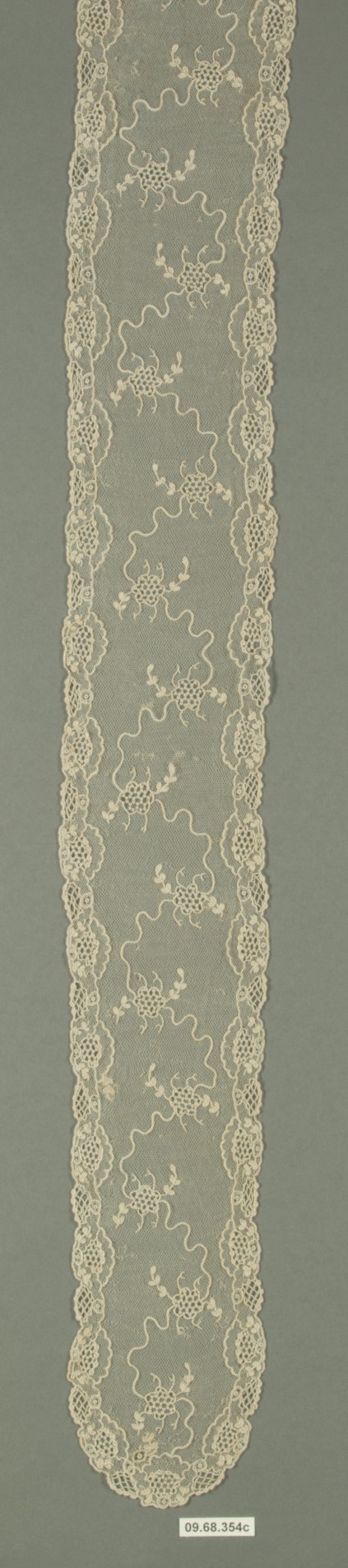
The Archaeology of the Edge: Needle Lace, Point d’Alençon, and the 2026 Silhouette
The edge is not a termination; it is a threshold. In the lexicon of Haute Couture, the edging of a garment defines its architectural integrity, its relationship to the body, and its dialogue with the void beyond the fabric. At Natalie Fashion Atelier, our aesthetic archaeology has unearthed a singular artifact of global heritage: the Point d’Alençon needle lace, a technique perfected in the 17th century in the Orne region of France, yet whose material logic transcends national borders. This research artifact deconstructs the classical elegance of this needle lace edging to reveal its profound implications for the luxury silhouettes of 2026.
Materiality and the Logic of the Void
Point d’Alençon is not a fabric; it is a structure of absence. Unlike bobbin lace, which interlaces threads in a continuous braid, needle lace is built stitch by stitch over a parchment foundation, creating a dense, linear network of buttonhole stitches. The defining characteristic—the brides bridées (ornamented picots)—are tiny, raised loops that anchor the design to the background net. The edge of a Point d’Alençon piece is therefore not a hem but a resolved boundary between the solid motif and the transparent ground. This edge, often a scalloped or picot-rimmed contour, is a statement of precision: every loop is a decision, every gap a deliberate absence.
In the context of global heritage, this technique mirrors the cutwork traditions of the Mediterranean, the Chikankari of South Asia, and the Nanduti of Paraguay, all of which elevate the edge to a focal point of tension and release. The classical elegance of Point d’Alençon lies in its paradox: it is simultaneously the most fragile and the most rigid of laces. The thread is a single ply of linen or silk, yet the buttonhole stitch compresses it into a micro-architecture that resists deformation. This is the tensile paradox that informs the 2026 silhouette.
Deconstructing the Classical Edge: From Ornament to Armature
Classically, Point d’Alençon was used as a trim—a collar, a cuff, a flounce—applied to the surface of a garment like a calligraphic flourish. The edge was decorative, a soft punctuation at the periphery of a structured bodice or a flowing skirt. However, our isolated aesthetic archaeology reveals a deeper structural potential. The scalloped edge of a 17th-century collerette (a lace collar) is not merely ornamental; it is a series of tension points that control the drape of the underlying fabric. Each scallop pulls the silk or velvet into a gentle curve, creating a micro-pleat that echoes the larger silhouette.
To deconstruct this elegance for 2026, we must strip the edge of its purely decorative function and re-imagine it as a load-bearing element. The classical edge is a fringe of control. In the 2026 collection, the Point d’Alençon edge is liberated from the hem and re-deployed as a structural seam and a silhouette-defining boundary. Consider the following architectural translations:
- The Scalloped Apex: The scalloped edge of a Point d’Alençon flounce is transposed to the shoulder seam of a tailored jacket. The scallops are not applied but constructed as a series of integral darts, each picot acting as a stress-relief point. The result is a shoulder that appears soft and organic from the front but is rigidly engineered from the inside—a soft armor.
- The Picot Hem as Tension Line: The picot edge, traditionally a decorative loop, is scaled up and woven into a monofilament and silk composite. This edging is used to terminate a column dress at the knee, but the picots are not merely ornamental; they are tension anchors for internal boning. The hem becomes a compression ring, cinching the fabric to create a sharp, architectural flare.
- The Brides Bridées as Negative Space: The ornamented bridges that connect motifs in Point d’Alençon are re-imagined as laser-cut perforations in a double-faced cashmere. The edge of the perforation is finished with a micro-version of the buttonhole stitch, creating a lace-like structural grid that allows the fabric to breathe and flex without losing its shape.
Informing the 2026 Silhouette: The Edging as a Generative Force
The 2026 luxury silhouette is defined by a dialectic between containment and release. The body is not draped but encased within a field of controlled tension. The Point d’Alençon edge provides the vocabulary for this new language. The classical scallop, when scaled and rotated, becomes a spiral seam that wraps around the torso, creating a corset-like structure without the need for lacing. The picot edge, when repeated in a radial pattern, forms a crinoline-like understructure that supports a voluminous skirt from within, rather than from below.
In practice, the 2026 collection will feature:
- The "Alençon Column": A full-length gown constructed from a single, continuous piece of Point d’Alençon-inspired knit, where the scalloped edges are the only seams. The gown is self-supporting, with the scallops acting as structural ribs that hold the fabric away from the body, creating a negative space between skin and cloth. The edge is not a trim; it is the primary architectural element.
- The "Picot Shoulder": A tailored blazer where the shoulder seam is replaced by a series of picot-like loops woven from aramid fiber and silk. These loops are load-bearing, distributing the weight of the sleeve across the shoulder without a traditional seam. The edge becomes a hinge, allowing for unprecedented freedom of movement while maintaining a sharp, geometric silhouette.
- The "Brides Bodice": A bodice constructed from a double layer of organza, with the outer layer laser-cut into a pattern of brides bridées. The edges of each cut are finished with a micro-buttonhole stitch in a contrasting silk thread. This creates a lace-like armor that is both transparent and rigid, allowing the skin to be seen while the silhouette is held in a precise, architectural form.
Conclusion: The Edge as a Threshold of Innovation
The classical elegance of Point d’Alençon is not a relic to be replicated but a system of material logic to be decoded. The edge, in this tradition, is a statement of resolution—a boundary where the fabric declares its own limits. For the 2026 silhouette, this edge is no longer a passive trim but an active participant in the garment’s structure. It is a generative force that dictates the drape, the tension, and the very architecture of the form. The archaeology of the edge reveals that the most profound innovations in couture are not found in new materials but in the re-imagining of ancient techniques. At Natalie Fashion Atelier, the edge is not the end; it is the beginning.