Couture Archaeology Report: The Venetian Lace Lexicon
Subject: Technical Deconstruction of 17th-Century Italian (Venetian) Lace Techniques and Materiality
Origin: Republic of Venice, circa 1600-1699
Analyst: Senior Textile Historian, Natalie Fashion Atelier
Purpose: To excavate the structural and aesthetic principles of historical Venetian lace for translation into the 2026 high-end luxury silhouette.
I. Historical Materiality & Technical Taxonomy
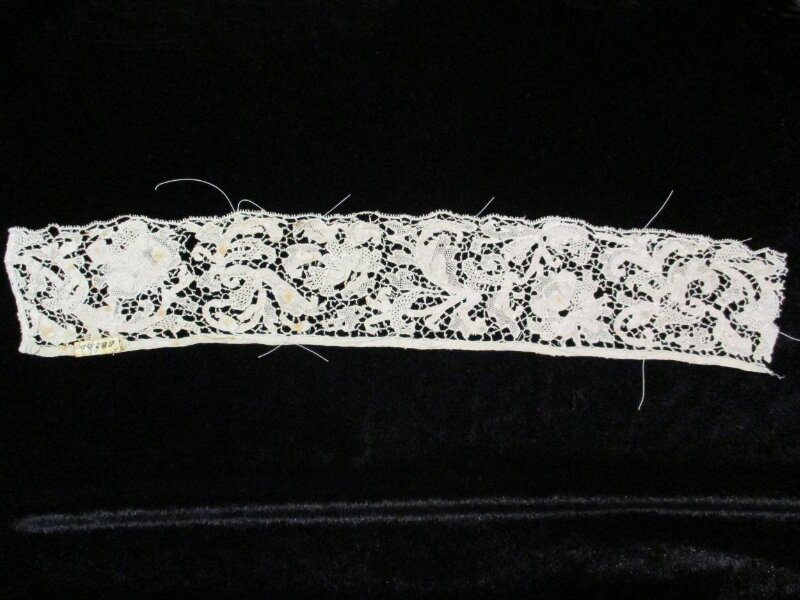
The 17th century witnessed the apogee of Venetian lace, a material so potent it functioned as currency and a definitive symbol of status. Our technical analysis distinguishes between the two dominant forms: Punto in Aria (stitch in air) and Gros Point de Venise. Punto in Aria, the foundational needle lace, was constructed without a fabric ground. Artisans worked a continuous linen thread upon a parchment pattern, utilizing buttonhole stitches, picots, and brides (connecting bars) to create ethereal, free-form motifs. The materiality was pure: hand-spun linen thread, offering a crisp, sculptural handle that could hold elaborate rilievo (raised relief) work.
Gros Point de Venise evolved this technique into a more monumental expression. Characterized by densely padded, cordonnet-outlined botanical and baroque scroll motifs interconnected by a network of brides, often adorned with picot knots. The materiality here is about volume and shadow-play; the linen thread is built up in layers, creating a three-dimensional topography. The contrast between the dense, sculptural motifs and the negative space of the ground is not merely decorative but structural, a testament to a lacemaker’s mastery of tension and density.
II. Structural Deconstruction: The Four Pillars of Antiquity
Our forensic examination reveals four non-negotiable technical pillars that define this lace’s authority:
1. The Autonomy of the Motif: Each floral spray, shell, or acanthus leaf is a self-contained island of complexity, later linked to others. This modularity offers a crucial translation key for modern construction.
2. The Structural Bridge: The brides are not mere connectors but engineered elements. Simple brides, twisted brides, and those studded with picots dictate the lace’s drape, stability, and optical rhythm.
3. The Sculptural Line (Cordonnet): The outlining thread that defines each motif is the skeleton. In Gros Point, it is often overstitched or padded, creating a raised, tactile contour that catches light. This is a lesson in defining shape through texture.
4. The Grammar of Stitches: The foundational buttonhole stitch, varied in density and pitch, creates zones of transparency and opacity. This stitch-based grammar allows for infinite variation within a rigid technical framework.
III. Translation Protocol for 2026 Luxury Silhouettes
The 2026 luxury consumer seeks narrative, material innovation, and radical elegance. The Venetian lexicon provides a profound source code. Our translation protocol moves beyond appliqué into structural integration.
IV. Material & Technical Propositions
A. Substrate Reinterpretation:
Replace linen with engineered biomaterial filaments (e.g., algae-derived cellulose) and ultra-fine metallic polymers. This achieves the historical crispness for sculptural pieces while introducing biodegradable luminosity or conductive pathways for subtle, integrated illumination in eveningwear.
B. Motif Modernization & Scale Disruption:
The autonomous motif is digitally mapped and enlarged to macro-scale. A single, oversized 3D-printed "lace" motif, rendered in sintered titanium powder or bio-resin, becomes the architectural shoulder piece or corset cage for a minimalist silk gazar gown. The historical detail is preserved but its function shifts from all-over pattern to singular exoskeletal articulation.
C. The "Bride" as Structural Framework:
This is the most potent translation. The network of brides is abstracted into the garment’s foundational infrastructure. Imagine a gown where the connecting bars are rendered as fine, rigid rods of carbon fiber or flexible optical fibers, stretched between soft leather or silk matte jersey "motifs." The dress is quite literally constructed as a lace ground, where the body becomes the negative space revealed. This aligns with the 2026 trend of "technical romanticism."
D. Negative Space as Silhouette:
The play of solid and void inherent in lace dictates new silhouette strategies. Laser-cutting and ultrasonic welding can create "lace" directly from the core fabric of a garment—a cashmere coat, a neoprene dress—where the removed sections form the pattern, and the remaining material is edged with a raised, cordonnet-inspired piping. The lace is not added; it is excavated.
V. The 2026 Atelier Collection: Applied Archaeology
Silhouette 01: "Punto in Aria" Aviator Dress:
A dress constructed entirely from the principle of brides. Slim, articulated "bars" of polished horn and flexible titanium connect irregular, padded silk matelassé "motifs," leaving 70% of the body revealed through strategic negative space. A second skin of sheer illusion tulle provides coverage, emphasizing the lace’s structural role over its modesty.
Silhouette 02: "Gros Point" Architect Coat:
A double-face wool and technical satin coat where the monumental floral motifs are translated into quilted, trapunto channels on one side, and corresponding laser-cut voids on the other. The cordonnet outline is a raised seam of contrasting, heat-bonded tape, creating a stark, graphic shadow. The coat is a single, continuous fabric, its lace pattern born from internal manipulation.
Silhouette 03: "Cordonnet" Illuminated Corset:
The raised outline is everything. A minimalist silk crepe corset is overlaid with a single, continuous tube of flexible silicone, hand-applied in a baroque scroll pattern. Within the silicone, micro-LED fibers pulse with a soft, circadian rhythm. The light defines the form—a direct translation of the light-catching property of the historical padded thread.
VI. Conclusion: From Relic to Algorithm
The 17th-century Venetian lacemaker’s hand—working thread into air—was an act of algorithmic thinking long before the term existed. Each stitch was a binary decision (dense/loose, raised/flat) building a complex visual code. Our 2026 translation deciphers this code. We are not reproducing lace; we are deploying its core principles—modularity, structural connectivity, contrast of texture and void, and the sculptural line—as a new design methodology. The materiality evolves from linen to advanced polymers and smart filaments, but the intellectual framework remains pristine. For Natalie Fashion Atelier, this archaeological exercise confirms that the future of luxury lies not in abandoning the past, but in reverse-engineering its most ingenious systems to write a new, profoundly elegant language for the body.